I apologize Mr. DeWeese
 Only my second blog back from a long hiatus and I find myself unprecentedly apologizing to the still-somewhat-honorable H. William DeWeese, majority leader of the Pennsylvania House.
Not bad.
DeWeese was not indicted by a state grand jury last week as another blogger predicted he might be.
Instead, state Attorney General Tom Corbett completed the first phase of his investigation by filing charges against former Beaver County legislator Mike Veon, Rep. Sean Ramaley, D-Beaver, and 10 former or suspended House Democratic staffers for taxpayer-funded bonuses paid to legislative staffers for campaign work as well as other political work done on the taxpayers' dime.
All were arraigned in Harrisburg on Friday.
Among them was Mike Manzo, DeWeese's former chief of staff, who also faces charges of handing a do-nothing job to Angela Bertugli, a former office intern he was "shtupping," as Inquirer columnist Stu Bykofky called it.
The Pittsburgh Tribune Review has even run a profile of the former small-town beauty queen. In that article, DeWeese, the loquacious House party leader and family friend who brought Bertugli to Harrisburg, was at a loss for words. "I'm heartbroken," he said Friday in an e-mail to the newspaper.
Before you go feeling sorry for the guy, factor this into your thinking:
- DeWeese and Veon were the only two state representatives who voted against repealing the pay raise lawmakers gave themselves in 2005.
- They have also been among the chief supporters of casino gambling in Pennsylvania and were important cogs in the fledgling industry's lobbying and campaign contribution efforts.
- DeWeese has said he acted aboveboard in all matters and expects to be cleared. He has portrayed himself, in public statements and through subordinates, as a hands-off leader who left the details to Veon, according to the Tribune-Review.
That's karma, Bill. What you put out into the ether will inevitably come back and bite hard.
I don't know whether to congratulate Corbett for not overreaching and arraigning DeWeese without the Bonusgate evidence to back it up, or whether another prosecutorial shoe may eventually drop from the Feds.
Lord knows, it would be long overdue. Slotsylvania needs an anema, not just a sex scandal.
That's because Corbett, who eyes the governors' mansion himself, accepted at least $35,000 in campaign contributions from a now-indicted slots parlor owner, Louis DeNaples, while running for attorney general.
Corbett says he won't give the money back unless DeNaples is convicted of lying to the state Gambling Control Board about his association with two mob bosses and two political fixers.
The Bonusgate scandal is but an ice cube compared to the titantic iceberg of legalized corruption the DeNaples case represents. Not only did Corbett, the state's top law enforcement officer, take money from DeNaples, so did Gov. Ed Rendell, judges, lawmakers and party leaders on both sides of the aisle.
In fact, DeNaples spread more than $1 million in campaign cash around in the years running up to the midnight passage of the 2004 law that legalized slot machine gambling in Pennsylvania and his eventual state license to operate the $415 million Mount Airy Casino Resort in the Poconos.
However, the Dauphin County District Attorney's case against the Dunmore billionaire isn't proceeding nearly as fast as DeNaples' case against him and the media.
To prove their assertion that grand jury leaks have tainted the case against their client, DeNaples' lawyers have subpoenaed 15 reporters from six news organizations - including 10 from The Inquirer and the Philadelphia Daily News. Lawyers for the news organizations have asked the judge to throw out all the subpoenas for journalists, saying that the state's shield law protects them from having to identify confidential sources.
The shield law states that no reporter "shall be required to disclose the source of any information procured or obtained by such person, in any legal proceeding, trial or investigation before any government unit."
On top of this travesty taking place in a mysteriously closed court, DeNaples' attorney, former federal prosecutor Sal Cognetti Jr., was able to legally obtain the cell phone records for the Dauphin County district attorney, his chief deputy, and two troopers assigned to an organized-crime unit without telling the prosecutors or police.
Francis Chardo, the first assistant prosecutor in Dauphin County and one of the prosecutors whose records were disclosed, was outraged. "This could get somebody killed," Chardo said of the precedent being set.
Cognetti successfully prosecuted DeNaples for felony fraud as an assistant U.S. attorney back in the '70s. He was also one of two law enforcement officials to vouch for him when he applied for his slots parlor license.
The other was U.S. Attorney Thomas Marino, who was supposed to be building a new federal case against DeNaples when the former felon used him as a reference for his casino license. Marino then quit his public post and joined DeNaples' legal team.
Labels: Bill DeWeese, Ed Marsico, Ed Rendell, Louis DeNaples, Mike Manzo, Mike Veon, Pennsylvania, slots, Tom Corbett

 |
|  RSS Feed |
The biggest story never told?
 Pssst. Hey Slotsylvania, I'm back. No, that isn't the big news. Just thought I'd give myself a plug for a second.
The biggest news story ignored by the state media over the July 4th holiday weekend was the reported indictments of state House Majority Leader H. William "Bill" DeWeese and Mike Veon, a former House Minority Whip and Democratic rat-fucker turned casino and tobacco lobbyist after voters threw him out of office.
So far, blogger and writer Bill Keisling is the only one to have part of the story, noting, "Prosecutors are expected to make public the charges against Majority Leader DeWeese and others within the next week or so."
Guess, they didn't want to interfere with all those good news cycles over the holiday weekend about Pennsylvania leaders actually passing a budget on time for a change. Or step on the tear-stained shoes of departing state Sen. Vince Fumo, who left the public stage last week amid health concerns and a federal indictment of his own to fight.
Of course, that could just be my "the incompetent media is a conspiracy" theory. Nobody else has printed a glimmer about the potential grand jury indictments since last month, according to a Google news search.
But I'm willing to give Keisling the benefit of the doubt on this - and apologize later if need be. The novelist and owner of yardbird.com previously broke the news that Gov. Ed Rendell had secretly hired his former law firm, Ballard Spahr, to handle the closed-door bidding and now-dead long-term leasing of the Turnpike.
According to Keisling, a grand jury investigation into legislative bonuses has blossomed into a wide-ranging inquiry throughout state government.
DeWeese and Veon, the only two nitwits to vote against repealing the 2005 legislative pay raise (before DeWeese caved and left Veon hanging), are probably being named because of allegations they paid taxpayer-funded bonuses to their legislative staffers for performing political work.
If true, the two main architects behind slot machine gambling in Pennsylvania - and the chief forces pushing for full casino gambling - are now both politically tainted. And suddenly, the governor finds himself and his staff answering a lot of tough questions about corruption.
DeWeese has said he acted aboveboard in all matters and expects to be cleared. He has portrayed himself, in public statements and through subordinates, as a hands-off leader who left the details to Veon, according to the Pittsburgh Tribune-Review.
I should be ecstatic. For years now, I've been calling for someone - preferably the Feds - to do this very same thing. However, I'll stop just short of singing Handel's "Hallelujah!" chorus.
That's because state Attorney General Tom Corbett, the guy who may be driving this freewheeling grand jury with an eye on the governor's chair (You reading me Pat Meehan?), has already painted himself with the same corrupt brush with which Rendell has become a master.
Rendell, a Democrat, and Corbett, a Republican, both accepted large political contributions from Dunmore billionaire and former federal felon Louis DeNaples in the run-up to the awarding of his slots license.
A Dauphin County grand jury indicted DeNaples last year for lying to the state Gaming Control Board about his alleged ties to organized crime figures. The local prosecutor was given Corbett's blessing, even though the state's chief law enforcement officer has a seven-attorney corruption taskforce in part because of legalized slots gambling.
State campaign finance records are shoddy even though they're computerized public records. But my research found Gov. Ed Rendell received at least $115,000 from DeNaples in campaign donations between 2000 and 2004, and Corbett, the state's top prosecutor, accepted at least $35,000.
Spokesmen for both officials have said they won't give the money back unless DeNaples is convicted. Other recipients of DeNaples' contributions included top state lawmakers, party groups and judges.
Labels: Bill DeWeese, casino, Ed Rendell, Louis DeNaples, Mike Veon, slots, Tom Corbett
| RSS Feed |
Cappy: High court collusion claims 'preposterous'
 Slotsylvania former chief justice Ralph Cappy plans to vigorously defend himself from a lawsuit filed by the League of Women Voters, telling the Associated Press its allegation that he negotiated a deal to exchange judicial raises for state Supreme Court approval of a 2004 law legalizing slot machines is "preposterous."
The lawsuit filed Monday by the League reiterates many of the assertion raised in a 2006 suit filed by the League and Common Cause, alleging the high court played tit-for-tat with lawmakers, bartering favorable rulings for more funding and pay hikes.
That case was chucked out by a federal judge, who erroneously claimed the issue was made moot when the pay raises passed in 2005 were rescinded after a public outcry. However, the Supreme Court later ruled that the while the Legislature had the power to raise judicial salaries, it did not have the power to lower them. So, the state judges got their pay raises after all.
The League's new suit cites comments from an anonymous state senator as proof that the one or more justices traded or used as leverage a favorable ruling in the previous lawsuit as part of secret negotiations between Cappy and legislative leaders.
Supreme Court Chief Justice Ronald D. Castille said in a statement that the League's new suit "slanders the entire Supreme Court of Pennsylvania with baseless and irresponsible charges." House Republican leader, Sam Smith of Jefferson County, said the league "should be ashamed to be involved in this kind of speculation and abuse of process."
The evidence may be flimsy, but I have no doubt it happened.
Cappy was way too involved with the pay raise issue, openly admitted to closed door discussions with top lawmakers, wrote opinion pieces for newspapers in favor of it and eventual had to recuse himself from the judicial pay raise case.
Why else do you think the Supremes let stand the slots law, whose passage clearly violated the state Constitutional provision requiring a public comment period and three approvals on the floor of the House?
The 145-page slots bill was inserted into an unrelated two paragraph measure requiring background checks for harness racing employees which had already been approved twice by the House. It was then brought to the floor late at night, without any debate on the eve of a July 4 holiday recess.
That's the main reason why I now call this state Slotsylvania, because we have the best justice and laws that lobbying money can buy.
But don't take my word for it. To read the lawsuit for yourself in pdf format, click here.
Labels: Ed Rendell, League of Women Voters, Louis DeNaples, pay raise, Ralph Cappy, slots
| RSS Feed |
Highway robbery
 Sorry folks. I was forced to take the last month off from blogging here to concentrate on some work projects as well as to fix some server issues.
And although I'm dead dog tired tonight, it seems fitting for me to make my return on the very day Gov. Ed Rendell flouted Pennsylvania's normal processes by accepting secret bids to lease the turnpike away for 75 years.
Fast Eddie did more shoveling during his press conference Monday to "unveil" the three bids than he would have if he was breaking ground for a new highway.
Not that the state will ever gain enough money to do that from the $12.8 billion high bid submitted by Abertis Infraestructuras, a Spanish group that operates highways in Europe, and Citigroup Inc., the biggest U.S. bank by assets.
Rendell openly admitted the state won't get anywhere near the $1.7 billion annually it needs to fix its decrepit highways and bridges - a testament to how poorly Rendell and the Legislature have run things.
Yet, Rendell said, "To me it seems like a slam dunk." Kind of like the Bush Administration's initial assessment of invading Iraq.
Only in Pennsylvania could the governor get away with bypassing the voters without a referendum, run a secret bidding process and then make legislators choose between accepting the winning lease or new tolls on Interstate 80.
Although this is the largest highway ever to be privatized, we still don't know how many unionized state workers will be laid off instead of actually fixing the turnpike.
What a bad joke. Here's hoping the lawmakers see through this scheme that only enriches the bond counsels - and the lawyers of Rendell's former law firm - while turning Pennsylvania into a banana republic.
LWV files another federal lawsuit over slots
The League of Women Voters of Pennsylvania sued Ralph Cappy, the former state Supreme Court chief justice on Monday, alleging that the high court upheld the state's slot-machine gambling law in exchange for approval of a judicial pay raise, according to the Associated Press.The 17-page suit cites an allegation by an unnamed senator that Cappy told legislators of one particular caucus during a meeting that "he needed the pay raise to secure the votes of Republican justices" on cases important to them.
Cappy, who was too chicken to stand for a retention election and retired from the bench on Jan. 6, did not immediately respond to a message left at his Pittsburgh law office Monday.
This isn't the first time this allegation has been raised. The league joined with Common Cause in suing Cappy, Rendell and top lawmakers in 2006, arguing that they played tit-for-tat, exchanging pay raises for a judicial rubberstamp on a 2004 law legalizing slot machines that was illegally approved.
State lawmakers gutted an existing bill that had already been approved twice and then forced the bill to the floor for a vote without the required public comment period late at night on the eve of a July 4 holiday recess in 2004.
But U.S. Middle District Judge Yvette Kane dismissed the case without prejudice and without ruling on its merits. Instead, she said the whole matter was moot because the Legislature was forced to rescind the pay raises after a public outcry.
She was wrong.
While the lawmakers' pay raises were rescinded later in 2005, the state Supreme Court - sans Cappy who recused himself - forced the state to continue them for all judges, including themselves.
The League was dead-set against slots gambling and remains firm against further expansion. Its lawsuit comes as the House may take up a bill (H.B. 2121) next month from Majority Leader H. William DeWeese that would turn the state's 14 slots parlors into full fledged casinos.
The effort to approve table games is moving forward even though perjury charges have been filed against slots parlor owner Louis DeNaples for lying about his ties to mob bosses and political fixers.
DeNaples, a Dunmore billionaire and former federal felon, reportedly gave more than $1.1 million to the campains of top state politicians - including at least $115,000 to Rendell, at least $35,000 to state Attorney General Tom Corbett and hundreds of thousands more to key lawmakers and party groups on both sides of the aisle, including some publicly opposed to slot machines - to get slots gambling legalized in 2004 and to buy enough influence to get his own license two years later.
Labels: Ed Rendell, League of Women Voters, Louis DeNaples, pay raise, Ralph Cappy, slots, turnpike
| RSS Feed |
Reputed mob boss likely turning state's evidence in Slotsylvania
 I've long dreaded this weird, but important moment in Slotsylvania history - and I'm not talking about the nation's temporary focus on this state for the heated Democratic primary in the U.S. presidential race.
Reputed Northeastern Pennsylvania mob boss Billy D'Elia pleaded guilty today to just one count of money laundering conspiracy and one count of witness tampering. He had been facing nearly two dozen counts as a result of a federal investigation.
D'Elia, 61, was charged in May 2006 with laundering hundreds of thousands of dollars in drug proceeds and five months later additional charges were added after he tried to have a witness in the case killed.
His attorney, James Swetz, declined to tell the Associated Press whether there was a plea agreement or whether D'Elia agreed to cooperate in other cases.
However, D'Elia has testified once already, in front of a Dauphin County grand jury last year. It then recommended perjury charges against Mount Airy Casino Resort owner Louis DeNaples and took the unusual step of asking for reforms to the state's slots gambling system.
The DeNaples case is beginning to rock Slotsylvania to its political core, leading some Republican state lawmakers to call for a special bipartisan committee with subpoena power to investigate his licensing.
 The Dunmore billionaire and former federal felon reportedly gave more than $1.1 million to the state's top politicians - including at least $115,000 to Gov. Ed Rendell, at least $35,000 to state Attorney General Tom Corbett and hundreds of thousands more to key lawmakers and party groups on both sides of the aisle, including some publicly opposed to slot machines - to get slots gambling legalized in 2004 and to buy enough influence to get his own license two years later.
Asked by the Scranton Times-Tribune in 2006 why he gave so many campaign contributions to the state's top brass, the landfill owner, banker and auto parts dealer replied, "It's more like building a customer base and spreading goodwill. It's business."
To date, the governor and the state's top prosecutor have publicly refused to return DeNaples' money, saying through their government-hired spokesmen that DeNaples is innocent until proven guilty.
Meanwhile, DeNaples spent $67,375 last year on lobbyists to sway lawmakers into passing a bill to turn the state's 14 slots parlors into full fledged casinos. That bill, H.B. 2121, was written by House Majority Leader H. William DeWeese but has been stuck in the Gaming Oversight Committee for more than a year.
Corbett and his seven-attorney government corruption unit are not prosecuting DeNaples. Instead, Corbett says he let Dauphin County District Attorney Ed Marisco do it.
DeNaples, 67, has long been rumored to have had mob connections, and was even cited in a report of the now-defunct Pennsylvania Crime Commission. He has denied any wrong doing.
DeNaples has hired high-priced lawyers and a spokesman with ties to the governor to defend him. They've launched a public smear campaign with lead defense attorney, Richard Sprague of Philadelphia, citing grand jury leaks to the media as proof Marsico is headline grabbing. The county prosecutor denies the assertion.
Swetz, D'Elia's attorney, has previously said his client would have been willing to testify before the Gaming Control Board before DeNaples was licensed, but was never subpoenaed.
 Former control board chairman Tad Decker, a college buddy of Gov. Rendell who appointed him, has said he was told D'Elia would refuse to cooperate if called, but refused to say who told him.
Decker has also publicly denied testimony from state police Commissioner Jeffrey Miller that he knew or should have known state police were investigating DeNaples for perjury before the Gaming Control Board voted unanimously to grant him a license on Dec. 20, 2006.
Decker's old law firm, Cozen O'Connor, which he has since returned to head, was subsequently hired by DeNaples to handle the financing of his slots parlor.
DeNaples was indicted Jan. 30, 2008, three months after opening his $412 million slots parlor at the site of the former Mount Airy Lodge, a once-famous lover's resort. The Gaming Control Board has since barred DeNaples from his own casino and his share of its proceeds until the charges are resolved.
The grand jury found DeNaples lied to the control board behind closed doors about his relationship with D'Elia; D'Elia's former boss, the late mafia don Russell Bufalino; and two corrupt political fixers in Philadelphia, based partly upon D'Elia's testimony and federal wiretaps.
D'Elia is said to be a mediator among mob families. The Feds say he met frequently with Philadelphia mobsters and had frequent contacts with western Pennsylvania and New York families.
DeNaples told the Gaming Control Board that he and D'Elia were merely acquaintances. But D'Elia told the grand jury they've been long-time friends, even to the point where DeNaples attended his daughter's wedding.
Attorneys for DeNaples dispute D'Elia's assertion, claiming he lied to the grand jury. As proof, Sprague has cited D'Elia's claim that DeNaples gave him his late father's rosary beads as a symbol of their friendship. The beads were buried with the elder DeNaples, Sprague told the Philadelphia Inquirer.
DeNaples' spokesman, Kevin Feeley, on Friday accused prosecutors of giving D'Elia a sweetheart deal in exchange for his testimony against DeNaples.
"It's clear to us that he's getting a deal to cooperate because he's the foundation of their case," Feeley said. "It is stunning that the government would agree to give a deal to a guy who allegedly tried to murder a witness."
Feeley also called D'Elia a liar. "It's clear he's willing to say anything if it helps him get a deal."
U.S. Attorney Martin Carlson declined to respond to Feeley's accusations Friday, issuing a press release that thanked state and federal law enforcement officials but said little about D'Elia's plea. He cited "sealing orders" entered by the court as his reason.
DeNaples' perjury case has yet to be scheduled for trial. His attorneys have asked the state Supreme Court to intervene, arguing Marsico overstepped his authority and the grand jury that issued the indictment was not properly empanelled.
D'Elia will be sentenced in June, when we may find out what, if any, deal he cut. He now faces up to 30 years in prison and a $750,000 fine.
On DeNaples' legal team, but away from the criminal case involving DeNaples, are four former federal prosecutors.
One of them is former Assistant U.S. Attorney Sal Cognetti Jr., who successfully prosecuted DeNaples for a government fraud conspiracy 30 years ago. He is now defending DeNaples' friend, the Rev. Joseph Sica, who also faces perjury charges. The grand jury claimed the Scranton priest lied to them about DeNaples' mob ties.
 DeNaples also hired former U.S. Attorney Tom Marino, Carlson's predecessor. who was supposed to be building a federal case against DeNaples in 2006 when he secretedly vouched for his good character as a law enforcement reference on DeNaples' slots parlor license.
Marino recused himself from the federal probe when word of his support of DeNaples leaked last year. He later resigned to take a job as DeNaples' in-house counsel.
DeNaples also hired Peter Vaira, a former U.S. attorney in Philadelphia, and J. Alan Johnson, a former U.S. attorney in Pittsburgh, to assure the control board that DeNaples had no relationships with organized crime figures.
For more about Louis DeNaples and to read my complete take on this long-predicted Slotsylvania snafu, click here. For more about Billy D'Elia, click here.
Labels: Bill DeWeese, Billy D'Elia, casino, Ed Rendell, Jeffrey Miller, Louis DeNaples, Pennsylvania, slots, Tad Decker, Tom Corbett
| RSS Feed |
Spinning the wheels of injustice in Slotsylvania
 I couldn't resist writing that headline after reading today's editorial in the Towanda Daily Review, which calls Pennsylvania's slots parlor licensing system "a game of chance in terms of reliability and integrity" because of the Louis DeNaples mess.
"The scandalous failure of several state agencies to cooperate, as the Gaming Control Board considered Dunmore businessman Louis DeNaples' application to operate the Mount Airy Casino Resort, must be the last such breach of the public trust."
I'll go that paper one step further and say it should never have happened in the first place.
It wouldn't have, had state law had prevented the billionaire from buying more than $1.1 million worth of influence among the state's top politicians despite his admitted federal felony in 1978.
Gov. Ed Rendell accepted at least $115,000 and state Attorney General Tom Corbett took at least $35,000 from DeNaples in campaign contributions. Neither will give it back now that DeNaples has been indicted for perjury.
A Dauphin County grand jury found he lied to the state Gaming Control Board during his closed-door licensing hearing about his relationship with two reputed mob bosses and two corrupt political fixers. DeNaples has denied any wrongdoing, but has been barred from his own casino pending the outcome of the criminal case.
Republican lawmakers, who are in the minority in the state House, have started a call for reforming the state's four-year-old law legalizing slot machine gambling. They also want a bipartisan committee to investigate DeNaples' licensing.
However, the bill to create that committee, House Resolution 652, still isn't posted online for the public to read. Is it any wonder that the Republicans are also decrying largely partisan efforts to block them?
"For all the grousing by lawmakers about the regulatory failure, they are responsible for creating a structure that compromised the independence of the investigative machinery responsible for licensing investigations and, potentially, of board members themselves," the Daily Review's editorial says.
I couldn't agree more.
Legalized gambling was a major change in Pennsylvania and should have been put to the voters in the form of a referendum. Instead, it was snuck into existence by gutting an existing bill and then ramrodded through the Legislature in the middle of the night on the eve of a July 4 holiday recess.
The newspaper also says, "Reforms now will be crucial not only regarding the determination of licenses for the remaining slots parlors authorized by the law, but for the inevitable future expansion of the gambling industry."
I dispute the inevitability of further gambling expansion.
Although House Bill 2121 is already pending to turn the 14 slots parlors - seven of which are already operating - into full casinos, Slotsylvania has yet to provide statewide property tax reductions for all homeowners, much less real tax reform.
Funding those tax cuts was the alleged public good behind slot machine gambling in the first place. Just because our lawmakers spend like drunken sailors and are now addicted to this revenue stream doesn't mean we should further feed their addiction. That's how New Jersey landed in budget trouble despite 30 years of gambling in Atlantic City.
Yet, even as America teeters on the edge of a recession, Pennsylvania's slots parlors continue to reap big profits. "What does this tell us?" state Rep. Paul Clymer (R-Bucks County) wrote in a letter to the editors of multiple newspapers today.
"It tells me that the path to addiction has a stronger hold on recreational gamblers than previously thought, because even though more and more people are carpooling, dining in and forgoing luxury vacations in an effort to save money, they are still spending money on the one-armed bandits."
The letter from Clymer, the minority chairman of the House Gaming Oversight Committee, also calls for passage of his own bill, H.B. 783. It would require "each licensed gaming entity that offers patrons total rewards cards that track the amount of money and time spent gaming in order to determine the value of provisions or complimentary services to their patrons issue monthly statements that list patrons' gaming winnings and losses."
Clymer's bill has been stuck in his own committee for more than a year now. In fact, the oversight committee hasn't passed a single slots reform bill in that time under Chairman Harold James (D-Philadelphia).
"I encourage all citizens, as we face a sluggish economy and rising unemployment rates, to be smart about their finances and stick to a budget when it comes to recreational expenses," Clymer wrote. "Your money is better spent elsewhere than at a multi-billion dollar casino that has the odds in its favor...."
For more about Louis DeNaples and to read my complete take on this long-predicted Slotsylvania snafu, click here.
Labels: casino, Louis DeNaples, Paul Clymer, Pennsylvania, slots
| RSS Feed |
Pressure building in Slotsylvania House for DeNaples probe

"It seems like we're not getting the truth here," state Rep. Curt Schroder (R-East Brandywine) told the Daily Local News of Chester County last week.
That's why Shroder and other Republican lawmakers are throwing in behind House Resolution 652. It reportedly calls for creating a select committee with subpoena powers to to examine the process that awarded a state license to indicted slots parlor owner Louis DeNaples.
I'd love to link directly to the resolution and tell you all about it.
But in typical Slotsylvania fashion, HR 652 still isn't posted online for the public to read. It isn't among a list of pending resolutions even though 12 others have been added since it was introduced last week.
That isn't what's supposed to happen when something controversial gets introduced in the Legislature. Just look at this example, which also happens to reference a fictional House Bill 652.
If passed by the House, HR 652 would reportedly create a select committee composed of 10 members, including the majority and minority chairs of the Gaming Oversight Committee, two appointments each from the majority and minority leaders, and four appointments by the speaker - two Republicans and two Democrats.
The committee would hold hearings, take testimony and issue subpoenas to compel testimony or produce documents, records or other information deemed appropriate.
Any person appearing before the committee would be put under oath or affirmation. Any person refusing to testify or produce requested records would be subject to penalties. The committee would have 90 days to complete its work.
That work is includes figuring who was telling the truth: State Police Commissioner Jeffrey B. Miller, who testified on March 4 that the state Gaming Control Board knew or should have known DeNaples was under investigation for perjury before he was granted a license, or former Control Board Chairman Thomas "Tad" Decker who has publicly stated they didn't.
The board unanimously approved a license for DeNaples on Dec. 20, 2006, ignoring DeNaples' near-three-decades old felony, a complaint that he sold a Hurricane Katrina-wrecked tractor trailer for hauling instead of scrap as well as his rumored ties to mob figures.
DeNaples was indicted Jan. 30 on four charges of lying to the gaming board about his relationship with two reputed Northeastern Pennsylvania mob bosses and two corrupt political fixers in Philadelphia.
He has denied any wrong-doing, but has been barred from his own $412 million Mount Airy Casino and its profits.
"I think we have to get to the bottom of this," said Shroder, a member of the House Gaming Oversight Committee. We can't just say, 'Oh, we'll do better next time.' We really have to restore the public's confidence in this whole operation."
Shroder could start by asking state Rep. Harold James (D-Philadelphia), the majority chairman of the oversight committee, why he hasn't called for hearings himself. Or ask James why the committee hasn't moved a single slots gambling reform bill in more than a year.
Ditto for state Sen. Jane Earll, an Erie Republican who heads the Senate Community, Economic and Recreational Development Committee and has similarly stymied reform efforts there.
Earll also stopped an effort last October to put state police in charge of slot licensee background investigations, saying, "I don't see any glaring problems that have been brought to light by today's testimony that we need to rush to fix."
As The Citizens Voice of Wilkes-Barre said in its editorial on Sunday, "Finding the truth is a matter of accountability to the public."
For more about Louis DeNaples and to read my complete take on this long-predicted Slotsylvania snafu, click here.
Labels: casino, Harold James, Jane Earll, Jeffrey Miller, Louis DeNaples, Pennsylvania, slots, Tad Decker
| RSS Feed |
DeNaples fights back; key lawmaker in trouble in Slotsylvania
 Now it's indicted slots parlor owner Louis DeNaples' turn to fight back.
On Thursday, the Dunmore billionaire gave a copy of his own FBI file to the state Gaming Control Board. He initially refused to do that during the background check for his license, even though he requested it through the Federal Freedom of Information Act.
Kevin Feeley, DeNaples' spokesman, blamed the discrepancy on the FBI's failure to release the entire file to DeNaples in a timely manner. Since then, the FBI has supplied the entire file to DeNaples' attorneys, Feeley said. In response to a recent request from the gaming board, the lawyers gave it to the agency.
DeNaples' lawyer, Richard A. Sprague of Philadelphia, told the Inquirer the perjury case against his client rests on lies told by reputed Northeastern Pennsylvania mob boss Billy D'Elia.
Sprague said D'Elia lied when he told the grand jury that the D'Elia-DeNaples family relationship ran so deep that DeNaples gave his father's rosary beads to D'Elia after the elder DeNaples passed away. The rosary beads were black, not green, and are buried with the elder DeNaples, Sprague told the newspaper's editorial board.
Sprague also attacked D'Elia's testimony cited in the grand jury's Jan. 30 presentment that D'Elia's predecessor, the late Russell Bufalino, gave DeNaples the ring he was wearing after DeNaples complimented it while the pair were at the C&C Club in the early 1970s.
It never happened, said Sprague, who had asked to meet with the Inquirer's editorial board to complain about the way the newspaper's editorials had characterized DeNaples, who maintains his innocence. He has been barred from his own casino - and its profits - pending the outcome of the criminal case.
State police filed the four perjury charges against DeNaples, 67, accusing him of lying to Gaming Control Board agents about the extent of his relationships with D'Elia, Bufalino and two men at the center of a federal probe into corruption involving Philadelphia City Hall.
And before you go thinking DeNaples' was framed, remember he pleaded no contest to a federal felony in a 1978 fraud case, gave more than $1.1 million to the state's top elected officials in the years before he received his license, and FBI wiretaps are being used as evidence against him.
None of that also explains whether DeNaples attended the 1999 wedding of D'Elia's daughter, as D'Elia has also claimed. Stands to reason that if there was no friendly connection between the two of them, DeNaples might just have sent a gift and well wishes.
Better hope the feds, state police and/or Dauphin County prosecutors are going through the wedding album right now looking for DeNaples in group shots.
Nor does it explain why Tad Decker, the former chairman of the gaming board, refused to call D'Elia as a witness before the board unanimously voted to grant him a license on Dec. 20, 2006.
Decker told the Allentown Morning Call that someone - he refused to say who - told him that D'Elia would merely have evoked his fifth amendment rights against self-incrimination if called. It wasn't D'Elia's lawyer, who said his client is eager to testify on this matter.
Decker and other Gaming Control Board members knew or should have known that the state police were investigating DeNaples for perjury before they issued him a license, according to testimony state police commander Jeffrey Miller gave the Legislature during budget hearings last month.
Since then, you can understand why Republicans in the Legislature are salivating for an official probe into DeNaples' licensing by a bipartisan committee with subpoena power. They also want reform for the state's four-year-old slots law.
One of the biggest impediments to slots reform, though, has been state Rep. Harold James (D-Philadelphia), majority chairman of the House Gaming Oversight Committee. He has refused to move any slots-related legislation out of his committee for more than a year.
But the wheels in Slotsylvania go round and round - and James may now be hardpressed to win re-election this year.
 According to the Inquirer: The state Supreme Court issued a three-sentence order Thursday overturning a ruling by Commonwealth Court Judge Doris A. Smith-Ribner and ordered her to consider a challenge against James's nominating petitions, seeking to have him thrown off the April 22 primary ballot.
The original deadline for submitting signatures was Feb. 12, and the deadline for challenging them was seven days later.
But a raging snowstorm in central Pennsylvania kept some candidates from reaching the state election bureau in time, and Gov. Rendell extended the filing deadline from 5 p.m. on Feb. 12 to noon on Feb. 14. Challenges were due seven days later.
James's opponent, Kenyatta Johnson, challenged James's petitions on grounds that he improperly listed himself as the person circulating his petitions, when in fact they were circulated by other people.
Johnson filed the challenge in mid-afternoon on Feb. 21. James's attorney, John Sabatina, contended that the challenge should have been filed before noon. Ribner-Smith agreed and dismissed the challenge, without hearing any of Johnson's evidence on the alleged petition problems.
The Supreme Court disagreed, ruling yesterday that the challenge had been "timely filed" and remanding the James case for a hearing next Wednesday.
There is no known direct connection between DeNaples and state Rep. James.
However, one of James' biggest political contributors over the years was former state Rep. Mike Veon, who gave him a total of $5,000. Although Veon is now a lobbyist in Harrisburg for gambling and other interests, as a lawmaker he received at least $60,000 in contributions from DeNaples.
Veon also was head of the House Democratic Campaign Committee and used that position to push for gambling expansion along with now-House Majority Leader H. William DeWeese, who reportedly received $5,000 in contributions from DeNaples.
James' committee is sitting on a bill DeWeese wrote, H.B. 2121, which would turn all of the state's 14 slots parlors - seven of which are already operating - into full fledged casinos.
For more about Louis DeNaples and to read my complete take on this long-predicted Slotsylvania snafu, click here.
Labels: Bill DeWeese, Billy D'Elia, casino, Harold James, Louis DeNaples, Mike Veon, Pennsylvania, slots
| RSS Feed |
Time to put the blinders on in Slotsylvania
 We may never know who lied - the state police commander or the former chairman of the Pennsylvania Gaming Control Board - if key lawmakers like Jane Earll get their way.
After first denying there was a problem with the way the state licenses its slots parlor owners, Earll (R-Erie) now says she's willing to hold hearings in light of the four perjury charges filed against slots parlor owner Louis DeNaples.
However, she does not want them to be about the conflicting testimony of state officials on how DeNaples got his license because "I'm not sure where that (investigation) gets us constructively."
As chairwoman of the Senate's Community, Economic and Recreational Development Committee, Earll is crafting the Senate GOP's plans to address the matter. "I have no desire to turn any of this into a side circus," she said.
Oops, too late.
The time for that was before the Gaming Control Board members unanimously handed DeNaples a license after a grand jury says he allegedly lied to the board about his ties to two reputed mobsters and two political fixers.
Adding to this freaky show is the fact that before DeNaples received his license he gave as much as $1.1 million an campaign contributions to the state's top officials. Among them, Gov. Ed Rendell and state Attorney Tom Corbett, who have refused to return DeNaples' money since his indictment.
The Dunmore billionaire and former federal felon has denied any wrongdoing, but has been barred from the $412 million Mt. Airy Casino Resort he owns until the charges are resolved.
Earll, whose district is home to Presque Isle Downs & Casino, voted to legalize slot machines in 2004. As chairwoman, she has refused to bring any reform legislation up for a vote in her committee for more than a year - defying many within her party who have called for change.
She also stopped an effort last October - three months before DeNaples' indictment - to put state police in charge of slot licensee background investigations, saying, "I don't see any glaring problems that have been brought to light by today's testimony that we need to rush to fix."
This being Slotsylvania, she's clearly trying to sweep things under the rug, telling the Associated Press that the conflicting accounts about what was shared between the gaming board and state police while vetting DeNaples is akin to "he said, she said."
It's much more than that.
Col. Jeffrey Miller, the Pennsylvania State Police commissioner, testified March 4 before the Senate and House Appropriations Committees that at least some of the state's seven Control Board members knew the state police were investigating DeNaples for lying to them, but they publicly voted to award him a slots parlor license anyway on Dec. 20, 2006.
In fact, Miller said, the board's own privately-hired background investigators were the ones who tipped the staties and the Feds off in the first place. (The Feds' case was later thrown for a loop when prosecuting U.S. Attorney Tom Marino left office and took a job with DeNaples.)
The Control Board's former chairman, attorney Thomas A. "Tad" Decker, has denied that the control board knew DeNaples was lying. "We didn't send a perjury referral," Decker told the Scranton Times-Tribune on March 7. "This is just flat out not true."
Yet, Sen. Robert J. Mellow, the Democratic leader from Lackawanna County and a longtime friend of DeNaples, called any Senate perjury investigation a "slippery slope."
"All we'll be doing is taking up our time policing (testimony) as opposed to doing public policy," Mellow, who voted for the slots law, told the AP.
However, Republican House leader Sam Smith, of Jefferson County, "It's hard to look at that stuff and not think, 'Somebody isn't being 100 percent truthful here.'"
Some lawmakers say they believe that lying to a legislative committee is a crime. Good luck proving that, since none of the PGCB members were sworn in during their House appropriations hearing last month.
It was an oversight and a mistake, David Atkinson, a committee spokesman, said then.
Sixty-eight House Republicans signed a letter to House Appropriations Chairman Dwight Evans (D-Philadelphia) this week asking the Appropriations Committee chairman to recall the Control Board members. "The members and the public deserve to be told honest and truthful answers from this regulatory agency." says the letter, which was released Friday
Like Earll, House Gaming Oversight Committee Chairman Harold James (D-Philadelphia) has been slow to call for hearings into the DeNaples' matter, even though Evans testified he asked him to look into it last month. James told the Pittsburgh Tribune-Review this week he is gathering information from both agencies and will call a hearing to look into it.
And just like Earll, James hasn't let any slots law reform bills comes up in his committee for more than a year.
Meanwhile, slots parlor owners - including DeNaples, may be barred by law from contributing to political campaigns, but are still allowed to lobby lawmakers largely in secret.
Things are getting so ugly in Slotsylvania, that politicians here can no longer point at Louisiana as more corrupt than they are, wrotes Allentown Morning Call columnist Paul Carpenter.
"The entire slots scam was ballyhooed from the start as a razzle-dazzle way to ease local school taxes," Carpenter wrote. "That was the worst fraud of all."
For more about Louis DeNaples and to read my complete take on this long-predicted Slotsylvania snafu, click here.
Labels: gambling, Harold James, Jane Earll, Jeffrey Miller, Louis DeNaples, Pennsylvania, slots, Tad Decker
| RSS Feed |
D.A. to Slotsylvania A.G.: Return DeNaples' money
 Northampton County District Attorney John Morganelli is calling on state Attorney General Tom Corbett to return all campaign contributions he received from now-indicted slots parlor owner Louis DeNaples.
"It is completely unacceptable to have the state's chief law enforcement officer financially tied to a person who is under indictment by a Pennsylvania grand jury for perjury, allegedly for lying about his ties to the mob and organized crime in order to obtain a gaming license," Morganelli wrote in a press release that arrived uninvited in my e-mail this morning. "Mr. Corbett's recalcitrance compromises the integrity of the Office of Attorney General."
Now put what Morganelli wrote through this prism: Morganelli is the lone announced Democrat running for state Attorney General. Corbett, the Republican incumbent, has already announced he's seeking re-election.
Corbett has refused to return DeNaples' campaign contributions to his first campaign, saying through his spokesman that DeNaples has not been convicted of perjury.
DeNaples did, however, plead no contest to a federal felony 30 years ago on a charge that he defrauded the federal government of $525,000 for cleanup work associated with Hurricane Agnes - a crime that did not bar him from obtaining a slots parlor license from the state Gaming Control Board.
Before he got the license, though, the Dunmore billionaire spread a lot of money around among the state's top elected officials. My research flound contributions from DeNaples of at least $679,375, but the state's records online are incomplete - perhaps purposely so. Some newspapers have reported that DeNaples' contributions topped $1.1 million.
At least $35,000 of DeNaples' money went to Corbett's campaign, state records show. Morganelli cites an additional $5,000 contribution to Corbett on Jan. 20, 2005, which I've been unable to verify. He also cites a Philadelphia Inquirer report that says Corbett received $55,000.
Regardless of the amount, Morganelli is troubled that Corbett has not given the money back because the Attorney General's position is one in which even the appearance of a potential conflict of interest can cause problems.
While I agree with Morganelli's premise, I think he's playing politics with an issue that should transcend politics. This is about doing the right thing ethically, whether or not the law says the contributions were legal.
Corbett should never have accepted the money from a known felon with long-rumored mob ties, no matter how rich and generous he is. But since he did, Corbett should have given the money back as soon as DeNaples was indicted. To do less calls into question his character and the character of his office.
Now, Corbett's opened himself up to political games and, dare I say, possible federal investigation.
And before you ask, I am a registered Democrat but not an ardent one. I am, however, a rod-ass when it comes to issues of good government and ethics, something I have in common with many Republican friends.
That's why I'm also calling on Gov. Ed Rendell, a Democrat, to give back the money DeNaples gave him, which amounted to at least $115,000. Fast Eddie set the bar by accepting that cash and is still sitting on $2.25 million even though he can't run for a third straight term as governor.
It's also why I agree with the Harrisburg Patriot-News blogger Brett Lieberman, who admonished Morganelli for failing to disclose his candidacy for attorney general in the same e-mail he sent statewide this morning attacking Corbett.
Rules are rules. As a district attorney, Morganelli should know that better than most.
Finally, it's also why I stand firmly against slots gambling in this state. Not because I'm anti-gambling, I actually love blackjack and poker, but because the law was passed in such an underhanded manner, bypassing all public comment, and then rammed through the Legislature by some of the state lawmakers who took campaign contributions from DeNaples.
ANOTHER VOICE IN PENNS WOODS, ANOTHER SCANDAL
I've been around a while as a blogger, but I must admit I was unfamiliar with the Web site yardbird.com until today.
On it, writer Bill Keisling posted today, "Gov. Ed Rendell has awarded his former law firm an extremely lucrative contract to act as special counsel in the proposed privatization of the Pennsylvania Turnpike, and related matters, including the proposed change of Interstate 80 into a toll road.
"The law firm, Ballard, Spahr, Andrews and Ingersoll, of Philadelphia, has billed the Commonwealth of Pennsylvania approximately $1.8 million for turnpike privatization and related legal work from March 1, 2007 to January 8, 2008, state records show. An additional invoice has been submitted in February, bringing the actual total costs to date closer to $2 million."
I won't ruin the rest of it for you, other than to say Kiesling calls it a "no-bid, no-contract contract." Nice.
Labels: Ed Rendell, gambling, John Morganelli, Louis DeNaples, Pennsylvania, slots, Tom Corbett
| RSS Feed |
Full text of Morganelli's press release
The underlined portions were emphasized by Morganelli, not by me. It's verbatim, except I cleaned up a few extra spaces here and there.
FOR RELEASE: Monday March 10, 2008
Northampton County District Attorney John Morganelli Says AG Tom Corbett Compromises Integrity of Office of Attorney General By Failing To Cut Financial Ties To Alleged Mob Associate Louis DeNaples
Today, I am requesting Attorney General Tom Corbett to immediately return all monies, which appear to be somewhere between $40,000 - $55,000 , that were contributed to him by Mr. Louis DeNaples and any entities controlled by Mr. DeNaples including, but not limited to, RAM Consultants and D& L Realty. It is completely unacceptable to have the state's chief law enforcement officer financially tied to a person who is under indictment by a Pennsylvania grand jury for perjury, allegedly for lying about his ties to the mob and organized crime in order to obtain a gaming license. Mr. Corbett's recalcitrance compromises the integrity of the Office of Attorney General.
First, let me make one point perfectly clear: Mr. Denaples IS INNOCENT UNTIL PROVEN GUILTY IN A COURT OF LAW BEYOND A REASONABLE DOUBT, and THE CHARGES AGAINST HIM ARE ONLY, AT THIS POINT, ALLEGATIONS. I do not know Mr. DeNaples and have no opinion of him. My concerns today are not about Mr. DeNaples who is entitled to due process, but about our Attorney General. It is astonishing that our Attorney General sees no problem with the chief law enforcement officer of the state keeping large amounts of money given to him by a person who is now indicted for perjury, allegedly for lying about his ties to the mob and organized crime in order to obtain a gaming license which Mr. Corbett oversees as Attorney General.
Here are the facts:
1. Pennsylvania law at 4 Pa.CSA 1517 (c.1) provides that the Attorney General has the PRIMARY authority to investigate and institute criminal proceedings under the gaming law. In fact, the legislature specifically authorized the creation of a gaming unit in OAG. Although the law recognizes that each individual District Attorney ALSO has powers to investigate and institute criminal proceedings (4 Pa.CSA 1517(d)(1)), the law SPECIFICALLY grants the authority to the AG and creates the "gaming unit" in OAG. See also 4 Pa.CSA 1517 (d)(2).
2. In 2004 and 2005, Tom Corbett received a number of separate campaign contributions from Mr. Louis DeNaples. Campaign records show that Mr. Corbett received the following contributions:
January 27, 2004 - $10,000 from D&L Realty
April 15, 2004 - $25,000 from D&L Realty
January 20, 2005- $5,000 from D&L Realty
Online campaign records may not be complete , and contributions to Mr. Corbett totaling $55,000 were reported in the Philadelphia Inquierer on September 16, 2007 by reporter Craig McCoy. The largest single contribution received by Mr. Corbett on April 15, 2004, was less than 3 months BEFORE the slots law was passed on July 5, 2004. The contribution to Mr. Corbett on January 20, 2005 was just 2 days after the day Mr. Corbett was sworn in as Attorney General and well after the slots law had passed giving oversight of gaming law to the Attorney General. Once Mr. DeNaples applied for a casino license, Mr. DeNaples was barred by law from making campaign contributions. But DeNaples was smart enough to make all the contributions BEFORE applying, gaining favor with Mr. Corbett, the chief law enforcement officer of Pennsylvania specifically charged with gaming enforcement.
3. On March 2, 2008, Sharon Smith of the Patriot News reported that Attorney General Corbett defiantly refuses to return the large campaign contributions received from Mr.Louis DeNaples who is presently under indictment by a Pennsylvania grand jury for perjury, allegedly for lying under oath about his ties to the mob and organized crime in order to gain a slots license. Mr. Corbett's refusal to cut his financial ties with the alleged mob associate was also reported by the Pittsburgh Tribune Review on March 9, 2008.
Clearly, the financial ties between Mr. Corbett and Mr. Denaples has been and will continue to be troublesome for the integrity and independence of the OAG. It has in effect handicapped the Attorney General in his legal duty to oversee gaming. For example, Attorney General Corbett had authority to investigate Mr. DeNaples for perjury, but chose to permit Dauphin County DA Ed Marsico to pursue the matter. Mr. Corbett's spokesman has said that the large amounts of money Mr. Cobett received from Mr. DeNaples played no role in Mr. Corbett's deferral to DA Marsico. But how can the public be so assured? There is an appearance that the Corbett/DeNaples connection hampered the Attorney General. There is an appearance of impropriety. The public deserves to hear in detail, directly from Mr. Corbett, and NOT his spokesperson, on why he passed on the DeNaples alleged perjury matter. Was it the money he got from Mr. DeNaples? A friendship? Some other reason?
Another question that needs to be answered is why the state police brought the DeNaples case to the DA instead of the AG. WHY? Or did, perhaps, the state police bring the case to the AG and he declined? The DA of Dauphin County Ed Marsico appears to be doing the heavy lifting on DeNaples and other gambling related matters. It has been reported that DA Marsico was asked to handle prosecutions of several individuals who ran afoul of the gambling act's provisions regulating political campaign contributions. Mr. Marsico reportedly said that these "minor" cases were settled with regulatory fines and without criminal charges. If this is so, why is DA Marsico handling these matters when AG Corbett is primarily charged with gaming enforcement and has a specific unit in the OAG to do so?
The Corbett/DeNaples financial tie also hampers the OAG going forward. On Sunday March 9, 2008, the Pittburgh Tribune Review rightly called for an investigation into the clearly inconsistent testimony between state police officials and others regarding the issuing of the license to Mr. DeNaples. Unfortunately, the Tribune-Review's call for the Attorney General to investigate cannot occur until Mr. Corbett gives back the DeNaples money. Mr. Corbett cannot ignore the clear conflict of interest he has relative to any investigations related to the DeNaples license.
It is perplexing why AG Corbett continues to fail to recognize conflicts of interest. Just like the BonusGate investigation where he is also severely conflicted and continues to jeopardize the ultimate outcome of any prosecutions, here again Mr. Corbett is allowing campaign cash to affect his duties. Mr. Corbett cannot have it both ways. He cannot continue to scoop up large campaign contributions from people he has an obligation to investigate. Mr. Corbett's non-recognition of the cloud that now hangs over the OAG is incomprehensible. If Mr. DeNaples is truly connected to organized crime figures as alleged, should the Attorney General also be so connected by a $55,000 campaign contribution? Again, I am not questioning Mr. Corbett's integrity. But I do again question his judgement in failing to recognize that he should give back all the money he received from Mr. DeNaples.
Lastly, Mr. Corbett may argue that Mr. DeNaples gave money to many officials of both political parties and that all contributions were, at the time, legal. Such an argument fails to appreciate the unique nature of the Office of Attorney General. Unlike other recipients of campaign funds from Mr. DeNaples, the Attorney General is the state's chief law enforcement officer. Also unlike the other recipients, the AG is uniquely and specifically charged with gaming oversight. Clearly, Mr. Corbett, as the chief law enforcement officer of Pennsylvania, must immediately give back all money received from Mr. DeNaples. He must disconnect the OAG from any relationship with a person who now stands indicted as associated with organized crime. And, Mr. Corbett must answer why he has declined to date to investigate the circumstances surrounding the issuing of the gaming license to Mr. DeNaples and the apparent conflicting testimony that has surfaced regarding same.
Contact: John Morganelli 610-248-7701
Labels: John Morganelli, Louis DeNaples, Tom Corbett
| RSS Feed |
Something stinks in Slotsylvania
 The Pittsburgh Tribune-Review is now calling on state Attorney General Tom Corbett to conduct "a thorough investigation" into whether it was the state police or the Pennsylvania Gaming Control Board that screwed up before Louis DeNaples was issued a slots parlor license.
"Everybody's pointing fingers at everybody else. But, clearly, the truth is not being served," the newspaper's Saturday editorial says.
I doubt the truth would be served if Corbett did launch a probe with his unproven seven-attorney gambling corruption unit.
That's because Corbett accepted at least $35,000 in campaign contributions from DeNaples, a Dunmore billionaire and admitted felon who now stands accused of perjury for lying about his alleged ties to two reputed mobsters and two political fixers.
Corbett, who is up for re-election this year, has "no plans to give the money back," his spokesman, Kevin Harley, told the Harrisburg Patriot News little more than a week ago.
Pressure is beginning to build, though, on him, Gov. Ed Rendell, state lawmakers and judges to give back the $1.1 million DeNaples gave their campaigns until he got his slots parlor license, according to the Tribune-Review.
My research says DeNaples contributed at least $679,335. The Scranton Times-Tribune puts DeNaples' contributions at $1,002,950.
"There was never anything hidden about" the contributions, DeNaples' spokesman Kevin Feeley told the Tribune-Review. "They were ... recorded under the proper campaign election law guidelines. They are perfectly legitimate."
They were also recorded shoddily by high-ranking state officials, the Department of State or both. For instance, newspapers often quote the amount of DeNaples' money that went to Corbett as $25,000.
However, a $10,000 donation by D&L Realty, one of DeNaples' many companies, to Friends of Tom Corbett on Jan. 27, 2004 does not appear in the state's online contribution database. It does, however, show up in that campaign committee's finance report with no mention in subsequent reports of the money being returned.
"There's only one good rule," Larry Sabato, a political science professor at the University of Virginia, told the Tribune-Review, "Return the money by certified mail, immediately."
But Harley insists Corbett won't return the cash, nor will he recuse himself from any investigations involving DeNaples. "If an issue came up ... we would investigate it," he told the Tribune-Review.
Corbett has denied a conflict of interest exists and said he opted to let Dauphin County District Attorney Ed Marsico pursue the perjury case against DeNaples because he had already prosecuted a couple of slots parlor applicants who illegally gave contributions after the state passed the law legalizing slot machines in 2004. They each received civil fines.
Corbett has a seven-lawyer corruption unit, which was established with slots gambling in mind. But it has yet to prosecute a single casino-related corruption case in two years.
Yet, Corbett said on Feb. 28, 2006, "By creating a Public Corruption Unit, the Attorney General's Office is putting a spotlight on investigating and prosecuting public corruption cases at a crucial time in our state's history when slot machines and casino gaming is about to become reality."
By the way, the Feds were also interested in DeNaples. But while his office was probing DeNaples, Tom Marino, the U.S. Attorney for Central Pennsylvania, was one of two legal references that DeNaples used on his slots parlor application. Marino recused himself when the information leaked publicly, resigned his office and now works directly for DeNaples.
Former Allegheny County Chief Executive Jim Roddey summed the situation up nicely in the Tribune-Review, "To have contributions going to people who could have an influence on a license and have the gaming board ignore all signs along the way just stinks."
State Sen. Jake Corman told the newspaper that Corbett should probe, if necessary, but first Corman wants the state Senate to take a whack at finding out if either the state police or Gaming Control Board was being untruthful in testimony before the Senate Appropriations Committee about DeNaples.
"At a minimum someone has not been honest with this committee," said Corman, a Centre County Republican. "Someone made a decision to turn a blind eye on this DeNaples matter."
Sen. John Rafferty, whose Law & Justice Committee oversees the state police, is planning a hearing. He wants to do it with Sen. Jane Earll, R-Erie, who chairs a gambling oversight panel. Rafferty, R-Chester County, is viewed as pro state police. Earll, who has a casino in her district, is viewed as pro-gaming.
Earll stopped an effort last October to put state police in charge of slot licensee background investigations, saying, "I don't see any glaring problems that have been brought to light by today's testimony that we need to rush to fix."
She also has not let any slots reform legislation out of her committee in more than a year now.
It shouldn't be such a shock considering lawmakers are still being lobbied hard by the gambling industry - to the tune of at least $2.6 million last year, my research shows.
That includes the parent company of DeNaples' slots parlor, Mount Airy #1 L.L.C, which spent $67,375 lobbying lawmakers for "casino gambling" through the Philadelphia firm of S.R. Wojdak & Associates LP.
For more about Louis DeNaples and to read my complete take on this long-predicted Slotsylvania snafu, click here.
Labels: casino, gambling, Louis DeNaples, Pennsylvania, slots, Tom Corbett
| RSS Feed |
Some things I still don't understand in Slotsylvania
 FOLLOW UP FRIDAY - Has indicted slots parlor owner Louis DeNaples ever faced an opposing lawyer or prosecutor he didn't hire?
He hired Sal Cognetti Jr., a former assistant U.S. attorney who prosecuted DeNaples sucessfully in 1978 on a charge that he defrauded the federal government of $525,000 for cleanup work associated with Hurricane Agnes. The Dunmore auto parts dealer, landfill owner and banker pleaded no contest to a felony conspiracy count, paid a $10,000 fine and spent three years on probation.
Cognetti is now defending the Rev. Joseph Sica, who has been charged with perjury for lying to a Dauphin County grand jury that later indicted DeNaples for perjury. The grand jury believed the Dunmore billionaire lied to the Pennsylvania Gaming Control Board about his ties to reputed mobsters and political fixers.
Cognetti was also one of two law enforcement references DeNaples used on his successful slots parlor application. "You judge a man by his whole life, not something that happened 30 years ago and I think when you judge Mr. DeNaples by his whole life, he is an honorable person," Cognetti told reporters then.
The other reference came from U.S. Attorney Thomas Marino, who was supposed to be building up a federal case against DeNaples even as he secretly supported the suspect's bid for a casino.
He left office last October and was hired as DeNaples' in-house counsel two months later.
Former Gaming Control Board Chairman Thomas "Tad" Decker was supposed to be weighing the public acceptability of DeNaples' license, but the board did most of its work behind closed doors under his reign and he seems to have disregarded any of the warning flags that were blowing at hurricane strength.
As soon as DeNaples got his license in 2006, one of the first things he did was hires Decker's former Philadelphia law firm, Cozen O'Connor, to handle the financing of his $412 million resort and casino. When Decker resigned from the PGCB last year, he immediately became CEO and President of Cozen O'Connor.
DeNaples also hired Peter Vaira, a former U.S. attorney in Philadelphia, and J. Alan Johnson, a former U.S. attorney in Pittsburgh, to assure the control board that DeNaples had no relationships with organized crime figures.
He never hired Attorney General Tom Corbett, but he did contribute $35,000 toward his election campaign and the state's top law enforcement officer now won't return it. Corbett opted to let Dauphin County District Attorney Ed Marsico prosecute DeNaples, instead of having his own seven-attorney slots corruption unit handle the case.
But given this track record, one can only wonder which honorable barrister is getting his resume together next?
It reminds me of what another felon, Bob Bolus Jr., an enemy of DeNaples and a competing auto parts dealer, testified to during a public hearing on DeNaples' license.
"DeNaples will lie, cheat and even allow someone to be imprisoned to get his own way," Bolus said. "Louis feels he can just buy anyone he wants."
I guess they have their uses s long as they have a law degree.
COMBATING ILLEGAL GAMBLING VS. TREATING GAMBLING ADDICTS
The Pennsylvania Gaming Control Board is handing out as much as $5 million to combat illegal slots and poker machines out of its 55 percent rake from legal slots parlors, even though some law enforcement officials are confused about how the money can be spent, according to the Pittsburgh Tribune-Review.
But they're not looking a gift horse in the mouth, either. For instance, the Washington County District Attorney's office received a state grant of more than $151,000 this week to establish an illegal slot machine task force so the state can defend its gambling monopoly.
However, there are already more than 200 Pennsylvanians so addicted to slot machine gambling that they've legally barred themselves from the seven operating casinos, with seven more parlors left to open, PGCB Chairwoman Mary DiGiacomo Colins testified to last month.
Yet, two bills that would require the PGCB to spend $1.5 million to $3.5 million on treatment for compulsive gamblers have been stuck in the House Committee on Gaming Oversight for more than a year.
And no offense to state Rep. Tom Creighton, but sending gamblers a monthly win-loss statement without providing additional means for them to seek help is just whitewashing over the social cost of legalized gambling.
MONEY AND LOBBYING TRUMPING PUBLIC REFORM EFFORTS
One thing I'll never understand, is why did the 2005 pay raise cause such a public outrage that it was later repealed, but no groundswell can seemingly beat back the 2004 slots law, which was similarly passed in the middle of the night on the eve of a holiday with no public debate or referendum?
And now even after the Legislature and Gov. Ed Rendell have reneged on the promise of using the extra $1 billion generated from slots for statewide property tax reform, one slots parlor owner has been indicted, and lobbyists are secretly spending at least $2.6 million to influence lawmakers, the public still isn't stirring.
What's it going to take? Will the public stay silent now that the state's estimate of $3 billion annually from the 14 slots parlors is expected to fall far short of projections while there's a bill waiting in the wings to expand the slots parlors into full fledge casinos?
For more about Louis DeNaples and to read my complete take on this long-predicted Slotsylvania snafu, click here.
Labels: casino, Ed Rendell, Louis DeNaples, Pennsylvania, slots, Tom Corbett
| RSS Feed |
Somebody else may be lying in Slotsylvania...
 Former Pennsylvania Gaming Control Board chairman Thomas A. "Tad" Decker is once again telling newspapers that his board did not know slots parlor applicant Louis DeNaples was lying to them before they issued him a license.
"We didn't send a perjury referral," Decker told Robert Swift, the Scranton Times-Tribune's Harrisburg reporter on Wednesday. "This is just flat out not true."
Decker may sound adamant in the newspaper, but his comments are the opposite of what State Police Commissioner Jeffrey B. Miller testified to this week during back-to-back hearings at the Capitol.
Miller, a colonel, testified Tuesday that at least some of the state's seven Gaming Board members knew the state police were investigating DeNaples for lying to them, but they publicly voted unanimously to award the politically-connected Dunmore billionaire a slots parlor license anyway on Dec. 20, 2006.
DeNaples was indicted by a Dauphin County grand jury on Jan. 30 for four perjury charges alleging he lied to the gaming board about his ties to two reputed mob bosses and two corrupt Philadelphia political fixers. He had denied any wrongdoing.
To be fair, Miller apparently used the word "apparently" in his testimony, according to a report by Brad Bumsted, the Pittsburgh Tribune-Review's capitol reporter.
Even with that slight hesitation, though, Miller said under oath that the board should have had enough warning flags to delay a decision on DeNaples' license - a conclusion I completely agree with.
I'll even go Miller a step further, to say if David Kwait and Thomas Sturgeon, the gaming regulators' privately-hired investigators, didn't tell their bosses that they tipped the state police to DeNaples' alleged perjury, then the PGCB really is an out-of-control board.
"The board should have known because the BIE (the gaming board's own privately hired Bureau of Investigation and Enforcement) did know, because they were the ones who referred it to us in the first place," Miller told senators.
However, Gaming Board member Raymond S. Angeli, the president of Lackawanna College in Scranton, told the Times-Tribune Wednesday he heard nothing about BIE criminal referrals or a state police perjury probe during the closed door hearings about DeNaples' license application.
"I don't ever remember anyone referring anything to us that would have been a concern," Angeli said. "They (BIE) gave us no indication they were referring anything to anybody at the time of licensure."
But they appear to have done just that.
In addition to tipping the state police and Central Pennsylvania U.S. Attorney Tom Marino (who now works for DeNaples) to the possible perjury, Miller testified that Kwait and Sturgeon also told troopers that DeNaples bought 30 tractor-trailers flooded by Hurricane Katrina in New Orleans for $180,000, and then allegedly sold at least one for illegal use on the open road for $75,000 rather than scrapping it. That investigation is still ongoing.
Decker has said the board opted to dismiss the truck allegation during closed door negotiations. The board referred the matter in fall 2006 to the Department of State, which later reported it "didn't have any proof there was anything illegal."
In a letter to the editor of The Philadelphia Inquirer on Feb. 14, Decker blamed the state police for failing to turn over a transcript of an FBI wiretap of DeNaples before he and the others unanimously approved his license. He also claimed it was the wiretap that triggered the perjury investigation.
Decker had an opportunity to clarify DeNaples' relationship with reputed mob boss Billy D'Elia by simply subpoenaeing D'Elia before the vote, but failed to do it.
Yet, he told the Philadelphia Daily News on Aug. 1, 2007, "We didn't find one scintilla of evidence that DeNaples had any issues."
On Tuesday, Miller testified in a 2008-09 budget hearing before the Senate Appropriations Committee, "Frankly, it is obvious even (former) chairman Tad Decker knew of the ongoing investigation."
Miller quoted from a letter Decker sent him on Dec. 18, 2006, which stated: "Your office may be in the possession of some important background information which may affect the suitability decision of the Pennsylvania Gaming Control Board with respect to an applicant for a (stand-alone casino)."
He then told lawmakers Decker "seemed to be in a hurry to grant that license (to DeNaples)."
Why would that be, I wonder?
Perhaps it's because Decker's old law firm, Cozen O'Connor, represents both DeNaples and HSP Gaming's SugarHouse Casino in Philly. Decker recused himself from SugarHouse's approval vote and O'Connor wasn't representing DeNaples during his application process. The firm was hired later to handle the financing of DeNaples' $400 million slots parlor. Meanwhile, Decker participated in all the PGCB deliberations and voted to approve DeNaples' license.
Decker was Cozen O'Connor's managing director before being hand-picked in 2004 to his $150,000 a year public post by his old college buddy, Gov. Ed Rendell. DeNaples contributed at least $115,000 toward Rendell's election campaign for governor in 2000, state records show.
Decker resigned as head of the gaming board on Aug. 8, 2007, and immediately returned to his old firm - this time as CEO and president.
Casino-Free Philadelphia, an anti-casino group, and Hallwatch.org, a good government Web site, subsequently questioned the cozy arrangement between Decker and Cozen O'Connor as a conflict of interest and a possible violation of Pennsylvania's Rules of Professional Conduct for licensed attorneys.
However, the state Supreme Court's Disciplinary Counsel dismissed their complaint. (By the way, supreme court Justice Ron Castille, a former Philly District Attorney, was Decker's law school roommate at the University of Virginia in 1971.)
Some of this may finally get sorted out soon at a hearing on the DeNaples licensing controversy before the state Senate Law and Justice Committee. The committee's chairman, Sen. John Rafferty (R-Chester) hopes to make the hearing a joint one with the Senate Community and Economic Development Committee chaired by Sen. Jane Earll, R-Erie.
Rafferty's committee has legislative oversight over the state police, while Earll's committee has oversight over the Gaming Board.
I won't hold my breath waiting, though. Earll has prevented any slots gambling reform legislation from coming to a vote in her committee for more than a year now.
For more about Louis DeNaples and to read my complete take on this long-predicted Slotsylvania snafu, click here.
Labels: casino, Ed Rendell, Jeffrey Miller, Louis DeNaples, Pennsylvania, slots, Tad Decker
| RSS Feed |
Slotsylvania corruption a concern, but Rendell isn't blamed
 Sixty five percent of Pennsylvania residents say property tax cuts are "not too likely" or "not likely at all" from the state's $1 billion windfall from slots parlors, a recent poll has found.
Oh, most residents (71 percent) believe the state is "very likely" or "somewhat likely" to raise that much money annually from slot machine gambling by 2012. They simply don't think the added revenue will benefit them. according to a Quinnipiac University survey released last Thursday.
The university's Polling Institute surveyed 1,872 Pennsylvania voters from Feb. 21-25. Its results have a margin of error of +/- 2.3 percentage points.
Slot machines were supposed to be the linchpin for property tax reform in this state.
So far, the only ones to benefit, besides the slots parlor owners and the lawmakers they continue to lobby, have been low income seniors.
The Legislature and Gov. Ed Rendell have yet to approve a workable plan to reduce taxes for every homeowner even though half of the projected 14 slots parlors are already open.
Here's where things get a little weird.
"While Pennsylvania voters remain skeptical that slot machine gambling casino revenue will cut their taxes, the author of the plan, Gov. Ed Rendell, cruises along with a comfortable approval rating," said Clay F. Richards, assistant director of the polling institute.
Although 14 percent of those polled say corruption in the operation of the slots parlors is "a major problem," and 42 percent say it is "somewhat of a problem," the issue hasn't hurt Rendell's popularity.
Fast Eddie is enjoying a 52 percent approval rating versus a 34 percent disapproval rating - almost the same as his 53-36 percent rating in a November 7, 2007, Quinnipiac poll.
However, voters split evenly (42-42 percent) on whether they approve of the way Rendell is handling slot machine gambling.
With that kind of a disconnect between the corruption issue, the failure of tax reform and Rendell, it's no wonder the lame duck governor felt safe enough this week to say through a spokesman that he is keeping the $115,000 in campaign contributions he received from indicted slots parlor owner Louis DeNaples.
DeNaples, a Dunmore billionaire and federal felon, is accused of lying to the state Gaming Control Board about his ties to two reputed mobsters and two corrupt Philadelphia political fixers. He has denied any wrongdoing.
Richards said the poll found "a majority are concerned about corruption in the slots casinos, but about a quarter say it's not much of a problem."
If the public only knew what you now do, I doubt Rendell would be nearly as popular. Some folks have already been calling for his impeachment based solely on his failure to pass legitimate tax reform.
The poll also found that 42 percent of voters disapproved of the way the Legislature is handling its job, compared to 37 percent who approve.
For more about Louis DeNaples and to read my complete take on this long-predicted Slotsylvania snafu, click here.
Labels: casino, Ed Rendell, Louis DeNaples, Pennsylvania, Quinnipiac University, slots
| RSS Feed |
Slotsylvania gambling regulators failed their duty
 At least some of the state's seven Gaming Control Board members knew the state police were investigating Louis DeNaples for lying to them, but they publicly voted unanimously to award the politically-connected Dunmore billionaire a slots parlor license anyway on Dec. 20, 2006.
In back-to-back hearings Tuesday, Col. Jeffrey Miller, the Pennsylvania State Police commissioner, told the Senate and House Appropriations Committees that one of his troopers told the gaming board's top agents that the investigation was ongoing when they asked about it in the weeks before the panel awarded a casino license to DeNaples, according to the Associated Press.
DeNaples was indicted Jan. 30 on four perjury charges for lying to the board about his alleged ties to two reputed mob bosses and two corrupt Philadelphia political fixers.
"The board should have known because the BIE (the gaming board's Bureau of Investigation and Enforcement) did know, because they were the ones who referred it to us in the first place," Miller told senators. He also said the bureau made three other referrals to outside agencies, including state police, on matters relating to DeNaples.
One of those outside agencies contacted was the Central Pennsylvania U.S. Attorney's office, which began its own investigation of DeNaples.
However, that probe had to be temporarily transferred in August 2007 to the federal prosecutors' Binghamton, N.Y., office after it was publicly disclosed that U.S. Attorney Thomas Marino was listed as one of two law enforcement references by DeNaples on his application for a slots parlor license.
Marino left office in October. He now works for DeNaples as in-house counsel for the billionaire's many other businesses, which include a landfill, a waste hauling business, an auto parts dealership and a motorcycle dealership as well as vast land holdings.
Because of the indictment against him, DeNaples has been suspended from a bank he chairs and the slots parlor he owns in Mount Airy. He has denied any wrongdoing and his defense attorneys have characterized the prosecution as headline-grabbing persecution by an overzealous Dauphin County District Attorney's office. The local prosecutor is handling the case with state Attorney General Tom Corbett's approval.
A gaming board spokesman refused comment on today's revelations.
In addition to tipping the state police and the feds to the possible perjury, the Gaming Control Board's investigators also alerted them to another matter involving DeNaples. They learned during their background check that DeNaples bought 30 tractor-trailers flooded by Hurricane Katrina in New Orleans for $180,000, and then allegedly sold at least one for use on the open road for $75,000 rather than scrapping it.
That state police probe for alleged "title washing" is reportedly still ongoing.
However, former gaming board chairman Tad Decker has said the board opted to dismiss the truck allegation during closed door negotiations. The board referred the matter in fall 2006 to the Department of State, which later reported it "didn't have any proof there was anything illegal."
Decker has previously blamed the state police for this mess, saying if the troopers had shared what they knew before the board voted, it wouldn't have given DeNaples a license. However, it was disclosed last month that the board never subpoenaed reputed mob boss Billy D'Elia to testify, even though his 30-year friendship with DeNaples is what sparked the perjury charges.
Even if none of the above set off a red flag for the gaming board's members, this should have at least given them pause.
DeNaples is a federal felon. He pleaded no contest in 1978 to defrauding the government of more than $500,000 for cleanup work associated with Hurricane Agnes. The 2004 law legalizing slot machine gambling did not bar him from owning a slots parlor, though, because it specifically forgave any offenses older than 15 years.
The question is why?
The state Supreme Court found in 2000 (Commonwealth ex rel. Baldwin v. Richard) that former felons are barred from holding any public office, period, no matter the basis for their conviction. So why did the state specifically let felons run its casinos?
That ruling was referred to in a 2001 Commonwealth Court ruling and a 2002 state Supreme Court affirmation which barred Republican Robert C. Bolus Sr. from running for Mayor of Scranton 10 years after his felony conviction for receiving stolen property. Bolus later tried to overturn the ruling by unsuccessfully suing the Supreme Court justices in federal court.
Bolus also happens to be an enemy of DeNaples and an auto parts competitor. He blamed DeNaples in written testimony before the Gaming Control Board in 2006 for what he claimed was a wrongful conviction.
"DeNaples will lie, cheat and even allow someone to be imprisoned to get his own way," Bolus testified. "Louis feels he can just buy anyone he wants."
Some of the same justices Bolus sued may soon decide whether to let DeNaples' prosecution continue after his lawyer filed a petition to have the high court intervene and dismiss the case last month.
Lawmakers have called the situation an embarrassment, although no consensus has emerged over how to change casino licensing to avoid the same thing from happening again, according to the Associated Press.
Meanwhile, DeNaples is forbidden from walking into his own casino or profiting from it, but is still legally free to lobby lawmakers. His company, Mount Airy #1 L.L.C, spent $67,375 last year lobbying for "casino gambling" through the Philadelphia firm of S.R. Wojdak & Associates LP, state records show.
Prior to the midnight passage of the 2004 law legalizing slot machine gambling, which barred direct political donations by slots parlor applicants, DeNaples contributed at least $679,375 and possibly more than $1 million to the state's top officials.
State records are shoddy. But Gov. Ed Rendell received at least $115,000 from DeNaples in campaign contributions between 2000 and 2004, and Corbett, the state's top prosecutor, accepted at least $35,000. Spokesmen for both told the Harrisburg Patriot-News this week they won't give the money back unless DeNaples is convicted. Other recipients of DeNaples' contributions included top state lawmakers, party groups and judges.
The seven Gaming Control Board members were appointed by Rendell and the top officials from each party in both the state House and Senate. There was no public vetting of their qualifications and no confirmation process, even though board members are paid $145,000 a year.
For more about Louis DeNaples and to read my complete take on this long-predicted Slotsylvania snafu, click here.
Labels: casino, Ed Rendell, Jeffrey Miller, Louis DeNaples, Pennsylvania, slots, Tad Decker, Tom Corbett
| RSS Feed |
Corbett, Rendell keeping DeNaples' money
 Look who finally woke up to the fact that our state is drowning in legalized gambling corruption? Why, it's the Patriot-News of Harrisburg.
On Sunday, the better-late-than-never newspaper actually published a story about indicted slots parlor owner Louis DeNaples' extensive campaign contributions to the state's top elected officials, including Gov. Ed Rendell and Attorney General Tom Corbett.
The Patriot News' says DeNaples' total contributions were "as much as $840,275" between 2000 and 2005.
In 2006, the Times-Tribune of Scranton put the total at "$1,002,950."
My own research found DeNaples had contributed at least $679,375 between 2000 and 2004 under his own name and through two of the many business the Dunmore billionaire operates, D&L Realty and RAM Consultants.
However, records in the state's online campaign contributions database are clearly incomplete.
For instance, The Patriot reported that state's top prosecutor received $15,000 from D&L Realty in 2004 and 2005. My own research says he accepted at least $35,000, including a $10,000 donation on Jan. 27, 2004 and a $25,000 donation on April 15, 2004.
I will give the Patriot points, though, for finally asking Corbett if he would give the money back now that DeNaples has been indicted on perjury charges for allegedly lying to the Pennsylvania Gaming Control Board about his ties to reputed mobsters.
The answer the newspaper got shouldn't surprise you.
"When those contributions were accepted, he did not have a gaming license and they were legal contributions," said Kevin Harley, a spokesman for Corbett's office. "There's no plans to give the money back."
Ditto for Gov. Ed Rendell, who accepted at least $115,000 from DeNaples (on Aug. 6 and Aug. 13, 2002). The Patriot News did not state how much Rendell's campaign accepted.
"To this point, Mr. DeNaples stands accused but not convicted," said Chuck Ardo, the governor's spokesman. "It's incumbent on everyone to allow the legal system to work before decisions are made on how to react."
"Certainly, the governor will in no way involve himself with the legal proceedings," Ardo said.
Yeah, right. Ardo forgot to add the phrase "without a 10-foot pole."
In another Patriot News story, state Rep. Will Gabig (R-Carlisle) has called on the gaming board to release its background files on DeNaples.
"Even if Mr. DeNaples' previous felony conviction and his refusal to turn his FBI file over to investigators, as he was required to do so under the law, were not enough to raise questions in board members' minds ... certainly the fact that the board's own investigators believe he lied to them should have been," Gabig said in a statement. "... The board has some explaining to do regarding its decision to grant a license to someone who did not cooperate with their investigation."
It's worse than Gabig knows.
The gaming board never subpoenaed reputed mob boss Billy D'Elia, whose long friendship with DeNaples is what sparked the perjury charges in the first place. D'Elia's attorney said he would have been more than willing to testify.
Second, the board knew about but ignored an incident in which DeNaples was accused of selling at least one of 30 Hurricane Katrina-wrecked tractor-trailers for over-the-road hauling, rather than as scrap.
And who appointed the Gaming Control Board members in the first place? Why it was Rendell along with legislatives leaders in the state House and the Senate, many of whom also accepted campaign contributions from DeNaples.
For more about Louis DeNaples and to read my complete take on this long-predicted Slotsylvania snafu, click here.
Labels: casino, Ed Rendell, Louis DeNaples, Pennsylvania, slots, Tom Corbett
| RSS Feed |
Slots of Louis DeNaples in the news
 Busy news weekend on the Louis DeNaples front.
First off, the now-indicted slots parlor owner was praised by a Roman Catholic bishop on Friday for helping fund the University of Scranton's new $35 million student center, which is named for DeNaples' parents.
"I congratulate the DeNaples family," said Scranton Bishop Joseph F. Martino. "I don't know what I'd do without the assistance I receive from this wonderful family."
DeNaples, who faces perjury charges for lying to the Pennsylvania Gaming Control Board about alleged mob ties, and the Rev. Joseph Sica, a family friend also charged with perjury in the case, joined more than 700 people for the dedication and Mass on Friday at the Patrick and Margaret DeNaples Center.
Two days later, though, DeNaples was the subject of two other articles far less flattering.
The Dunmore billionaire was the subject of a criminal probe just last year for buying 30 tractor-trailers flooded by Hurricane Katrina in New Orleans for $180,000, and allegedly selling at least one for use on the open road for $75,000 rather than scrapping it, The Morning Call of Allentown reported Sunday.
State Police, acting on a referral from the FBI, began investigating the case early last year as possible "title washing" of the Katrina trucks, Ralph Periandi, a former deputy commissioner for the staties, told the newspaper.
A law enforcement source said the investigation remains open and the gaming board knew of that probe before issuing a license to DeNaples, former PGCB Chairman Tad Decker said.
Decker also said the board referred the matter in fall 2006 to the Department of State. The gaming board dismissed the incident, though, after the department reported it "didn't have any proof there was anything illegal."
DeNaples is a federal felon. He pleaded no contest in 1978 to defrauding the government of more than $500,000 for cleanup work associated with Hurricane Agnes. The 2004 law legalizing slot machine gambling did not bar him from owning a slots parlor, though, because it specifically forgave any offenses older than 15 years.
Meanwhile, Dauphin County District Attorney Ed Marsico has denied DeNaples' defense allegations that he is an ambitious prosecutor who misused a county grand jury to help the state police win a turf war with the Gaming Control Board.
Marsico told The Times-Tribune of Scranton that he simply is "going where the evidence leads" in the case against DeNaples.
The paper's Harrisburg reporter, Robert Swift, pressed Marsico on the whole jurisdiction question, namely why a Dauphin County DA is prosecuting a Lackawanna County man concerning a casino he owns in Monroe County.
In an opinion filed last December when the Supreme Court allowed the DeNaples grand jury proceedings to resume, now-retired Chief Justice Ralph Cappy warned against the Dauphin County DA elevating himself to a super prosecutor of gaming violations "due mainly to the geographic circumstance that he presides in the county where the politically charged gaming legislation was enacted."
But Marsico countered, "We didn't self-elevate ourselves to anything. The state police brought to us this investigation because the hearing where the alleged perjury occurred took place in our jurisdiction."
Marsico said state police previously asked him to handle prosecution of several individuals who ran afoul of the act's provisions regulating political campaign contributions. These minor cases were settled with regulatory fines and without criminal charges.
His answer jives with one given by state Attorney General Tom Corbett, who said he opted to let Marsico prosecute DeNaples - rather than have the state's seven-attorney gambling corruption unit take the case - because the local prosecutor was already working on other gambling-related cases. The corruption unit has yet to bring a single gambling-related prosecution.
Corbett, who is up for reelection, has denied his decision to let Marsico proceed was made because DeNaples contributed at least $35,000 to Corbett's first election campaign. However, Northampton County District Attorney John Morganelli, the sole candidate to file for the Democratic party's nomination for state Attorney General, has already made those donations a campaign issue.
For more about Louis DeNaples and to read my complete take on this long-predicted Slotsylvania snafu, click here.
Labels: casino, Louis DeNaples, Pennsylvania, slots, Tom Corbett
| RSS Feed |
The Slotsylvania gambling 'reform' panacea
 Like many other newspapers across the state, The Altoona Mirror came out today in support of the Pennsylvania Gaming Control Board transferring background investigations of potential slots parlor owners to the state police in the wake of perjury charges against slots parlor owner Louis DeNaples.
Although DeNaples denies any wongdoing, Dauphin County prosecutors allege he lied to the gambling board about his alleged ties with two reputed mobsters and two Philadelphia political fixers.
"Chairwoman Mary DiGiacomo Colins recently told lawmakers unless a change occurs the same situation could happen again," the Mirror's editorial says. "We agree, but we disagree with Colins on the cure. Colins wants state police to give gambling regulators a heads-up when they have a potential licensee under investigation without providing details. A better solution is to hand over the duty of doing background checks to a police agency, rather than a regulatory one, such as the Gaming Control Board."
While I agree with the Mirror somewhat, I'm adamant that transferring the preliminary probe of a slots parlor applicant is no cure.
And if that's the only "reform" that happens now that the Dunmore billionaire has been indicted, it won't even be a sugar pill, just a bitter one we'll all have to swallow later.
The 2004 law legalizing slot machine gambling is inherently flawed. How could it not be since it was illegally rushed into existence and passed on the eve of the July 4 holiday without any public debate - all in the name of property tax relief that most homeowners in the state now won't receive?
The law:
- Does not require the gaming board to hold all applications hearings and its deliberations in public view.
- Does not outlaw lobbying by gambling interests, only direct campaign contributions. It's still legal for a slots parlor owner to hand money to a lobbyist who donates it to a lawmaker. Last year, DeNaples spent $67,375 last year lobbying, state records show. However, the state's lobbying disclosure law doesn't require him to say which lawmakers benefited from it.
- Does not require that some of the state's $1 billion rake from slots gambling be used to treat gambling addiction, even though Colins told lawmakers that more than 200 citizens across Pennsylvania have already been "self-excluded" from the state's seven operating slots parlors. One is likely a woman who gambled away $573,000 at Harrah's Chester Casino.
No one can convince me that one provision in the 2004 slots law wasn't specifically designed to make sure DeNaples got his license in December 2006. Why else would the legislators have specified anyone with a felony older than 15 years can have a license? DeNaples admitted to a federal felony in 1978.
Ask yourself this: If lawmakers were serious about keeping criminals out of the casinos, why would they let any felon have a license?
Of course, Pennsylvania's other laws are so lax that while a felon must wait five years after his conviction before he can vote again, there are no laws barring the same felon from making campaign contributions or lobbying lawmakers while he waits.
It would be ironic if state Attoney General Tom Corbett ends up in charge of doing the background checks, as some lawmakers want, considering it would put him in the same potential position a disgraced predecessor in the post faced.
In 1995, then-Attorney General Ernie Preate Jr. went to jail for 14 months on mail fraud charges stemming from $40,000 in campaign contributions he solicited from illegal video poker machine operators and failed to report. He later failed to seek the maximum criminal penalties against distributors of illegal video poker games because some of them had contributed to his campaign.
Then-Gov. Tom Ridge asked Corbett to fill out Preate's remaining term. He was later elected to the post in November 2004 in a close election by a two-percentage point margin, a biography Web page says.
One of those who helped fund Corbett's 2004 campaign was DeNaples, who contributed at least $35,000 to the top prosecutor through two of the many businesses he owns.
I say at least because state campaign records are so incomplete and so shoddily disclosed, that's it's nearly impossible to track a total dollar amount. I do know DeNaples contributed at least $679,375 to possibly more than $1 million to the campaigns of Corbett, Gov. Ed Rendell, legislative leaders and judges between 2000 and 2004.
Has Corbett been swayed by the money?
Let's put it this way, although prosecuting DeNaples might have represented a conflict of interest for him, Corbett says he let the Dauphin County District Attorney prosecute him because he was already investigating other gambling-related matters.
Meanwhile, Friday makes it exactly two years to the day since Corbett announced the formation of a seven-attorney unit to investigate gambling-related corruption allegations involving elected officials. However, the group has not made a single major prosecution for anything gambling-related.
Yet, Corbett said on Feb. 28, 2006, "By creating a Public Corruption Unit, the Attorney General's Office is putting a spotlight on investigating and prosecuting public corruption cases at a crucial time in our state's history when slot machines and casino gaming is about to become reality."
For more about Louis DeNaples and to read my complete take on this long-predicted Slotsylvania snafu, click here.
Labels: casino, Louis DeNaples, Pennsylvania, slots, Tom Corbett
| RSS Feed |
Pa. public pension plan doing just fine
 You can tell I'm on drugs because the first thing I'm going to do is praise - you heard me right - praise the folks running the State Employees' Retirement System. Somehow, they managed to reap a 17.2 percent rate of return last year, earning a whopping $5.2 billion.
Guess those investments in booze, oil, gambling and defense contractor stocks are paying off. Just kidding, the only thing squirrely on a list of the system's investments was just the name "Fidelity Real Estate Opportunistic Income Fund."
But if being oppportunistic pays, more power to 'em. How many of us in the private sector wish we could have done so well with our 401(k)s?
By having such a great year, the system now projects the taxpayers' share toward state employee retiree benefits will cost less than 8 percent of the state's payroll in 2012 - instead of the 28 percent forecasted just five years ago.
If you that forecast was fubared, just ask Philly Mayor Michael Nutter what he's facing thanks to the city's underfunded retirement plan.
Hell, I hope PHEAA hires a few of those SERS folks away. The huge egos over at the student-loan agency, which is suspending its federal loans, could not forsee the subprime mortgage crisis rocking the bond market too and now college students are paying the price. Duh!
BOOZE ON WHEELS, PLANE FOR SALE
This one must be brought to you by the same geniuses who thought it was cool to allow motorcyclists to drive without helmets and don't see a correlation with the resulting increase in brain damage and fatalities.
Pennsylvania Liquor Control Board spokesman Nick Hays says the idea of mobile liquor stores is just one of several possibilities the agency is weighing to make wine and hard liquor more available in rural parts of the state, I kid you not.
Believe it or not, that was the best Hays could spin the idea Board chairman P.J. Stapleton mentioned during a Senate hearing on the PLCB's budget, Hays also noted it's not a priority for the agency.
What a state! We can't afford bookmobiles, additional funds for meals on wheels, and are reduced to art on a cart in some school districts, but we can afford to drive around the countryside delivering booze to doorsteps like the milkmen of old?
Money is so tight now, that Gov. Ed Rendell is selling half of his air force - if you can call a two-jet fleet that.
To save money, Fast Eddie want to sell the older and smaller of the two jets, a 1982 Beech King Air 200, for $1.3 million.
SLOTS TO EXPLAIN
In a pair of hearings held in the state Capitol Wednesday, House Republicans criticized what they called weaknesses in the current slots law, while the Senate Appropriations Committee called on the Pennsylvania Gaming Control Board to defend its performance.
Some lawmakers who opposed the state's 2004 legalization of slot machines cited the perjury charges against Mount Airy Casino Resort owner Louis DeNaples as evidence.
"We all look funny with this," Sen. James J. Rhoades, R-Schuylkill, told gaming board members and staff. "Dealing with gaming, we have to be beyond any reproach."
Sen. Pat Browne, R-Lehigh, called it a "black mark" as he and other senators asked gaming board officials what changes should be made.
The board's own investigators believed DeNaples lied about his relationship with reputed mob boss Billy D'Elia, but couldn't prove it. They alerted the state police, who began investigating DeNaples, but did not tell the board. Nor did the board subpoena D'Elia before issuing a license to DeNaples on Dec. 21, 2006.
For more about Louis DeNaples and to read my complete take on this long-predicted Slotsylvania snafu, click here.
Labels: Louis DeNaples, Pennsylvania, PHEAA, PLCB, SERS, slots
| RSS Feed |
Preaching to the wrong choir in Slotsylvania
 To state Sen. Jeffrey Piccola, slot machine gambling preys on the poor, breeds destructive behavior and hurts local economies.
So, that's what the Republican from Dauphin County told leaders in the industry while delivering the keynote address today at the 4th annual Pennsylvania Gaming Congress & Mid-Atlantic Racing Forum in Harrisburg.
An outspoken critic of the state law legalizing slot machines in Pennsylvania, Piccola was chosen after Gaming Control Board Chairwoman Mary DiGiacomo Colins withdrew in protest to the event's sponsor, Spectrum Gaming Group of New Jersey.
Fred Gushin, CEO of Spectrum, told The Morning Call of Allentown last year that the control board's licensing of applicants was "an overtly political process instead of an exercise in regulatory control. It was a disaster in the making."
And Piccola hammered that point home to the casino operators and suppliers today, saying, "The process is inherently flawed if the staff that you are relying on for accurate information does not have direct access to the information that it so desperately needs."
He was referring to privately hired investigators who did the background check on now-indicted slots parlor owner Louis DeNaples, but never named him specifically.
The investigators believed DeNaples lied about his relationship with reputed mob boss Billy D'Elia, but couldn't prove it. They alerted the state police, who began investigating DeNaples, but did not tell the board. Nor did the board subpoena D'Elia before issuing a license to DeNaples on Dec. 21, 2006.
DeNaples maintains his innocence. "The facts are that the (bureau) and the board investigated Mr. DeNaples for nearly 2,000 hours before finding him suitable for a license," DeNaples spokesman Kevin Feeley told the Citizens Voice on Monday. "Now after the fact, it's become fashionable to use Mr. DeNaples as a scapegoat."
But Piccola told the crowd of about 100 today, "I'm here to tell you that a legislative response to this present controversy is inevitable. Many of you are going to pay the price if we don't do it over."
Among other proposed reforms, Piccola wants to put the state Attorney General's office in charge of licensing applicants so that office can utilize information in law enforcement hands.
To see a video of his speech in Windows Media Player, click here.
PHEAA SUSPENDS FEDERAL STUDENT LOANS
The Pennsylvania Higher Education Assistance Authority decided two weeks ago to suspend loans made outside the state through the Federal Family Education Loan Program, but didn't announce it until this afternoon.
The agency will soon send out notices to colleges and universities that it will suspend in-state loans effective March 7, acting president and chief executive officer James Preston told lawmakers.
"Right now, it's not profitable for us at all to finance (FFELP) loans," Preston told a House committee during a hearing on the agency's budget. He cited the subprime mortgage mess and chaos in the bond market for making the loans too expensive.
Instead, the agency will steer prospective borrowers to banks that are still participating in the $50 billion program. PHEAA provides federally subsidized, low-cost student loans to about 500,000 Pennsylvania students annually.
Labels: casino, Jeffrey Piccola, Louis DeNaples, Mary DiGiacomo Colins, Pennsylvania, PHEAA, slots
| RSS Feed |
Never assume anything in Slotsylvania
 He may be bound by Omerta not to rat on other made guys, but reputed Northeastern Pennsylvania mob boss Billy D'Elia would have gladly sung like a canary about his long-time friendship with now-indicted slots parlor owner Louis DeNaples.
But nobody - certainly not the Slotsylvania Gaming Control Board - ever subpoenaed him, D'Elia's attorney, James Swetz of Stroudsburg, has told The Morning Call of Allentown.
"He would have testified and he would have answered any questions truthfully that were posed to him about whether or not he knew Mr. DeNaples, and Bill has known him for 30 years," Swetz said.
Tad Decker, the out-of-control board's former chairman, said the regulators could have used their weak subpoena power to compel D'Elia's testimony, without the ability to grant immunity, "But we were told he would come and take the Fifth and he wouldn't testify."
He declined to tell the newspaper who told the board that.
Swetz said neither he nor his client did. "With all due respect to Mr. Decker, he may have assumed that Mr. D'Elia wouldn't testify, but he certainly never asked me that. And if he had, the answer may have surprised him."
It's partly because of his alleged relationship with D'Elia that DeNaples, a Dunmore billionaire, has been indicted for perjury for lying to the gaming board. DeNaples told both the board and a Dauphin County grand jury that he only knew D'Elia as "a guy from the neighborhood" who shopped at his auto parts store.
But Swetz said, "Mr. D'Elia's association with Louis DeNaples is not simply from across the auto parts counter, as Mr. DeNaples has stated. They've known each other for a long time."
D'Elia, who is in federal custody awaiting trial on charges of money laundering and conspiring to kill a witness, told the grand jury he had close ties to DeNaples as a friend and business associate. He said he frequently met with DeNaples at his private office at DeNaples Auto Parts in Dunmore and that DeNaples was a guest at the 1999 wedding of D'Elia's daughter.
Had D'Elia told gaming board investigators that, the board would not have issued DeNaples a slots license, Decker said. "Absolutely not."
Private investigators performing a background check on DeNaples for the board did ask to interview D'Elia, but Swetz said he directed them to federal prosecutors in Harrisburg and then never heard from the Gaming Control Board again.
So much for due diligence and the board's current theory that the state police's refusal to share criminal information is to blame for this mess.
In other Slotsylvania news:
- Mafia book author Charles Brandt, who has read the grand jury presentments against DeNaples, told The Citizens Voice of Wilkes-Barre that Dauphin County prosecutors may have a hard time proving their perjury case. "I found the questions inartfully crafted, and they left lots of wiggle room," Brandt said.
- DeNaples' spokesman, Philly PR guy Kevin Feeley, was profiled in today's Philadelphia Inquirer. Among the other clients he's trying to spin is the city tax board which lost the file on Sen. Vince Fumo's $6 million mansion.
- Northampton County District Attorney John Morganelli, the sole candidate to file for the Democratic party's nomination for state Attorney General, has begun to attack Republican incumbent Tom Corbett for accepting at least $35,000 in campaign contributions from DeNaples.
- The Morning Call has caught on to my idea that state Rep. Harold James (D-Philadelphia) is purposely dragging his feet and refusing to bring any slots reform bills up for a vote in the House Gaming Oversight Committee he chairs.
- Two of the bills the Oversight Committee has pigeonholed, H.B. 1715 and H.B. 1975, would require $1.5 million to $3.5 million from the state's rake of slots gambling be used to treat gambling addicts. Gaming Board Chairwoman Mary DiGiacomo Colins testified last week that already 200 people across the state have excluded themselves from the state's seven open slots parlors. One of them is likely a woman who gambled away $573,000 at a Harrah's Chester Casino. She is now cited as a statistic in Casino-Free Philadelphia's Operation Hidden Costs, an anti-casino study it plans to unveil Wednesday.
For more about Louis DeNaples and to read my complete take on this long-predicted Slotsylvania snafu, click here.
Labels: Billy D'Elia, casino, Harold James, Kevin Feeley, Louis DeNaples, Mary DiGiacomo Colins, Pennsylvania, slots, Tad Decker, Tom Corbett
| RSS Feed |
Don't believe the hype, or much else in Slotsylvania
 Well, that "noisy debate" at Tuesday's state budget hearing turned out to be a bit of a bust, with the most friction occurring between two lawmakers and not with the head of the state Gaming Control Board.
State Rep. Douglas Reichley (R-Lehigh county) tried to grill board chairwoman Mary DiGiacomo Colins at length about why she and other board members approved a license for now-indicted slots parlor owner Louis DeNaples.
But Reichley was shut down after about 15 minutes by House Budget Committee Majority Chairman Dwight Evans (D-Philly) for going off topic during the House's first public budget hearing of the year.
Evans said he has asked the House Gaming Oversight to hold hearings on Mt. Airy's licensing and suggested that would be a better forum for Reichley's questions. More on that in a bit.
The real news today is that DeNaples, a Dunmore billionaire, asked a Dauphin County court judge to dismiss the perjury charges against him, arguing in a court filing that:
- Prosecutors never proved that statements Louis A. DeNaples made to state gambling investigators were false. (I thought that was the whole purpose of a trial? It apparently was enough to convince a grand jury.)
- Dauphin County prosecutors gave inadequate instructions for the grand jury to understand the legal requirements for a perjury charge.
- DeNaples was never questioned about some of the occurrences that prosecutors say help prove that he lied about the extent of his relationships with two reputed mobsters and two Philly political fixers.
- Some lines of questioning by state Gaming Control Board investigators were so vague that DeNaples' answers could not prove that he lied.
"The charges are simply not supported by the facts, and we are confident that Mr. DeNaples will be proven innocent," DeNaples' defense attorney, Richard A. Sprague, said in a statement. Sprague has also asked the state Supreme Court to intervene in the case.
However, Dauphin County District Attorney Ed Marsico countered that he believes DeNaples knowingly lied in response to clear questions, and the grand jury understood his testimony amounted to perjury. "The merits of this case will speak for themselves," Marsico told the Associated Press.
The charges allege that DeNaples lied about his mob ties while being interviewed for his slots parlor license and later in testimony before the grand jury. He has denied any wrong-doing but has been legally barred from both his casino and a bank he built until the charges are resolved.
Part of the case rests on FBI wiretaps that caught DeNaples talking to some of the men. The G-men alerted the state police to what they found, but neither the staties nor the Feds would reveal what they knew to the Gaming Control Board before DeNaples got his license.
No one actually used DeNaples' name at Tuesday's budget hearing, as if saying his name in front of TV cameras might make them burst into flames. Instead, they referred to him only by proxy by naming his $412 million Mount Airy Casino Resort.
During the hearing, Reichley pointed to letters dating as far back as Feb. 16, 2006, in which law enforcement authorities repeatedly warning the gambling regulators they could not share what they knew about DeNaples before he was granted his slots parlor license in December 2006. DeNaples opened Mount Airy in October 2007.
The letters also stated that the board's privately hired investigators had no right to use the FBI's National Crime Information Center computer system in its background checks for slots parlor applicants, Reichley said.
Colins, the board's chairwoman and a former Philly judge, admitted there is "a real tension" between law enforcement and gambling regulators, but insisted the state Criminal History Record Information Act "doesn't prevent acknowledging that an investigation is going on."
She suggested one possible future remedy may be to have a judge review all information the state police have on an applicant in secret, and then he or she could advise the gaming board whether there is reason to withhold an applicant's slots parlor license.
As I said, Evans cut off questions, saying he has asked state Rep. Harold James, majority chairman of the House Gaming Oversight Committee, to hold hearings into Mount Airy's licensing.
Reichley won't hold his breath waiting. "I do not believe Chairman Evans' attempt to shield Chairperson Colins from questions is helping to restore faith in the Gaming Control Board's integrity, and House Democratic leadership must be held accountable for this," he said in a press release after the budget hearing.
James (D-Philadelphia) has refused to move any reform-minded slots legislation out of his committee in more than a year. James was also one of only 20 representatives to vote against Senate Bill 862, which in part barred lawmakers from owning a piece of any slots parlor. The bill was unanimously approved by the Senate and passed the House, 180-20, on March 14, 2006. It was signed into law by Gov. Ed Rendell on Nov. 1, 2006.
He did hold a hearing at Mount Airy on Dec. 6, 2007, but only to examine the operation and the economic and social impact of Mount Airy Casino Resort on the surrounding communities. DeNaples was indicted less than two months later.
James has received 337 political contributions since Jan. 1, 2000, but none are directly from gambling interests, state records show.
He did, however, receive a total of $5,000 in three contributions from the campaign committee of then-state Rep. Mike Veon (D-Beaver County), an outspoken advocate for gambling expansion in the state. The three payments in 2000 and 2002 made Veon one of James' largest contributors over the years.
I recorded Tuesday's budget hearing and placed Reichley's exchanges with Colins and Evans on YouTube.com. That site limits video file sizes to 10 minutes, so I had to cut into two files. You can view them below.
For more about Louis DeNaples and to read my complete take on this long-predicted Slotsylvania snafu, click here.
Labels: casino, Douglas Reichley, Dwight Evans, Ed Rendell, Harold James, Louis DeNaples, Pennsylvania, slots
| RSS Feed |
Slotsylvania Gaming Board chair put on the spot
 I'm going to make this quick tonight because I want to watch the Pennsylvania Cable Network's rebroadcast of a state House Appropriations committee hearing for the Gaming Control Board at 8 p.m.
Ok, I'm an obsessed geek and this sounds like a real yawner, huh?
But wait, this morning's hearing reportedly turned into a raucous pissing match between the state's gambling regulators and the state police over who is to blame for the slots parlor license given to indicted Dunmore billionaire Louis DeNaples.
The Associated Press called it "a noisy debate" right in its lede this afternoon.
I call it must-see TV and even plan to record it. (I wonder if I'll get sued if I put it on YouTube?)
The AP reports that Gaming Control Board chairwoman Mary DiGiacomo Colins told lawmakers that the state police had no legal reason to stay silent about their perjury investigation into DeNaples.
"I believe we did everything a regulatory agency could do," Colins said, according to the Pittsburgh Tribune-Review. "We believed we had everything we needed."
Don't have PCN on your cable lineup. No worries, you can watch a streaming rebroadcast on PCN's Web site at 8 p.m. so long as you have Apple's QuickTime program.
In other racino and slots news, the Pennsyltucky Politics blog bashes Gov. Ed Rendell - not for failing to show up at none of the openings of the state's seven slots parlors, as state Rep. Paul Clymer takes Rendell to task for - but for treating his fellow Slotsylvanians with utter disdain.
 "These are people who lead very gray lives," Rendell said of the senior citizens who flock to casinos in a 2006 interview with the Lancaster New Era, the Patriot-News' Brett Lieberman writes.
"They don't see their sons and daughters very much. They don't have much social interaction," Rendell said. "There's not a whole lot of good things that happen in their month. But if you put them on the bus, they're excited. They're happy. They have fun. They see bright lights. They hear music. They pull that slot machine and with each pull they think they have a chance to win... . It's unbelievable what brightness and cheer it brings to older Pennsylvanians. Unbelievable."
Unbelievable is right.
Or as Clymer (R-Bucks) wrote last week in a letter to the editor, "In his first term, Gov. Rendell aggressively promoted the social and economic benefits of this dubious industry. Property tax relief for all was his standard cry. When the General Assembly passed the Pennsylvania Race Horse Development and Gaming Act in the midnight hours of July 4, 2004, Gov. Rendell made a beeline for Philadelphia Park (Bensalem, PA) to sign the bill into law legalizing up to 61,000 slot machines.
"Now, he cannot be found at any grand opening. Is it too much to question his whereabouts? It seems to me that Gov. Rendell has shunned the casino crowd."
Too bad he didn't shun DeNaples' political contributions too, but that's another story.
For more about Louis DeNaples and to read my complete take on this long-predicted Slotsylvania snafu, click here.
Labels: casino, Ed Rendell, Louis DeNaples, Mary DiGiacomo Colins, Pennsylvania, slots
| RSS Feed |
Report: Pa. slots parlor owners, wannabes spent $1.7M lobbying in '07
 Citizens Voice Projects Editor Dave Janoski pulled off a statewide scoop Sunday, revealing in his Wilkes-Barre newspaper that lobbyists for holders and seekers of casino licenses spent nearly $1.7 million last year to influence state lawmakers.
It's a scoop because no one but the lobbyists and the legislators themselves know right now how much money was spent on their behalf. Public release of the total amount spent lobbying by gambling and other interests in the state appears to be purposely obfuscated behind bureaucratic process.
No offense to Janoski, who I worked with for years, but his total does not account for all the nameless middlemen and others who stand to make a killing off gambling here and are lobbying for their chance.
Although the House of Representatives passed a lobbyist disclosure bill on Oct. 24, 2006, and Gov. Ed Rendell signed it into law on Nov. 1 of that year, the total amount of money being spent by gambling lobbyists is still a closely held secret.
There is a lobbying expenditure database posted online. However, you have to know the name of the lobbyist or his/her client in order to get any detailed information out of it. Even if you went through it from "A" to "Z", there's no way to know for sure if you missed someone. Then you have to add all those numbers up.
This is what passes for public disclosure here in Slotsylvania. It's like trying to find a specific tree from within a tall, thick forest.
Previously, lobbying disclosure for the state Senate broke down the total amount of money given by the interests of the lobbyists' clients. While the online database is a step in the right direction, it's nearly meaningless without knowing the total amount spent by similar interests for similar goals.
A notice on the Web site of the state Department of State's Division of Campaign Finance and Lobbying Disclosure says the Lobbying Disclosure Regulations Committee has met for more than a year now - ostensibly to discuss how best to gather and release the information - but didn't publish its proposed regulations until the Jan. 19, 2008, issue of the Pennsylvania Bulletin.
The new regs are now in a 30-day public comment period. Any person with questions or comments may e-mail Louis Lawrence Boyle, deputy chief counsel for the Department of State, at , to state Attorney General Tom Corbett, the regulation committee's chairman, at , or to .
You may want to use those e-mail addresses after you finish reading this.
The rules are largely legalese but basically focus on the filing requirements the lobbyists must meet, not how the information is supposed to be released or in what form.
So why then are total breakdowns by category of lobbyist still being withheld from the public?
The regulations committee adopted interim guidelines on May 30 and the lobbyists have been filing reports for more than a year now.
Although the 2004 law legalizing slot machine gambling banned direct campaign contributions from anyone with gambling interests, it did not bar them from hiring lobbyists who can wine and dine lawmakers and make indirect political donations on their client's behalf.
In 2007, holders and seekers of casino licenses paid lobbyists $1.68 million to represent their interests in the capital, Janoski reports, without citing a specific source. However, he does quote extensively from Craig Christopher, counsel to federally indicted state Sen. Vincent Fumo (D-Philadelphia).
Christopher, who had a hand in drafting the state slots law, said no other state with gambling has barred lobbying from companies with an interest in it.
Then again, probably no other state gave a slots parlor license to a guy like Louis DeNaples. The Dunmore billionaire and federal felon was indicted for lying about his alleged mob ties a little more than three months after opening his Mount Airy casino. He has denied any wrong-doing.
While DeNaples faced a Dauphin County grand jury for months last year, his company, Mount Airy #1 L.L.C, spent $67,375 lobbying lawmakers for "casino gambling" through the Philadelphia firm of S.R. Wojdak & Associates LP.
That was on top of at least $679,375 and possibly more than $1 million in political contributions DeNaples gave to Rendell, Corbett, key lawmakers, judges and party groups to get slot machine gambling legalized and to obtain a slots parlor license between 2000 and 2004.
While I don't doubt Janoski's reporting, I think he has only seen the tip of the iceberg.
In 2006, the last year for which total corporate and lobbying expenses are currently available, gambling interests spent $3.1 million just to lobby the state's 50 senators. That was down from the $4.6 million spent in 2005 and the $4.7 million spent in 2004.
No figures are available for the state House, which has 203 members.
Despite the lack of lobbying disclosure the lobbying disclosure law has wrought, Majority Floor Leader H. William DeWeese introduced House Bill 2121 last summmer which would legalize table games at the slots parlors - in effect, turning them into full-fledged casinos.
State Sen. Sean Logan (D-Allegheny County) proposed in Senate Bill 658 to shut off the spigot of millions of dollars being spent annually by gambling interests to influence state lawmakers. But his bill hasn't made it out of committee since it was introduced nearly a year ago.
Now, here's the really scarey part.
"Lobbyists employed by gaming companies say tax laws, liquor laws and even Pennsylvania's new Open Records law, which expands public access to government documents, are of interest to the industry," Janoski wrote.
"There is an immense level of detail and private information provided in the licensing process. Our interest in (the Open Records law) was protecting that type of personal information," said Eric Schippers, vice president for government and public affairs for Penn National Gaming Inc.
Penn National opened the Hollywood Casino at its horse track in Dauphin County last week. It spent $238,458 on lobbyists in 2007, Janoski wrote.
To say I hate the lobbying disclosure law with the heat of a thousand suns, is to put it mildly. It was rammed through using some of the same tricks employed to pass the 2004 slots law and the now-repealed 2005 legislative pay raise.
Even when the new regulations are finally enacted, they won't require lobbyists to say specifically which lawmakers were lobbied and how much was spent on each. The lobbyists merely have to state the total amount of money spent on behalf of their client each quarter and briefly why - and even then only if it was more than $2,500.
To delay publicly releasing total lobbying expenditures by category until the new regulations for the law are complete - or even worse, not at all - is just adding further insult to injury to an already bruised, battered and bloodied body politic.
It's one of the reasons why I now call this state Slotsylvania, for we have the best government money can buy in secret.
Labels: Bill DeWeese, casino, Citizens Voice, Legislature, lobbying, Louis DeNaples, Sean Logan, slots, Vincent Fumo
| RSS Feed |
DeNaples' perjury appeal headed to Slotsylvania Supreme Court
 Here's where the fun(house) begins.
Lawyers for indicted slots parlor owner Louis DeNaples have appealed his perjury charges to the state Supreme Court, the same cast of characters - minus one, former Chief Justice Ralph Cappy - that rubberstamped the Legislature legalizing slot machine gambling in the first place despite clear violations of the state Constitution in the way the law was passed.
This after DeNaples, a Dunmore billionaire, spread at least $679,375 and possibly more than $1 million in political contributions around among the state's governor, top prosecutor, key lawmakers, judges and party groups to get slot machine gambling legalized and to obtain a slots parlor license.
Somebody save me a ticket to this well-scripted and choreographed show. The dancing alone should be spectacular.
Is it any wonder that DeNaples' appeal was filed last Monday and the press didn't find out about until Friday night?
I've long figured three things might happen at this point:
1. DeNaples's attorneys argue the merit-worthy jurisdictional question. What right did the Dauphin County prosecutors have to empanel a grand jury about what is essentially state business? If state Attorney General Tom Corbett had thought DeNaples perjured himself before the state Gaming Control Board, he would have empaneled a statewide grand jury, which he didn't.
There's one flaw with that logic. While Corbett had authority to investigate DeNaples, he chose to permit Dauphin County District Attorney Edward Marsico to pursue him because the county prosecutor had already begun delving into other gambling-related matters.
However, Corbett also had a clear-cut conflict of interest. He accepted at least $35,000 from DeNaples in political contributions when he first ran for attorney general.
Did he let a jurisdictionally questionable prosecution occur knowing it might eventually protect his benefactor?
2. The DeNaples' camp runs a smear campaign against Marsico, arguing prosecutorial misconduct and claiming both grandstanding (which they've already alleged publicly) and possibly selective prosecution.
3. The attorneys take the long-term approach of dragging things out so that when DeNaples, 67, finally dies, his estate can sue to reclaim its ownership of Mount Airy Casino Resort and his half of the profits since the charges would never have been proven.
Looks like DeNaples and his lawyers are about to take a number one and number two all over the passe ideas of truth and justice in the state of Slotsylvania. Not that the high court, Corbett, the Gaming Control Board, the Legislature and the Governor haven't all taken turns soiling those ideas already in this giant, corrupt circle jerk.
Kevin Feeley, a spokesman for DeNaples, told the Times Leader of Wilkes-Barre that the appeal renews DeNaples' argument that Marsico overstepped his authority and the grand jury that issued the indictment was not properly empanelled.
Attorney Richard Sprague of Philadelphia previously tried to make the same argument before the high court, but the justices refused to hear its merits after ruling in December that the appeal was premature because, at that time, no indictment had been issued, Feeley said.
Now that the grand jury has indicted DeNaples - finding on Jan. 30 that he lied to both the them and the Gaming Control Board about his alleged ties to mob bosses and corrupt Philly fixers based partly on FBI wiretaps - the court can hear the merits.
Feeley told the TL that DeNaples remains confident the charges will dismissed before the case ever gets to trial. "Next week, you will begin to see phase one of our defense. There are going to be some very aggressive steps taken to make people understand this prosecution is outrageous and ultimately doomed to fail,: he said.
Although DeNaples has been banned by the gaming board from his own slots parlor - and its profits - until the perjury charges are settled, the casino still remains profitable. The week after DeNaples' indictment, gross terminal revenue at Mount Airy was up more than 13 percent to $2.7 million. Betting totaled $41.5 million, up more than ten percent over the previous week.
The question now is for how long, considering I've never heard of a casino with bad credit before?
Mount Airy defaulted on more than $400 million in debt when DeNaples was arrested, leading two national credit rating services to downgrade the slot parlor's credit rating this week, the Citizens Voice of Wilkes-Barre said Friday.
While there is no indication that lender JPMorgan Chase will foreclose on the debt, Mount Airy has lost direct access to a $25 million revolving line of credit with the investment bank and now has to ask JPMorgan Chase permission to tap it.
Also, Standard and Poor's downgraded ratings for the corporate bonds issued to fund the construction of Mount Airy from "B", meaning a "speculative investment", to "CCC", indicating "a strong likelihood of default in the next year," Craig Parmelee, a managing director for Standard and Poor's credit rating service, told the newspaper.
For more about Louis DeNaples and to read my complete take on this long-predicted Slotsylvania snafu, click here.
Labels: casino, Ed Marsico, Ed Rendell, Louis DeNaples, Pennsylvania, slots, Tom Corbett
| RSS Feed |
Three for follow-up Friday
Tad Decker finally gets it!
 In a letter to the editor of The Philadelphia Inquirer on Thursday, former Slotsylvania Gaming Board Chairman Tad Decker once again blames the state police for failing to turn over a transcript of an FBI wiretap before he and others unanimously approved a license for now-indicted slots parlor owner Louis DeNaples.
"By letter of Dec. 20, 2006, state police Commissioner Col. Jeffrey Miller advised the board that it was in a position to determine the suitability of all applicants, including Louis DeNaples, even though the state police now admit it knew at the time this statement was untrue," Decker wrote. "The state police's misrepresentation violated the act and its agreements with the board and the governor's office and did a terrible disservice to the commonwealth's citizens."
Decker later told the Associated Press, "Because of what (the state police) did, it was an embarrassment of issuing a license to someone who potentially - potentially - may have done something wrong in the process."
DeNaples now faces eight counts of perjury after a Dauphin County grand jury found that he lied to both them and the gaming board about his alleged ties to organized crime.
"Their own agents thought he was lying," Bruce Edwards, president of the Pennsylvania State Troopers Association, shot back in an article in today's Pittsburgh Tribune-Review.
Personally, I don't care what the state police letter said or about its pissing match with the control board, which hired private investigators instead of letting troopers handle the background investigations of slots parlor license applicants.
There was plenty of anecdotal evidence in the public domain (namely DeNaples' 1976 federal felony and his name appearing in Pennsylvania Crime Commission reports) tying DeNaples to reputed and indicted Northeastern Pennsylvania mob boss Billy D'Elia. DeNaples also gave at least $115,000 in political contributions to Decker's "close friend," Gov. Ed Rendell.
That alone should have given Decker and the rest of the board pause before they embarrassed the state.
By the way, it was Rendell who appointed Decker, a Philadelphia attorney, to both the board and the chairmanship and it was Rendell who later defended him against allegations that Decker too had a conflict of interest with another slots parlor applicant.
In other Slotsylvania casino news:
- New Philadelphia Mayor Michael Nutter told reporters Friday that his city budget does not count on any revenue from any of the seven slots parlots now operating within the state.
"We know it's out there," Nutter said. "It's not in our pocket so we're not counting it."
That's prudent plannning Mr. Mayor and I applaud you for it, even though part of that money is supposed to be used eventually to lower Philly's wage tax.
- State Senator Jeffrey Piccola (R-Dauphin County) will deliver the keynote address at the 4th annual Pennsylvania Gaming Congress & Mid-Atlantic Racing Forum, February 25-26 at the Whitaker Center and Harrisburg Hilton.
Piccola, a member of the senate's Community, Economic and Recreational Development Committee, unsuccessfully threatened to shut down the state amid budget talks last year while trying to reform the slots parlor law.
 Gaming Board Chairwoman and former Philly judge Mary DiGiacomo Colins was supposed to deliver that address. However, she withdrew after the CEO of the event's sponsor, Fred Gushin of Spectrum Gaming Group of New Jersey, openly criticized the board's licensing process.
Gushin told The Morning Call of Allentown in September that the control board's licensing of applicants was "an overtly political process instead of an exercise in regulatory control. It was a disaster in the making."
- Monthly casino revenue was down 10 percent in January in Atlantic City, marking the 12th month out of the last 13 that revenues have fallen, the Associated Press reported this week. Last year was the first in the 30-year history of A.C. casino gambling that revenues decreased from the previous year.
N.J. student loan agency gets a monitor, freespending PHEAA doesn't.
New Jersey Attorney General Ann Milgram has appointed an independent monitor to watchover the state's Higher Education Student Assistance Authority after a state investigation found troublesome lending practices, including the steering of students to Sallie Mae loans.
HESAA and 41 New Jersey colleges have also agreed that their financial aid officers will no longer take gifts from loan companies. Milgram said gifts in the past have given some lenders an unfair inside track.
No one knows if that is happening across the river, but we may know by June when state Auditor Gener Jack Wagner is expected to complete his first-ever audit of the Pennsylvania Higher Education Assistance Authority.
PHEAA has spent millions over the years rewarding its executives with hefty bonuses, expensive trips for its lawmaker-dominated board and even renting all of HersheyPark for a day. Yet, despite Rendell calling it "a disaster" and threatening to privatize the authority, only internal changes have been made.
Pink pig dreams deflated.
 Government reform activist Gene Stilp, who became famous for floating a giant inflatable pink pig in Harrisburg after the 2005 legislative pay raise, has ended his candidacy for the 104th state House seat in Dauphin County, citing personal reasons.
Last Friday, Stilp, 57, of Middle Paxton Township, said "emerging family health issues" would keep him from devoting the necessary time to his campaign to unseat incumbent state Rep. Sue Helm.
My thoughts are with him and his family.
Labels: Billy D'Elia, casino, Ed Rendell, Gene Stilp, Jeffrey Piccola, Louis DeNaples, Mary DiGiacomo Colins, Michael Nutter, Pennsylvania, PHEAA, Philadelphia, slots, Tad Decker
| RSS Feed |
The Rendell lynch mob is forming up
 Slotsylvania Gov. Ed Rendell, no stranger to putting his foot in his mouth by word or deed, may very well be heading towards the biggest political crisis of his career.
This from a guy who once said Bill Clinton should resign the presidency amid the height of Slick Willie's impeachment for the Monica Lewinsky scandal while he was still running the Democratic National Committee.
Now that he's a lame-duck governor, entering the second year of his final term, Big Ed is so desperate for the national stage that he's willing to look the fool. But if he's not careful, the large hook may come out and bring down the curtain on his vaudevillian act.
During a newspaper tour last week to push his mildly-hated 2008-09 proposed budget, Fast-lipped Eddie let it slip with the Pittsburgh Post-Gazette that he doesn't think Barack Obama can win the Democratic nomination for president in Pennsylvania because of his race.
Rendell, who supports Hillary Clinton (How's that for irony?), told the newspaper's editorial board, "You've got conservative whites here, and I think there are some whites who are probably not ready to vote for an African-American candidate."
That's Rendell, tactful as ever. Now his remark is getting national play thanks to the Associated Press picking up on it.
Is he wrong? No. Is he impolitic? Absolutely. Our state may have more than its quotient of rednecks, but no one likes to be told to their faces that they're ignorant and intolerant.
Even the Clintons' long-time political adviser, James Carville, showed better taste when he once described Pennsylvania as "Philadelphia and Pittsburgh, with Alabama in between."
Chuck Ardo, the governor's spokesman, tried to spin it Tuesday when pressed. "He was simply making an observation about the unfortunate nature of some parts of American society," Ardo told the AP. "He wasn't being critical, he wasn't making accusations, but just being realistic."
While the national media may or may not eat Rendell's lunch the next few days for his latest gaffe, the once-popular governor better start worrying about his approval ratings back home if he hopes to have any future pull in this state - even though he's still sitting on a campaign war chest of $2.25 million with which to play kingmaker by donating to other candidate's campaigns.
I may sound like the lone crank in the wilderness at times attacking Rendell for taking at least $115,000 in campaign contributions from now-indicted slot parlor owner Louis DeNaples, but the people of this state have a pretty good nose for bullshit.
Many now feel the governor has pulled a bait-and-switch with slot machine gambling, promising all homeowners would benefit from the state's increased revenue through lower school property taxes and a cap on what districts could spend. A tax reform promise Rendell now has no plans to deliver without hiking income or sales taxes for everyone - or dare I say it - turning the slots parlors into full-fledged casinos.
That's why during my day job as an online content editor I wasn't surprised this morning by a lettter-to-the-editor to the Bucks County Courier Times that calls for Rendell's impeachment.
William Gallagher, a resident of Bensalem - home of the Philadelphia Park Casino and Racetrack, wrote, "Over the last few years I have read letters calling for the removal of President Bush from office because the writers hate him. I would like to see Gov. Rendell impeached for not keeping his word about casino revenues.
"He has raised taxes for social programs that mainly benefit Philadelphia. And the people who live along Interstate 80 will pay for the Philadelphia transport unions' high demands and broken system.
"Finally, the biggest insult to injury is that Bensalem's school board is proposing a large tax increase even though there is a casino located in the township that rakes in millions of dollars a week."
That very slots parlor got approval to build its standalone casino Monday - and the biggest question wasn't whether to build it, but if its construction would be a union-only work site. It will.
Meanwhile, in Grantville near Harrisburg this morning the state's seventh slots parlor - Hollywood Casino at Penn National Race Course - opened its doors for the first time. The $260 million facility has 2,000 slot machines, and is designed to accommodate 5,000 machines.
And up in the Poconos, the quarters continue to fall into DeNaples' Mount Airy Casino Resort without its owner being there because he's barred from the place until he can beat back eight perjury charges for lying about his alleged mob ties to the state Gaming Control Board.
The federal Office of the Comptroller of the Currency have now also barred DeNaples from the bank he built, First National Community Bancorp Inc., the AP reported Tuesday.
Federal law allows banking regulators to ban officials from holding positions at banks when they are charged with breaking state or federal laws "where the charge may threaten to impair public confidence" in the bank, the OCC said. The suspension is in effect as long as the charges against DeNaples are pending or until terminated by the OCC.
DeNaples, the bank's chairman and largest shareholder with 10 percent of its shares, took what he thought was a temporary leave of absence from the institution on Feb. 6 - a full week after he was indicted by the Dauphin County grand jury.
 The 67-year-old Dunmore billlionaire need not be too worried about finding other work. As far as I know, auto parts dealers and landfills don't have such high standards.
Come to think of it neither does his friend, Rendell.
By the way, Ardo once tried to spin that too, saying, he could see no connection between the governor and reputed Northeastern Pennsylvania mob boss Billy D'Elia through DeNaples. "Given the six degrees of separation like that, I can associate you with Mr. D'Elia," Ardo said.
For more about Louis DeNaples and to read my complete take on this long-predicted Slotsylvania snafu, click here.
Labels: Barack Obama, Billy D'Elia, Ed Rendell, Hillary Clinton, Louis DeNaples, Pennsylvania, slots
| RSS Feed |
Six degrees of Louis DeNaples
 Anybody who reads my blog on a regular basis has heard me rant that indicted slots parlor owner Louis DeNaples gave at least $115,000 in political contributions to Pennsylvania Gov. Ed Rendell, and that his honor has given none of the money back.
Today I learned of another connection between the Dunmore billionaire and the state's top politician which has nothing to do with money. That's the man who, for years now ,has put words in each of their mouths and tried to shape their public image.
Attorney Kevin Feeley, DeNaples' hired spokesman, used to be an adviser and press secretary for Rendell during Big Ed's two terms as Philly mayor.
Yeah, I know, they shared the same flack, big deal.
But when you think about it, the connections between DeNaples and Rendell suddenly seem far more than just a rich donor and a rising political star, and a lot less coincidental and deniable.
Remember, it's DeNaples' denial of alleged relationships with two reputed mob bosses and two corrupt Philadelphia political fixers that now have him defending eight charges that he lied to both the state Gaming Control Board and a Dauphin County grand jury.
Let me be clear, I'm not alleging anything. It's Feeley's job to defend his boss to the press, no matter who that boss is. I'm just saying the ties seem a might cozy.
Given the shoddy public disclosure of campaign finances in this state, combined with the utter sham of lobbying "reform" which left the public no way of knowing who gave what to whom and why, some times these Six Degrees of Kevin Bacon games bear fruit when looking for an explanation on why things happen around here.
Rendell's not alone in taking money from DeNaples.
Between 2000 and 2004, the auto parts dealer, landfill owner and banker either personally or through one of his many companies contributed at least $679,375 and possibly more than $1 million to state lawmakers, judges and even its top prosecutor with seemingly little regard to their party affiliation.
As far as I know, only one state official, former state Rep. David "Chip" Brightbill, returned the money he received. And the public show Brightbill made of giving back that $20,000 didn't save him from being trounced at the polls.
As it turned out, Brightbill had to return the money or face criminal charges because DeNaples gave it to him after the state law legalizing slot machine gambling was enacted in 2004 and outlawed such contributions.
Oops.
By the way, Brightbill voted against the slots law.
Since then, there has been no legal limitation on what paid lobbyists can contribute to lawmakers for their votes or to block legislation. Perhaps that's why one proposal to cut off the lobbying spigot of gambling interests, Senate Bill 658, hasn't budged in a year.
While such regulatory efforts and attempts to rein in the out of control board remain at a standstill, the juggernaut that is legalized gambling in this state continues unabated.
On Tuesday, the state's newest slots parlor - their not casinos yet - will open as Hollywood Casino at Penn National Race Course in Grantville, despite the DeNaples debacle.
I assume the owners didn't want the hassle of changing its name when House Bill 2121, which would legalize table games, finally makes it out of committee. It's being pushed by House Majority Leader Bill DeWeese and my guess is it will see moonlight sometime between July 2 and July 4, because that's how both the slots law and the 2005 legislative pay raise were rammed into law and down the public's throat.
Public outrage forced a repeal of the pay raise less than a year later. Nothing short of a lynch mob might stop gambling in Slotsylvania.
I'd start watching for sales on rope and effigy dummies, though.
After Rendell's plan for property tax reform failed miserably last year, it looks like his new plan to use all $1 billion annually in state slots revenue to eliminate property taxes for poor seniors only - then jack up sales and income tax rates for the rest of us - will eventually become law.
Just who are all these "tourists" plunking quarters and silver dollars into noisy machines to the state's benefit?
They're your neighors. Most are the same folks who previously had to take at least a two-hour bus ride to Atlantic City, N.J., to gamble. (Yet, a bill to spend a paltry $3.5 million of the state's new largesse on curbing problem gambling has been pigeonholed in commmittee since October.)
Believe me when I say A.C. misses them - well, their money at least - and so do New Jersey lawmakers. The Assembly is now betting on a long shot that it can overturn federal law and add sports book betting to their casinos in order to lure some Pennsylvanians back.
Given the way Congress put the hammer down on Internet betting in 2006, despite the potential for huge federal tax revenue, you have to at least admire their courage.
Now if only the Feds would expand their wiretapping investigation of a single slots parlor owner to the politicians he - and who knows how many others - have given money to, I might feel a bit better. But probably not.
For more about Louis DeNaples and to read my complete take on this long-predicted Slotsylvania snafu, click here.
Labels: casino, Ed Rendell, Louis DeNaples, Pennsylvania, slots
| RSS Feed |
Have lobbying and partisanship trumped public protection in Slotsylvania?
 There are plenty of bills pending in Pennsylvania's Legislature that would have reformed the state's slot machine gambling law before the indictment of slots parlor owner Louis DeNaples last week.
None of them have yet to see the light of day, much less been voted upon.
And if ever two guys needed to be stuck in an elevator together to find common ground for the public good, it's state senators Jeffrey Piccola and Sean Logan.
Logan (D-Allegheny) voted for the law legalizing slot machine gambling (Act 71) in 2004, but introduced a bill on March 22, 2007, to stop the state's fledgling gambling industry from lobbying lawmakers and to prevent lobbyists from serving as a pass-through for outlawed campaign contributions.
In effect, Senate Bill 658 would shut off the spigot of millions of dollars being spent annually with no public scrutiny to influence legislators into expanding legalized gambling (see H.B. 2121) and who knows what else.
However, Logan's bill has gone nowhere since it was introduced, remaining stuck in the Senate's Community, Economic and Recreational Development Committee.
Piccola (R-Dauphin), a former majority caucus administrator and whip, is a member of that committee and is no fan of the state's industry-written and hastily-passed slots law either - at least the way it exists currently.
Piccola voted against the slots law in 2004 and was one of 13 senators who fought in August 2006 for a package of 21 bills that would have: prohibited public officials and their families from holding any ownership interest in casino-related firms, created an entirely new Gaming Control Board with only five members appointed by the governor and confirmed by the senate, banned the board members from having any other salaried jobs, and rejected any slots license applicants who have felony criminal records (the 2004 slots law forgives convictions before 1991).
The senators urged the control board not to approve any more licenses - including one for DeNaples, a Dunmore billionaire who admitted a federal felony in 1978 - until their reform measures were heard. Some of them, including Piccola, even threatened to shut down the state government and all active casinos during budget wrangling in July 2007 to get their bills enacted.
They failed.
Piccola has since called DeNaples' indictment for lying to the control board about his allleged mob ties "a black eye on Pennsylvania" while standing on the floor of the Senate.
On Wednesday, the same day DeNaples was arraigned on the perjury charges, Piccola announced he will try again to reform the slots law.
Although his new bills have yet to be introduced, this time they appear far less sweeping. His proposed changes now include:
- opening all portions of the application process relating to character and integrity of applicants, principals, and key employees to public scrutiny.
- transferring the Gaming Board's Bureau of Investigation and Enforcement to the Office of the Attorney General (a move the state police commander has said won't make any difference)
- requiring all applicants to make Freedom of Information Act requests regarding their criminal file and providing all documents obtained to the Bureau of Investigation and Enforcement.
If Piccola wants to be seen as a true reformer, then why hasn't Logan's bill made it out of his committee? Is the fact that Logan is a Democrat, and Piccola is a Republican, the reason?
The chairperson of that committee is state Sen. Jane Earll (R-Erie), a former candidate for lieutenant governor who voted in favor of the slots law in 2004 but told Project Vote Smart that she is against expanding it to include riverboat gambling.
Earll stopped an effort last October to put state police in charge of slot licensee background investigations, saying, "I don't see any glaring problems that have been brought to light by today's testimony that we need to rush to fix."
Her refusal to act came after the FBI informed the control board that it wasn't a law enforcement agency and therefore could not see the information bureau agents had collected on DeNaples, according to the Pittsburgh Tribune-Review.
Logan's bill is not the only reform-minded measure stuck in Earll's committee. Also pigeonholed there is S.B. 856, which merely adds "former candidates" to the list barred from receiving direct campaign contributions from gambling interests.
I don't know how much money Earll has accepted in campaign contributions from gambling interests. The state's online database lists 1,177 contributions to her since Jan. 1, 2000, but many of the contributors's occupations and employers have been left blank.
She did receive a total of $875 from William J. Bleill, a consultant for First Presque Isle Corp. I don't know what relationship, if any that company has with MTR Gaming Group Inc., the parent company of Presque Isle Downs & Casino near Erie. Earll also accepted $175 from Edson R. Arneault, president, CEO and chairman of MTR.
Earll's committee is similarly stymieing:
- S.B. 113, which would require the control board to take a public vote among all seven members - not just a supermajority consisting of the governor's appointee and four legislative appointees - on whether to take enforcement actions against a slots parlor license holder.
- S.B. 423, which allows slots parlors to issue rewards cards to frequent gamblers, but also requiring each casino to issue monthly statements that list patrons' gaming winnings and losses.
- S.B. 855, which requires all Gaming Control Board appointees to be confirmed by the Senate.
- S.B. 600, which bars the Gaming Control Board from hiring relatives, requires all prospective board employees to submit their "complete criminal history" and to take a drug test, and subjects all control board employees "who, while on duty or off duty, engages in scandalous or disgraceful conduct which may bring the service of this Commonwealth into disrepute" to prompt disciplinary action and immediate suspension.
- S.B. 1031 and S.B. 1032, which would prohibit the location of a slots parlor within 1,500 feet of a school, church or home.
None of those measures are nearly as controversial as S.B. 683, which state Sen. John Rafferty Jr. (R-Montgomery County) introduced on March 23, 2007. It would require a binding referendum be approved in any municipality where a slots parlor has been proposed.
Yet, none of those bills have moved out of Earll's committee in nearly a year.
Stumbling blocks toward reform are not limited to the state Senate and are not only being erected by Republicans.
On Jan. 30, 2007, state Rep. Michael O'Brien (D-Philadelphia) introduced House Bill 14, which like Sen. Rafferty's bill, would require approval of a slots parlor in a local binding referendum. It has been stuck in the House Committee on State Government ever since.
Bottled up in the House Committee on Gaming Oversight since March 6, 2007, is H.B. 567, which would prohibit further gambling expansion without the approval of a statewide referendum or by a two-thirds vote of the General Assembly.
The chairman of the Gaming Oversight committee is Harold James (D-Philadelphia), who has been singled out for criticism by House Republicans for failing to move H.B. 1450. That bill would put the state police in charge of doing slots parlor licensee background checks (even though, again, the state police commander has said it won't make any difference).
James voted for the 2004 slots law. It was impossible to tell from the state's online database whether he received campaign contributions from gambling interests. It lists 337 contributions since Jan. 1, 2000, but many of the occupations, employers and even names have not been completed.
James' committee is also holding up:
- H.B. 482, which would cut the pay of Gaming Control Board members to $64,178, except the chairman who would get $66,810. Currently, board members are paid $145,000 and the chairman gets $150,000. (There is currently no law or bill pending on what the board can pay its employees.)
- H.B. 909, which would require an audit if a slots parlor fails to generate 85 percent of its anticipated revenue in a year.
- H.B. 1181, which would reduce the potential number of stand-alone casinos from five to three.
- H.B. 1477, which would prohibit the location of a slots parlor within 1,500 feet of a school, church or home.
- H.B. 1715 and H.B. 1975, which would require $1.5 million to $3.5 million be transferred annually from the Pennsylvania Gaming Economic Development and Tourism Fund into the Compulsive and Problem Gambling Treatment Fund.
None of those measures are nearly as controversial as H.B. 2121, which would expand the state's definition of legalized gambling to include table games - including roulette, baccarat, blackjack, craps, big six wheel, mini-baccarat, red dog, pai gow, poker, twenty-one, acey-ducey, chuck-a-luck, fan-tail, panguingui, chemin de fer, sic bo, and any variations or composites of such games - in effect turning the slots parlors into full-fledged casinos.
The table games bill was introduced July 14, 2007, by Majority Floor Leader H. William DeWeese and immediately garnered 19 Democratic supporters. They include state representatives: James Wansacz (D-Lackawanna County), Thomas Caltagirone (D-Berks County), Todd Eachus (D-Luzerne County), Florindo Fabrizio (D-Erie County), Dan Frankel (D-Allegheny County), Michael Gerber (D-Montgomery County), R. Ted Harhai (D-Fayette County), Patrick Harkins (D-Erie County), John Hornaman (D-Erie County), Deberah Kula (D-Fayette County), Frank Louis Oliver (D-Philadelphia County), John Pallone (D-Armstrong County), Eddie Pashinski (D-Luzerne County), Dante Santoni Jr. (D-Berks County), Frank Andrews Shimkus (D-Lackawanna County), John Siptroth (D-Monroe County), Majority Caucus Administrator Dan Surra (D-Clearfield County), Jesse White (D-Allegheny County), and Edward Wojnaroski Sr. (D-Cambria County).
 DeWeese has accepted 4,401 campaign contributions from individuals and political action committes since Jan. 1, 2000. Again, it's unclear from the state's online database how many came from gambling interests because many of the employers and occupations have been left blank.
Like the rest of the bills pending before the Gaming Oversight committee, DeWeese's table games bill has been tabled since it was first introduced.
But given the continued flow of lobbying money and in-direct campaign contributions to lawmakers, which bill do you think will pass first?
I can tell you this, DeNaples, who has said he never placed a bet in his life, predicted in 2006 that table games would be a reality within two years.
Finally, one slots gambling-related bill was introduced this week by state Rep. RoseMarie Swanger (R-Lebanon) after Gov. Ed Rendell announced a state funding package designed to help lure a professional soccer team to the city of Chester .
H.B. 2225 would prohibit any money in the Gaming Economic Development and Tourism Fund from beng used for multipurpose recreational facilities or sports facilities.
For more about Louis DeNaples and to read my complete take on this long-predicted Slotsylvania snafu, click here.
Labels: Bill DeWeese, casino, Ed Rendell, Harold James, Jane Earll, Jeffrey Piccola, Louis DeNaples, Pennsylvania, Sean Logan, slots
| RSS Feed |
Gaming Board's justification: Public perception
 To the head of the Pennsylvania Gaming Control Board, the justification for barring indicted slots parlor owner Louis DeNaples from his own Poconos casino, escrowing his share of the profit and appointing a trustee it selected in secret to run the facility boils down to one thing: Public perception.
"The integrity of gaming and the public perception thereof, justifies a suspension of DeNaples' principal license in this instance," the board says in a 13-page opinion posted online Thursday and signed by its chairwoman, former Philly judge Mary DiGiacomo Colins. "The indictment, especially for falsifying testimony to this Board in his effort to obtain a slot machine license, undermines public confidence in the integrity of the board's regulation of gambling."
Actually, I think Slotsylvania's out-of-control board did a pretty good job of that all by itself.
Although there was plenty of anecdotal evidence in the public record - including reports from the now-defunct Pennsylvania Crime Commission - of alleged ties between DeNaples and reputed mob figures going back decades, not to mention that the Dunmore billionaire is a former federal felon, the board choose to give him a license anyway after its own privately hired investigators failed to turn up any proof.
DeNaples denies any wrongdoing and has pleaded not guilty to the four perjury charges he now faces.
But as Bruce Edwards, president of the Pennsylvania State Troopers Association, said in a letter to the editor of the Philadelphia Daily News this week, "In preparing to award the first-ever state licenses in a competitive process for an industry that has always suffered from organized-crime undertones, it is confounding as to why the PGCB would not take every imaginable step to ensure that its process was above reproach.
"If DeNaples truly was the best candidate, it would still seem to be the prudent course to delay the award to make sure all the facts were known," Edwards wrote. "Despite the failure to do just that, and the DeNaples indictment, the board's executive director, Anne Neeb, curiously defended the process, proudly boasting, 'The system is working perfectly.'"
The question to ask now is, for whom?
The control board has performed much of its functions behind closed doors - ignoring and possibly violating the state's Sunshine Law - leaving the public to wonder whether DeNaples' political contributions of at least $679,375 and possibly more than $1 million to the state's top officials between 2000 and 2004 played a major factor in the board's initial licensing decision.
And although the 2004 law legalizing slot machines and forming the control board barred further direct political contributions from gambling interests, the board has ruled that they can continue to lobby state legislators.
Given Slotsylvania's poor public disclosure of political contributions and weak lobbying reporting laws, the public now has almost no way of knowing who is trying to sway lawmakers into expanding gambling to include blackjack, roulette, craps and possibly riverboat gambling.
That isn't a problem of public perception, as Colins claims. It's a perversion of public trust.
TOMORROW: I'll look at some legislative measures that might fix both the broken gaming board and Slotsylvania's casino system - if they can ever come up for a vote.
For more about Louis DeNaples and to read my complete take on this long-predicted Slotsylvania snafu, click here.
Labels: casino, Louis DeNaples, Pennsylvania, slots
| RSS Feed |
DeNaples arraigned in near-empty Slotsylvania courtroom
 It seems ironic that casino owner Louis DeNaples was arraigned Wednesday in a near-empty courtroom one tumultuous week after he was indicted on perjury charges for allegedly lying about his mob ties to a Dauphin County grand jury and the state Gaming Control Board.
But hey, that's what happens when the prosecutor lets you turn yourself in to face the charge at your earliest convenience, not the media's.
And so the public hearing went on, away from the TV cameras, photo-ops and spectacle that have dogged the 67-year-old Dunmore billionaire since last Wednesday.
The best an Associated Press reporter could do was talk to the Dauphin County court clerk's office afterward and learn that no filings resulted from the proceedings. District Attorney Ed Marsico, who has been accused by DeNaples' lawyers of grandstanding, didn't return phone calls and the office of Judge Todd Hoover would not release details about DeNaples' court appearance.
The AP did talk to Kevin Feeley, a spokesman for DeNaples, who said defense attorney Richard Sprague moved for a jury trial and asked for materials in the possession of prosecutors that may or may not have been presented to the grand jury, as well as transcripts of the testimony of more than a dozen witnesses - including indicted alleged mob boss Billy D'Elia. No preliminary hearing date has been set.
Other media accounts tonight have simply quoted or used the AP.
Reporters playing catch-up is nothing new here in Slotsylvania.
For instance, not a single newspaper connected the financial dots yesterday between Anthony Ceddia, the newly appointed trustee running DeNaples' casino now that he's barred from it, and state Gaming Control Board member Jeff Coy. (The linkage was Ceddia's $950 in political contributions to Coy when he was still a state representative.)
However, Dave Janoski, projects editor at the Citizens Voice in Wilkes-Barre and a former Times-Leader co-worker during my time there, did manage to find another Coy-Ceddia connection. Coy was on Shippensburg University's board while Ceddia was its president.
In fact, Coy was the chairman of the trustees at Shipp and served on the search committee that selected Ceddia, who became the longest serving president in the Pennsylvania State System of Higher Education with 23 years of service before he retired in 2005. Both also served together on the Orrstown Bank board of directors.
Mary DiGiacomo Colins, the Gaming Control Board's chairwoman, told Janoski that Ceddia has had relationships with several members of the control board.
Such time-consuming Six-Degrees-of-Kevin-Bacon games are often necessary to understand why politicians behave the way they do - like handing a $300 to $800 an hour job (Colins didn't even know how much) to a former university president without any kind of public hiring process.
Colins told The Morning Call of Allentown that the seven-member gaming board began considering trustees several weeks ago amid speculation of a DeNaples arrest and that Ceddia was among 10 to 12 individuals reviewed.
Who the rest were, how they were contacted, by whom and why Ceddia was finally selected is anyone's guess. That's nothing new, really. The control board has been mired since its 2004 inception on public allegations that most of its workings have been cloaked in politics and backroom deals with some of the biggest powerbrokers and deepest pockets in the state.
Why the hiring process could not be done in full public view is a question that should be posed not only to the control board, but every legislator in the state and Gov. Ed Rendell, whose gubernatorial campaign accepted $115,000 in contributions from DeNaples.
DeNaples' Mount Airy casino will pay Ceddia's hourly fee, whatever it is, plus liability insurance for him and must agree not to hold Ceddia responsible if his decisions as trustee harm the resort, Colins told the newspaper.
So Ceddia's taking the money and not the blame if he screws up. Wonderful.
One attorney for DeNaples, John Donnelly, publicly objected to Ceddia's appointment Tuesday - and not because of the secret way it was carried out.
"The Gaming Control Act does not permit the board to appoint trustees," said Donnelly, a lawyer in Atlantic City.
The act doesn't forbid them. In fact, it doesn't say anything.
Legislators never envisioned this happening when they approved the 146-page act in one-night, without public comment on the eve of the July 4, 2004 holiday.
However, it was easily predictable given their haste to ram-rod it into law by gutting a pre-approved and unrelated two paragraph bill about background checks for harness racing employees - then getting the state Supreme Court to say the method was perfectly legal (possibly in exchange for judicial raises).
I've always found sunlight to be a most effective disenfectant in such matters and will continue shining what little I can muster with what time I can devote.
To that end, let me acknowledge a mistake in yesterday's blog. I wrote in both a cutline and one sentence that Ceddia was president of Susquehanna University, which is an expensive private college. He headed Shippensburg University, a state-owned school. Although I did have it right later in the blog, I corrected both boneheaded (and sleep-deprived) mistakes this morning. Weirdly, nobody else even noticed it except Google, which picked up the erroneous cutline.
Here's one somebody did. The initial post of this blog said Donnelly was a control board member based solely on my misreading of a Tribune-Review article. I should have double-checked his name with the control board's Web site. I regret that mistake, as I do all of them.
For more about Louis DeNaples and to read my complete take on this long-predicted Slotsylvania snafu, click here.
Labels: Billy D'Elia, casino, Louis DeNaples, Pennsylvania, slots
| RSS Feed |
Out of control board keeps the quarters rolling in Slotsylvania
 It's more important that Slotsylvania keeps the quarters flowing into Louis DeNaples' one-arm bandits in the Poconos than it is for the state Gaming Control Board and lawmakers to fix their rigged and broken slots parlor licensing system.
The control board put expediency and profit above the public good yet again Tuesday by naming a trustee to run DeNaples' $412 million slots parlor - who has political ties to both a board member and the PGCB's chief spokesman - without any public process for $300 to $800 an hour.
The board also continued its order barring DeNaples from his own casino and its profit as long as he remains under indictment for allegedly lying about his mob ties.
But board members didn't move to revoke DeNaples' $50 million license fee, didn't change their licensing process, didn't impose a mortatorium on granting new slots parlor licenses and didn't publicly disclose their connections (direct or indirect) to DeNaples and other slots parlor applicants.
But fittingly on Fat Tuesday the board did say, "Laissez les bons euros rouler!" Let the good dollars roll.
"We've not jeopardized the jobs of 900 Pennsylvanians, we're keeping the revenue flowing and we have protected ... the facility from any taint from contact from Mr. DeNaples," board Chairwoman Mary DiGiacomo Colins told reporters after the two-hour hearing in Harrisburg.
So glad the judge has her priorities straight. Colins was appointed to the board twice by Gov. Ed Rendell, who accepted at least $115,000 in campaign contributions from DeNaples.
She was to be the featured speaker at the fourth annual Pennsylvania Gaming Conference on Feb. 25 and 26 in Harrisburg, but withdrew after the CEO of the event's sponsor, Fred Gushin of Spectrum Gaming Group of New Jersey, openly criticized the board's licensing process way back in September.
At that time, Gushin told The Morning Call of Allentown that the control board's licensing of applicants was "an overtly political process instead of an exercise in regulatory control. It was a disaster in the making."
However, DeNaples' lawyer, Richard Sprague of Philadelphia, told reporters after Tuesday's hearing, "The bottom line here is the state police wants to take over the investigative work for the gaming board and they have used DeNaples as a scapegoat to try to say the gaming board's staff did not do a good job."
During the hearing, former Shippensberg University President Anthony F. Ceddia was named the new trustee of DeNaples' casino without any public debate or public application process - proving once more that the control board is out of control.
Board members first contacted Ceddia weeks ago, before DeNaples' indictment was announced, Colins told the Pittsburgh Tribune-Review. He will be paid between $300 and $800 an hour.
Ceddia has contributed a total of $1,850 to several political campaigns since Jan. 1, 2000 - including $950 to former state Rep. Jeff Coy, according to state records.
Coy was named to his $145,000 a year post as one of seven gaming board members in 2004 by House Majority Leader H. William DeWeese.
Ceddia also gave $150 to the failed state House campaign of Doug Harbach in 2004. Harbach was named the control board's communications director in January 2007 replacing Nick Hays, a former deputy communications director for Rendell.
I couldn't find Harbach's salary online but in a Parade Magazine article in May entitled "Is gambling good for America?" Harbach admitted that he was initially against slots gambling when he ran for state representative.
"I went door-to-door, and people kept saying, 'Doug, what can you do about our taxes?' I got off my moral high horse. If people go into that casino and pull that lever, and some of the money goes to help taxpayers, then I'm for it," Harbach said then.
On Sunday, however, Harbach defended the control board's lavish spending on travel and state-leased cars in an article in Sunday's Evening Sun of Getttysburg.
During Tuesday's hearing, Coy sought assurances from Mount Airy's chief executive, Joseph D'Amato, that he would obey the agency's directives and run Mount Airy with integrity and free from the influence of DeNaples, the Associated Press reported.
"Yes sir, I pledge that. I do that not only for myself, but all my employees that I have and my management team," D'Amato responded. "We will comply with not only the letter, but the spirit of the directives given to us."
None of this is meant in offense to Ceddia, a bank director, who seems trustworthy - at least according to his resume, which is posted on the Morning Call's Web site, and a posting about him on the Shippensburg University's educational foundation site.
It will now be his job to serve as an intermediary between the board and the casino's executives in order to keep the dollars flowing into state coffers.
"Since it opened on Oct. 22, 2007, Mount Airy has generated nearly $40 million in revenue and $21.7 million in tax revenue to the Commonwealth from slot machine play," a board press release says.
For more about Louis DeNaples and to read my complete take on this long-predicted Slotsylvania snafu, click here.
Labels: casino, Ed Rendell, Louis DeNaples, Pennsylvania, slots
| RSS Feed |
Credibility - not investigatory - gap in Slotsylvania
 Pennsylvania House Republicans on Monday called on Harold James, the Democratic chairman of the House Gaming Oversight Committee, to improve the state's casino licensing process by letting debate on a GOP-backed bill ensue.
Democratic Gov. Ed Rendell later agreed to back the bill too, according to the Philadelphia Inquirer.
The measure, House Bill 1450, would put the state Attorney General's office in charge of all integrity background investigations of casino license applicants. It won't make any difference other than making its backers look responsive momentarily, but more on that in a bit.
A press conference (a video of which is available on Windows Media) about the 4-month-old bill was held in Harrisburg Monday morning - less than a week after slots parlor owner Louis DeNaples was indicted for perjury after allegedly lying about his ties to organized crime figures to both a grand jury and state gaming regulators.
"This is a black eye on Pennsylvania," state Sen. Jeffrey Piccola (R-Dauphin), later said of the perjury charges from the floor of the Senate. "If we do not correct this statute, we are hanging out a sign telling organized crime, 'Welcome, open for business - Pennsylvania.'"
The Republican legislators' theory is that the attorney general - the top law enforcement agent in the state - would be able to provide an "advisory opinion" to the Gaming Control Board on whether to grant a license to a slots parlor applicant.
There's two serious flaws with that theory, though.
First, State Police Commissioner Col. Jeffrey Miller issued a press release in the afternoon that says the bill "would not prevent a similar situation from occurring in the future."
According to Miller, even if his troopers had conducted the background investigation of DeNaples - not private investigators hired by the gaming board - and then reported to the attorney general, "a law enforcement agency cannot share information about an ongoing criminal investigation with any non-criminal justice agency" like the gaming board.
Believe it or not, as far as Miller's concerned, "The bottom line is that every agency involved in this process acted appropriately and professionally under the circumstances."
The second flaw is more crucial and really laid the foundation for this entire fiasco.
In Pennsylvania, the attorney general is an elected official. The current top cop, Republican Tom Corbett, accepted at least $35,000 from DeNaples in campaign contributions when he ran.
And he wasn't alone.
Between 2000 and 2004, DeNaples donated at least $679,375 and possibly more than $1 million to the campaigns of politicians, lawmakers and judges across the state - including at least $115,000 to Rendell and at least $41,200 to the House Republican Campaign Committee.
How much exactly the Dunmore auto parts dealer, banker and former federal felon contributed really isn't known because of the shoddy method in which campaign finance reports are made public in this state. I did, however, confirm the $679,375 with state records along with the minimum amounts to Corbett, Rendell, and the House GOP ratfuckers.
None of those elected officials have publicly acknowledged giving a penny of DeNaples' campaign money back or to charity since his indictment.
Yet, there were state Reps. Doug Reichley (R-Berks/Lehigh) and Mike Vereb (R-Montgomery), the authors of H.B. 1450, standing shoulder to shoulder with House Republican Leader Sam Smith in the capitol Monday morning in front of TV cameras and reporters, claiming their solution would solve this stacked deck.
As deluded as it sounds, Reichley said, "This gaming reform bill leaves no question as to the integrity of the gaming investigations. It is a commonsense fix."
However, House Appropriations Chairman Mario Civera (R-Delaware) nailed it when he said, "We are looking to protect the public's interest. If the public doesn't believe in the process, gaming will always have problems."
Therein lies the rub, folks.
If these lawmakers are so concerned with public perception - and they weren't when they legalized slots gambling without public debate in a single night before adjourning for a holiday in 2004, then adding a new coat of whitewash for Slotsylvania and calling it reform should now wait.
This is a question of influence peddling and credibility, pure and simple.
Although the slots law finally banned direct political contributions from gambling interests, paid lobbying and indirect gifts are still perfectly legal.
Some in Harrisburg have been pushing for legalizing card games, craps, roulette and even riverboat gambling, lobbying state senators at a total cost of nearly $4.6 million in 2006 - the last year for which such figures are currently available online. (The reason why total figures for both the House and the Senate in 2007 are not online will be another rant for another day.)
But which lawmakers benefited from all that money the public will never know thanks to a "lobbying reform law" former House speaker John Perzel ram-rodded into existence just two years ago before he was deposed last year.
Are we going to allow the same jerks who sold their offices and created this mess - some even before they were elected - another chance to pay back more of their invisible friends and contributors?
Pennsylvania must have immediate and legitimate campaign finance reform, as well as a strict ban on all gambling lobbying and a moratorium on new slots parlor licenses. Without them, this painful lesson on how not to run a government will be for naught.
I demand a system that clearly spells out the conflicts of interests that existed even before the then-Republican controlled House, with the assistance of a Democratic governor and possibly the state Supreme Court, was able to ram slots gambling down our throats to benefit a billionaire campaign contributor with alleged mob ties - and who knows how many others.
By the way, slots gambling was approved under the public ruse of "property tax reform," then "property tax relief," and now most Pennsylvanians won't even get that. All $1 billion of the state's annual share of slots money is to be earmarked for eliminating property taxes for "low-income" seniors only - and some in the Legislature now want to RAISE sales or income taxes to give other property owners a break.
Where's the public benefit then, especially in a state which had a huge budget surplus last year yet cannot afford to fix its highways without the governor working behind closed doors to "lease" them to a private company?
For more about Louis DeNaples and to read my complete take on this long-predicted Slotsylvania snafu, click here.
Labels: casino, Ed Rendell, Louis DeNaples, Pennsylvania, slots, Tom Corbett
| RSS Feed |
Doing the Slotsylvania shuffle
 Former Pennsylvania Gaming Control Board chief Tad Decker blames the state police for not sharing what they knew before the board licensed now-indicted slots parlor owner Louis DeNaples.
"If it's true that Mr. DeNaples lied, [the state police] did a horrible disservice to the citizens of this commonwealth," Decker told the Philadelphia Inquirer Friday.
Bruce Edwards, a state police sergeant who heads the Pennsylvania State Troopers Association, pointed a finger back at the control board Thursday, repeating hiss public charge that the staties should have done the background investigation on DeNaples, not privately hired investigators with no real power.
He and others have also said the state police were not about to jeopardize their "ongoing investigation" of DeNaples' alleged mob ties by releasing information prematurely.
The Republicans in the state House are now blaming the Democrats for this debacle, even though the GOP was in power and had accepted contributions from DeNaples when the state's weak, lobbyist-written slots law was rammed through in the dead of night on July 2, 2004, with the help of Democratic Gov. Ed Rendell.
Rendell has remained uncharacteristically quiet about the indictment of DeNaples - one of the governor's biggest political contributors - on charges that the billionaire Dunmore businessman lied to a Dauphin County grand jury about his connections to two Northeast Pennsylvania mob bosses and two friends of former Philadelphia Mayor John Street who were charged with corruption.
Two of the four men are dead, one is in prison and the other is under indictment.
The governor did, however, blast Philly's City Council on Wednesday - the same day DeNaples' indictment was unveiled - for showing "no guts" by failing to approve two proposed riverfront casinos.
On Saturday, Councilman Frank DiCicco returned fire, telling the Philadelphia Daily News, "If he (Rendell) wants to pander to the folks who have been contributing to him, and these are very wealthy people, that's his business. I'm not giving in and I hope my colleagues will continue to support me."
DeNaples, who has been barred from his own casino by the control board until at least a hearing on Tuesday, maintained his innocence in letters to the editor sent Friday to both the Times-Tribune of Scranton and The Morning Call of Allentown. In each, he said, " I reiterate that I am innocent, and I intend to prove my innocence in court."
He also apologized profusely for telling the control board's lawyers he wouldn't recognize Shamsud-din Ali and the late Ron White because "To me, all black people look alike." (A bug authorities planted in Ali's office as part of a City Hall corruption case proved to the grand jury the two had dealings.)
"I sincerely regret the pain I have caused anyone with my statement," says the letter from the 67-year-old auto parts dealer, landill owner and banker. "People who know me know that I believe deeply in the cause of racial diversity and minority participation on the job."
Yes, folks, we've begun that most painful of all dances - the Slotsylvania shuffle. Crank up the Polka music for this statewide blame game has only just begun.
Not that this fiasco wasn't easily predictable
On Oct. 17, 2005, Edwards, president of the troopers association, testified before the State Senate Law and Justice Committee that, "Leaving background checks to outside vendors simply creates another layer of bureaucracy, which can create weaknesses in the system, not to mention waste tax dollars. The State Police are the primary law enforcement agency in Pennsylvania. This duty should clearly be the department's responsibility.
"... Nothing should take a back seat to law enforcement," he added. "The gaming board and administration must show Pennsylvania is serious about preventing organized crime from infiltrating our gaming industry. Make no mistake, criminals will try everything they can to do just that. Outsourcing background checks will do nothing but weaken the oversight of an industry that has traditionally attracted organized crime and rampant corruption."
In 2006, DeNaples' direct competitor for one of the two free-standing slots parlor licenses available in the state was Greg Matzel, who applied for a license for Pocono Manor Resort & Casino in Monroe County and said that unlike DeNaples, neither he nor any other principal in the Pocono Manor project donated money to state lawmakers.
"It would be an absolute tragedy if politics trumped economic benefit and better judgment," Matzel told the Associated Press back then. "Clearly, we're concerned about any conflicts that may exist. We come with no strings attached. Clearly, there will be no public perception that there was any favoritism given to us if we are awarded the license."
This being Pennsylvania, naturally Pocono Manor didn't win.
Its investors sent a letter to the gaming board Friday calling its decision "a gross miscarriage of justice" and demanding a license for their casino.
For more about Louis DeNaples and to read my complete take on this long-predicted Slotsylvania snafu, click here.
Labels: casino, Ed Rendell, Louis DeNaples, Pennsylvania, slots
| RSS Feed |
Gravy train wrecks in Slotsylvania
 You have to hand it to lame-duck Pennsylvania Gov. Ed Rendell. He sure knows how to play both sides.
First, he took at least $115,000 from Louis DeNaples in campaign contributions, even though the billionaire Dunmore businessman was clearly seeking to legalize slots gambling in the state and wanted a license.
Now, he's applauding the Gaming Control Board's decision to suspend DeNaples' license two days after the slots parlor owner was indicted on perjury charges for allegedly lying about his mob ties.
Will Fast Eddie give back the cash any time soon? I think not. As one reporter covering this story told me today, DeNaples is still innocent until proven guilty - no matter what a Dauphin County grand jury believes.
However, Rendell is taking notice of the grand jury's recommendations for improving gambling oversight, Chuck Ardo, the governor's spokesman, told The Times-Tribune of Scranton.
Among their very obvious suggestions:
- DeNaples should forfeit his $50 million license fee and the Gaming Control Board should immediately suspend his gambling license and then question him about his ties to the four criminal figures named in the presentment. (A public hearing by the board on whether to continue the suspension is scheduled for Tuesday morning, even though at least board member Ray Angeli has some ties to DeNaples, according to the Times-Leader of Wilkes-Barre)
- The General Assembly should require all portions of the slots casino application process relating to the character and integrity of license applicants be open to the public. (Unlike New Jersey's casino application process, Pennsylvania's board held two closed door hearings with DeNaples, according to the Philadelphia Inquirer.)
- The General Assembly should consider placing the control board's Bureau of Investigation and Enforcement under the jurisdiction of the state attorney general. (Oops, State Attorney General Tom Corbett accepted at least $35,000 in campaign contributions from DeNaples.)
"The fiasco surrounding the DeNaples license is a national embarrassment for Pennsylvania," Bruce Edwards, a state police sergeant serving as head of the 4,300-member Pennsylvania State Troopers Association, said in a letter to newspapers Friday including the Pittsburgh Tribune-Review.
Edwards also wrote that the board shouldn't have approved DeNaples' license in December 2006 if its investigators had doubts about DeNaples' veracity.
Gambing Board agents Roger Greenback and John Meighan clearly had doubts, Dauphin County District Attorney Edward Marsico told The Times-Tribune.
"Agents Greenback and Meighan believed that DeNaples was lying about his background," Marsico said. "They simply could not prove those lies by competent evidence with the information to which they had access."
That's because the hiring of private investigators to do the digging pissed off the state police, who decried the outsourcing then refused to open their ongoing case file agaist DeNaples to the gaming board claiming it would be a violation of state law to release the information to private citizens. A lawsuit over the turf war is still pending.
"How can you have the same agency in charge of licensing and investigating?" a New Jersey gaming official, who requested anonymity because of the sensitivity of the pending case, told the Inquirer. "How do you get a fair and impartial hearing when the investigators are employees of the agency in charge of issuing the license?"
Editorial writers across Pennsylvania are finally starting to take notice of the wreckage, if not the runaway campaign contributions gravy train buried in the debris.
The Allentown Morning Call said Friday, "The case presented in Dauphin County also is an indictment of state government for failing to create better guarantees that in this state, the gambling industry would be free of corruption. And, this blame must be spread broadly - to Gov. Ed Rendell, who supported the creation of the Gaming Control Board in its present form and supported Mr. DeNaples' license; to the legislators who passed the gaming law; and to the gaming staff and board, who defended the status quo even as its flaws became apparent."
The Times-Tribune noted, "It's not yet clear how the Legislature, the Rendell administration and the Pennsylvania Gaming Control Board will answer for the state government's dismal failure to ensure the integrity of the gambling industry. ...It's not the licensing process that is supposed to be the gamble."
The Citizens Voice of Wilkes-Barre blasted the board's argument that its quasi-judicial function shielded its integrity hearings with slots parlor owners from the state's Sunshine Law. "Public scrutiny of DeNaples' testimony might have prevented the public spectacle we now see in his perjury case."
Meanwhile, state House Republicans see an opportunity to make a little hay at the expense of Democrats.
"Due to the lack of attentiveness by the Democrat chairman of the House Gaming Oversight Committee, House Republicans have taken on the issue of bringing integrity and transparency to Pennsylvania's new gaming industry," a press release issued Friday says.
Several GOP leaders plan a press conference Monday to "discuss pending legislation to reform the background check process and announce future hearings aimed to strengthen the public’s confidence in the state's gaming process."
There's only one flaw in their logic.
DeNaples gave at least $679,375 and possibly more than $1 million to candidates on both side of the aisle over the years - including at least $41,200 to the House Republican Campaign Committee.
For more about Louis DeNaples and to read my complete take on this long-predicted Slotsylvania snafu, click here.
Labels: casino, Ed Rendell, Louis DeNaples, Pennsylvania, slots, Tom Corbett
| RSS Feed |
Slotsylvania shrugs at DeNaples indictment
 Ask yourself this: Why is it national news when U.S. Sen. Barack Obama gives away the $150,000 his presidential campaign received from a now-indicted Chicago businessman, but it's not even statewide news that Pennsylvania Gov. Ed Rendell accepted at least $115,000 from a now-indicted Dunmore businessman with alleged mob ties who was given a slots parlor license?
And Rendell isn't even giving the money away.
Neither is state Attorney General Tom Corbett, who accepted at least $35,000 toward his election campaign in 2004 from Louis DeNaples, a 67-year-old billionaire auto parts dealer, landfill owner and banker who also happens to be a former federal felon.
Ditto for many of the state's top lawmakers, judges and the Republican and Democratic parties.
In fact, few reporters have even begun to question any of Pennsylvania's leaders about the more than $1 million DeNaples contributed to their campaign war chests between 2000 and 2004 before he finallly received one of the state's two prized standalone slots parlors licenses.
Asked why he gave all that money, DeNaples once said, "It's more like building a customer base and spreading goodwill. It's business."
No newspaper missed a chance, though, this morning to detail the gaps in DeNaples' grand jury testimony.
He denied being friendly with indicted Northeast Pennsylvania mob boss Billy D'Elia - statements a Dauphin County grand jury decided were perjury after they were contradicted during seven months of testimony from other witnesses.
My old paper, The Times-Leader of Wilkes-Barre, went so far as to post the 23-page indictment in pdf format on its Web site. (I've made a copy of it, just in case it lapses off their servers.) So did its regional rival, The Times-Tribune of Scranton.
But instead of grilling the governor or the state's top prosecutor, those newspapers as well as the Philadelphia Inquirer, Daily News, The Morning Call of Allentown and even the Harrisburg Patriot-News focused instead on the $50,000 DeNaples funneled to former Philly Mayor John Street's reelection campaign through the late city fixer Ron White, who was indicted on corruption charges but never convicted before he died.
The Pocono Record seemed more concerned that DeNaples' $412 million slots parlor, on the site of the former Mount Airy Lodge, might be forced to close.
It didn't.
In fact, its parking lot was full Thursday morning and there was more action reportedly on the casino floor than there ever was in the heart-shaped hot tubs of the defunct lovers' resort it replaced.
The only real changes are that the casino's executives now report directly to the state Gaming Control Board - the same panel that let this happen in the first place - and that DeNaples is not allowed to even walk through the door.
That's OK. DeNaples once claimed he has never gambled, not even on a lottery ticket.
Like many newspapers today, the Pittsburgh Tribune-Review merely covered his indictment. However, it also included a quote from state Sen. John Eichelberger, an Altoona Republican, who called it "another black mark for Pennsylvania" without explaining why.
Its rival, the Pittsburgh Post-Gazette, at least got Control Board Executive Director Anne Neeb to say that all of the profit DeNaples would have received as the parlor's owner will now be placed in an escrow account, and either returned to him if he is cleared or kept by the state if he is convicted.
Are all these reporters lazy? Don't they know how to connect the dots? Or do they just lack the guts to ask Rendell or Corbett to their faces if they'll give the money back now?
I worked with two of the reporters for years that wrote stories cited here. I can tell you they're some of the hardest working, ballsy and professional folks I've ever had the pleasure of calling co-workers and friends.
But in an era of constant cuts in newsroom budgets, crushing competition, declining circulation and 24-hour news cycles, there's simply no time for a veteran reporter to stand back for a moment and look at the overall - much less follow a time-consuming money trail through the state's clunky online database of campaign contributions.
That's one of the main reasons I got out of the game nine years ago and became an online editor.
I do, however, have to give it up for Associated Press reporter - and former Times-Leader cubiclemate - Mike Rubinkam, who is way ahead of the pack on this story.
Rube broke the news today that two months before his indictment Wednesday and just a month after the slots parlor opened, DeNaples tried to shift ownership of the casino to his children and grandchildren.
"The timing is, honestly, coincidental," DeNaples' spokesman Kevin Feeley said. "It was about succession and the fact that he is 67-years-old. Good planning requires that you think about these things."
One thing you can say about DeNaples, he's certainly a guy who knows how to plan ahead.
For more about Louis DeNaples and to read my complete take on this long-predicted Slotsylvania snafu, click here.
Labels: casino, Ed Rendell, Louis DeNaples, Pennsylvania, slots, Tom Corbett
| RSS Feed |
Trouble in crooked Slotsylvania
 Louis DeNaples, the owner of one of only two free standing slots parlors in Pennsylvania, was indicted today by a Dauphin County grand jury for allegedly lying to the state Gaming Control Board about his mob ties during a prelicensing background check.
The board then suspended DeNaples' license with an emergency order that allows the casino to stay open but bars him from entering the property, exerting control over the casino or profiting from it.
It makes you wonder how thorough the board's investigation really was, considering DeNaples alleged ties to indicted Northeast Pennsylvania mob boss Billy D'Elia and the late Russell Bufalino date back decades and were included in reports issued by the now-defunct Pennsylvania Crime Commission.
But the board eventually made its licensing decisions without knowing what state police knew about DeNaples and other applicants because the board hired private investigators to do its background checks, pissing off the staties. A lawsuit from the PSP against the board is still pending.
The real question to be asked now is whether any of the state's top officials, prosecutors and judges - not to mention political parties - will give back any of the more than $1 million DeNaples gave them as campaign contributions between 2000 and 2004 before he applied for the casino license?
I wouldn't hold my breath waiting for Gov. Ed Rendell (at least $115,000), Attorney General Tom Corbett (at least $35,000), multiple judges (at least $15,500), the Pennsylvania Democratic Party (at least $55,000) and the House Republican Campaign Committe (at least $41,200) to return the money.
Two years ago, then-state Sen. David Brightbill did return $20,000 DeNaples gave him in 2004 and 2005, but only because the contributions were illegal.
The cash was donated months after the state slots law went into effect and prohibited potential casino applicants from making campaign contributions. Not that the Gaming Control Board cares, since it ruled anyone connected with slot parlors can still hand money to lobbyists, who can then turn around and give it to elected officials on their client's behalf.
Kevin Feeley, a spokesman for DeNaples, called the public release of the indictment "outrageous" because his boss wasn't notified first. He claimed it was done solely to garner headlines and added that "One thing is clear now: Mr. DeNaples is glad that we are finally moving from the rumor mill to the courtroom. Anybody who knows Louis DeNaples knows that he tells the truth. And he's eager to have the chance to show he did exactly that before the gaming board."
But District Attorney Ed Marsico said, "I'm confident that the questions were clear, and that there could be no misunderstanding as to whether or not Mr. DeNaples understood those and he answered falsely."
He said he expects DeNaples to turn himself in within a few days.
DeNaples himself told The Times-Tribune of Scranton in 2006, "Look, I'm 65 years old. I don't need the money. Do you think for one minute that I would stick my neck out and put my personal name on an application, send it to the gaming commission, knowing the kind of questions they'll ask, knowing the background checks. ... If I thought I had a problem, do you think that I would do that? Why would I be that dumb?"
The same grand jury that indicted DeNaples today previously charged the Rev. Joseph F. Sica, a Roman Catholic priest and friend of DeNaples, with perjury. Prosecutors said Sica lied to the grand jury about his relationship with Bufalino, an organized crime boss who served lengthy prison terms in the 1970s and '80s and died in the 1990s.
Corbett, the state's top prosecutor, had authority to investigate DeNaples, but chose to permit Marsico to pursue the matter saying that the county prosecutor had already begun delving into other gambling-related matters. He denied that his own conflict of interest in having taken money from DeNaples was the reason.
By the way, former state Senate President Pro Tempore Bob Jubelirer, who acccepted $20,000 from DeNaples, praised Corbett for starting an anti-corruption task force in 2006, saying, "Gambling has never proved to be a corruption-free enterprise, no matter which state tries it, and no matter how strong the regulatory oversight is designed to be. So there is no question there is trouble ahead for Pennsylvania. The only questions seem to be when, where, and how much trouble hits."
Guess Bob was right about that. He wasn't about the 2005 pay raise legislators gave themselves and got chucked out of office by voters.
The money aside, DeNaples' indictment should throw open the whole way the slots parlor law was rammed down our throats in the first place - by inserting a 146-page bill into a two-paragraph one late at night on the eve of a July 4th weekend.
And if none of that convinces you the game is rigged in Slotsylvania, this should. The slots law was sold to Pennsylvanians - after the fact - by legislative leaders and Rendell as a way to lower property taxes for everyone.
But four years later, the state House overwhelmingly passed a bill Tuesday that says all of the state's share of slots revenue - an estimated $1 billion annually - should be used to lower property taxes for lower income seniors only.
The rest of us may eventuallly have to pay higher income or sales taxes if younger homeowners are to get any break at all.
For more about Louis DeNaples and to read my complete take on this long-predicted Slotsylvania snafu, click here.
Labels: casino, Ed Rendell, Louis DeNaples, slots, Tom Corbett
| RSS Feed |
Slots of forces at play in Pa.
 It's hard to express any surprise that Pennsylvania gambling regulators have given a green light to a slots parlor application for Philadelphia Park's horse racing track.
Work at the track's grandstand has been underway for months to make room on the top floors for 2,100 slot machines.
It started even before the Gaming Control Board, in a hearing Tuesday on the track's casino-license application, said it found nothing objectionable in the backgrounds of the track's ownership, or its financial and operational history, according to the Philadelphia Inquirer.
That's despite the fact that the track and slots parlor in Bensalem will be owned by Watche "Bob" Manoukian, a Lebanese businessman considered one of the wealthiest men in the United Kingdom.
I'm uncomfortable with the idea that a foreigner will be benefiting the most from Pennsylvanians pumping their life savings into machines.
I'm even more unfortable with the fact that Pennsylvanians with felony convictions from more than 15 years ago can legally own a slots parlor too.
Sen. Jane Orie, R-Allegheny, wants to change that.
At a hearing on proposed changes to the slots law, Orie said it should be strengthened to prohibit slots licenses from going to applicants with "certain" felony convictions.
I disagree with that idea too. It's too vague.
Although not all felons and felonies are the same, where should the line be drawn?
The issue is only apparent because Dunmore businessman and slots hopeful Louis DeNaples, who plans to turn the former Mount Airy Lodge in the Poconos into a casino, has a felony conviction dating back to 1978.
But after he gave more than $1 million between 2000 and 2005 to the state's top politicians - including Gov. Ed Rendell and Attorney General Tom Corbett - the slots law was written to grandfather him in.
While some state's ban felons from ever voting again - let alone contribute to political campaigns, Pennsylvania wipes their slate clean after just four years.
Labels: casino, Ed Rendell, Louis DeNaples, slots
| RSS Feed |
DeNaples: A shy, charitable billionaire felon
 An interesting series of stories ran today in the Scranton Times-Tribune detailing the life and financial times of Dunmore businessman and slots hopeful Louis DeNaples.
One story, "From wrecks to riches," traces his climb from being the being the ninth child of an impoverished Scranton PennDOT worker to the possibly Northeastern Pennsylvania's richest person thanks to salvaging auto parts from junked cars.
DeNaples, 65, now reportedly has a net worth of $1.5 billion, owns, operates or has an interest in more than 200 companies, directly employs about 600 people, and is the largest landowner in Lackawanna County and one of the largest in the region.
He is also one of two applicants for a slots machine license in the Poconos. He purchased the former Mount Airy Lodge and plans to spend about $360 million developing it into a casino.
This from a guy who claims never to have gambled, not even on a lottery ticket.
But he knows an opportunity when he sees one, and DeNaples is predicting that "within two years" the state will be licensing table games in addition to slot machines.
It will issue seven casino licenses - five standalones and two for resorts," DeNaples told the newspaper. He sees an industry easily netting $1 billion in gross revenues and does not anticipate that any other licenses will be issued.
And he's pulling out all stops to come out on top.
Asked why he has reportedly given more than $1 million to the state's top politicians between 2000 and 2005, DeNaples said, "It's more like building a customer base and spreading goodwill. It's business."
In "DeNaples: mob links simply don't add up," the newspaper details his federal felony record and alleged ties to organized crime.
DeNaples pleaded no contest to felony fraud in 1978 after a federal jury could not reach a verdict on charges he tried to defraud the government out of $525,000 in the wake of Tropical Storm Agnes. He received a suspended sentence.
In 1990, the now-defunct Pennsylvania Crime Commission reported James Osticco, underboss of the Buffalino crime family, bribed the husband of a juror to hold out for acquittal in the trial.
DeNaples blames it all on bad recordkeeping by Lackawanna County in the months after the storm left the region inundated and said, "Aside from the flood thing, you won't find so much as a parking ticket."
As for those who believe he has unproven ties to the mob, DeNaples said, "What am I going to do? Am I going to argue with them? Fight with them? Sue them? There's nothing I can do about them. I just give it to God and let him deal with them. That's all I can do.
"Look, I'm 65 years old. I don't need the money. Do you think for one minute that I would stick my neck out and put my personal name on an application, send it to the gaming commission, knowing the kind of questions they'll ask, knowing the background checks. ... If I thought I had a problem, do you think that I would do that?
"Why would I be that dumb?"
Labels: casino, Ed Rendell, Louis DeNaples, slots, Tom Corbett
| RSS Feed |
D'Elia indictment raises Pa. slots question again
 It took 20 years, but the feds finally indicted reputed northeastern Pennsylvania mob boss William "Big Bill" D'Elia this week for allegedly money laundering somebody else's drug profits.
Word of the indictment, which was unsealed Thursday after being filed May 24, came in today's newspapers on the last day the state's Gaming Control Board was to accept public comment on two proposals for standalone slot machine parlors in the Poconos.
One of the slots hopefuls, Dunmore banker, landfill owner and auto parts dealer Louis DeNaples, has alleged ties to D'Elia, 59, the alleged head of the Pittston-based Buffalino crime family.
DeNaples' spokesman Kevin Feeley denied the accusation at an April hearing of the Gaming Board on his proposal for gambling at Mount Airy Lodge, saying, "He has no ties to organized crime."
But in 2001, the IRS filed an affidavit in U.S. District Court outlining contacts and "good will" and protection money DeNaples allegedly paid to D'Elia. Neither man was charged with any wrongdoing.
Why would DeNaples pay D'Elia protection money?
In 1989, Harold Kaufman, a former union official, told the now-defunct Pennsylvania Crime Commission that D'Elia was a mob power broker in the solid-waste landfill industry in upstate Pennsylvania.
DeNaples owns the Keystone Landfill, one of the state's largest, near Scranton. He is also an alleged felon.
In 1978, DeNaples received a suspended sentence. He pleaded no contest to felony fraud after a jury could not reach a verdict on charges he tried to defraud the federal government out of $525,000 in the wake of Tropical Storm Agnes. In 1990, the Crime Commission reported James Osticco, underboss of the Buffalino crime family, bribed the husband of a juror to hold out for acquittal in the trial.
Between 2000 and 2004, DeNaples and two of his companies allegedly donated more than $1 million to the state's top politicians - including Gov. Ed Rendell, Attorney General Tom Corbett, judges and leading state legislators, the Scranton Times-Tribune has reported. I've only been able to confirm contributions totaling $679,375.But state records do show that DeNaples gave $115,000 towards Rendell's election in 2002.
Rendell spokesman Chuck Ardo said Friday he could see no connection between the governor and D'Elia through DeNaples. "Given the six degrees of separation like that, I can associate you with Mr. D'Elia," Ardo said.
Actually, I've already said I've met D'Elia but not DeNaples. It was only for a moment and, I'm sure, entirely forgetable to the former mob driver turned alleged mob kingpin. D'Elia used to hold court in a booth at The Woodlands, a nightclub near Wilkes-Barre which was known in the '90s as being one of the largest purchasers of alcohol in Pennsylvania.
A slots fan, D'Elia was banned from Atlantic City's casinos in 2003 by the New Jersey attorney general's office.
|
"Given the six degrees of separation like that, I can associate you with Mr. D'Elia."
- Chuck Ardo
Spokesman for Gov. Ed Rendell |
|
According to the indictment, D'Elia and Smallacombe laundered hundreds of thousands of dollars in drug money from convicted trafficker John Doncses, allegedly by creating bogus companies, loans and consulting agreements that made it appear as if the money was legitimately earned.
Labels: Billy D'Elia, casino, Ed Rendell, Louis DeNaples, slots
| RSS Feed |
Pa. primary voters send a message
"The fault, dear Brutus, lies not in our stars, but in ourselves."Of course, we all know what happened to Casear in the end. Now, for some would-be Caesars who also deserved their comeuppance.
- From Julius Caesar (I, ii, 140-141)
Despite a light turnout, reformers and vengeance-minded voters in Pennsylvania can claim victory in Tuesday's primary election after Senate Majority Leader David "Chip" Brightbill conceded his race to Mike Folmer shortly before 10 p.m.
 And with three-quarters of the vote counted in Blair County, Senate President Pro Tempore Bob Jubelirer appeared to be on his way to defeat too, trailing former county commmissioner John Eichelberger, 7,023-4,877.
Jubelirer, who some call the architect of last year's legislative pay raise, was also partly responsible for its repeal in November.
All of this comes after veteran state senator Vince Fumo predicted no incumbent legislators would lose reelection in the wake of taxpayer outrage over the pay raise.
"I think it's one thing to say you're mad at your current legislator or senator over the pay raise," Fumo told the Pennsylvania Press Club last month. "But when you get into the heat of the campaign and people are going to be reminded of everything else they've done for that district in the past ... I think in the end, [the incumbents] are going to be successful."
Brightbill ran a negative primary campaign against Folmer, a relative political newcomer and produce store owner, at one point dredging in Folmer's former paramour from while he was separated from his wife.
The six-term incumbent had reason to be running scared.
Brightbill not only supported last year's pay raise, he took it early in the form of "unvouchered expenses." After it was repealed in November, he opted to pay it back.
In the wake of outrage over the raise, though, Brightbill's name became infamous around the state for taking $18,000 worth of per-diems. The $141 per day allowance is designed to help lawmakers who travel to Harrisburg from more than 50 miles away. But Brightbill only lives 26.2 miles away from his Senate office.
Brightbill also made news for returning $20,000 in campaign contributions from companies owned by slots parlor hopeful Louis DeNaples, in part because they arrived after the slots law was passed in 2004 and were therefore illegal.
The law barred political contributions from slots parlor interests, but did not bar lobbying by them or contributions laundered through other organizations.
Although Brightbill opposed the slots bill, he reportedly accepted more than $52,000 from lobbyists and individuals with ties to gambling interests before it was passed.
 Jubelirer, another slots parlor opponent, also accepted $20,000 from companies owned by DeNaples, a Dunmore banker and owner of a landfill and auto parts store.
DeNaples, who is also a felon, gave more than $1 million to the state's top politicians since 2000 in hopes of receiving one of two standalone slots parlor licenses for Mount Airy Lodge in the Poconos.
After the November general election, new legislators will have their hands filled fixing problems leftover from this session and many others. Among them:
MONDAY'S ISSUE: THE PERKS & BENEFITS
SUNDAY'S ISSUE: TAX REFORM
SATURDAY'S ISSUE: CAMPAIGN FINANCE REFORM
FRIDAY'S ISSUE: LOBBYING REFORM
THURSDAY'S ISSUE: THE PAY RAISE
Labels: casino, David Brightbill, Ed Rendell, Louis DeNaples, slots
| RSS Feed |
Rethinking Jubelirer
 I don't live in his Pennsylvania senatorial district and I'm not even a member of his party, but two newspaper stories this morning got me wondering if I've been too hard on state Senate President Pro Tempore Robert Jubelirer.
At least, about Jubelirer's "quarterbacking" last year's now-repealed legislative pay raise into law. The eight-term Republican's reversal and subsequent written apology to his constituents made statewide news last year.
I'm still plenty pissed at him, though, for saying he was against legalizing slot machine parlors and then taking campaign money from licensee hopeful Louis DeNaples. But that's another story.
Bob is weaving but still catching the most flack from his constituents about the pay raise.
Jubelierer's initial support of the pay raise was "part of the trappings of being in power," Dennis Brown, 67, of Roaring Spring told the Associated Press over the weekend. Brown is now supporting a Jubelirer primary challenger, John Eichelberger.
That's because Brown probably missed a Nov. 20, 2005, story in the Pittsburgh Tribune-Review which credits Jubelirer's change of heart with crashing down the house of cards the pay raise was built upon.
As the story goes, Jubelirer, R-Altoona, walked into the office of Senate Minority Leader Robert Mellow at 4 p.m. on Monday, Oct. 31, and told him, "I have bad news for you. ... I'm sorry, I've changed my mind"
Jubelirer wanted to get rid of the unvouchered expenses portion of the pay raise, a legal trick that let incumbents take the raise early despite a provision in the state Constitution that's supposed to prevent it.
"The fact is, we were getting nothing done," Jubelirer told the Trib. "It dominated everything. And I felt the time had come to absolutely listen to the public out there. I did what I thought was right."
Mellow said, "I never saw it coming." Neither did House Minority Leader H. William DeWeese, who later asked Jubelirer, "How can you do this unilaterally? There were four caucuses, the governor and the (state) Supreme Court" involved in passing the pay raise, DeWeese said.
DeWeese's statement alone proves the point of Common Cause's federal lawsuit, which alleges collusion and favorable rulings between the state's highest court and lawmakers in exchange for a pay raise that would also cover the courts and the executive branch.
Jubelirer's decision led to a Nov. 1 secret meeting in Jubelirer's office attended by all of the state's top lawmakers. "Jubelirer seemed to be beset by an extravagant case of the jitters," DeWeese recalled. "It became clear to all of us within about 30 seconds of entering the room that Robert Jubelirer was morphing into John Hancock trying to erase his name from the Declaration of Independence."
But it wasn't Jubelirer's courage that brought the full repeal to a floor vote. Sensing weakness, Sen. Jim Ferlo, D-Highland Park, and Sen. Sean Logan, D-Monroeville, cut a deal with staffers of Lt. Gov. Catherine Baker Knoll to make sure their bill for a full repeal made it to the floor before leaders could bring a bill outlawing only the unvouchered expenses.
Jubelirer tried to talk Logan out of it, but in the end accepted most of the blame and rebuke - not credit - by his peers for the full repeal.
Instead of being hailed as a hero of taxpayers, House Majority Leader Sam Smith accused Jubelirer of secretly trying to keep the judges' pay increase because his wife, Commonwealth Court Judge Renee Cohn Jubelirer, was in line for a hefty salary hike.
"I'm convinced that he doesn't have more than half a dozen people out of 253 (members of the Legislature) that have a shred of respect for his commitment to the institution of the General Assembly," DeWeese told the Tribune-Review.
He also called Jubelirer's decision an act of "epic cowardice," and added, "We'll certainly never name a building after him."
This from a guy who supported the pay raise until the second vote came for its repeal, leaving House Minority Whip Mike Veon hanging in the wind as the lone dissenting lawmaker.
There's one thing I hate more than unrestrained greed, and that's a mean-spirited schoolyard bully who lacks the courage of his convictions.
 Anybody who has ever read about the Milgram experiment knows that peer pressure can be a powerful force. The social psychology experiment found just 35 percent of those tested refused to administer a lethal shock to another person despite orders from an authority figure.
For his willingness to stand up to such scorn and do what's right, whether he believed in it or not, voters in the 30th-district, which includes Blair, Bedford, Huntingdon and parts of Fulton counties, should seriously consider sending Jubelirer back to the Senate next Tuesday.
Plus, it would really piss off the powers that be in Harrisburg and that - even more than Jubelirer's past accomplishments in office or his endorsement by Republican gubernatorial candidate Lynn Swann - might be the reason to return him there.
Labels: Bill DeWeese, Bob Jubelirer, casino, Ed Rendell, Louis DeNaples, Mike Veon, slots
| RSS Feed |
Louis, Louis
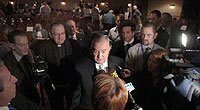 Two weeks ago I asked the question, "Who is Louis DeNaples?"
On Thursday, we found out he's the kind of guy who brings a Roman Catholic nun with him as a character witness while requesting a slots parlor license from the state's Gaming Control Board for his now-defunct Mount Airy Lodge.
DeNaples, 64, of Dunmore, told the board, "It's the best location in the Poconos," the Associated Press reported today.
The publicity-shy Keystone Landfill owner, auto parts dealer and banker wants to turn the former lover's getaway in the Poconos he bought for $25 million into a $360 million, 200-room slots resort by fall 2007.
Dressed in a black suit, DeNaples hunched at the podium as he read carefully in a "confident, staccato voice" from a script. "Mount Airy will be the signature resort of the Poconos," DeNaples said. "It will be done on time, it will operate with complete honesty and integrity, and it will be a project we can all be proud of."
Just like the song "Louie, Louie" by the Kingsmen, though, DeNaples is hard to discern, easily misunderstood and has been a subject of investigation by law enforcement.
A-way we go.
DeNaples pleaded no contest to a federal fraud felony decades ago. Federal and state agencies have also publically questioned his association with organized crime figures, but were not able to prove any wrongdoing.
That hasn't stopped most of the state's top officials - including Gov. Ed Rendell and Attorney General Tom Corbett - from accepting more than $1 million in campaign contributions from DeNaples over the last five years.
His "generosity knows no limits," Sister Mary Bonaventa, the administrator of a retreat house next to Mount Airy, told the gaming board. She also said DeNaples "lives out the Gospels in his everyday life."
He's also a man with an enemy.
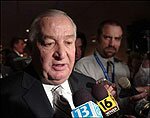 Bob Bolus Sr., whose Bolus Truck Parts competes with DeNaples in Dunmore, called him a crook with ties to the mob, according to the Pocono Record.
"DeNaples will lie, cheat and even allow someone to be imprisoned to get his own way," Bolus said in a prepared statement (pdf). "Louis feels he can just buy anyone he wants."
Bolus gave the board and reporters 67 pages about DeNaples' campaign donations to politicians and references to him in reports from the now-defunct Pennsylvania Crime Commission.
DeNaples' spokesman Kevin Feeley denied the accusation, saying, "He has no ties to organized crime." He called Bolus "someone who clearly has an ax to grind on a personal level."
Bolus claimed DeNaples helped ruin him in a complicated case from the early 1990s in which Bolus was convicted of receiving stolen property - a front-end loader - and spent four months in a work release center.
DeNaples is no stranger to criminal court, either. He received a suspended sentence in 1978. He pleaded no contest to felony fraud after a jury could not reach a verdict on charges he tried to defraud the federal government out of $525,000 in the wake of Tropical Storm Agnes.
"You can paint a leopard, you can get rid of his spots, but in this case, the spots don't go away," Bolus said.
DeNaples is vying for one of only two free-standing slots parlor licenses available in the state.
A competing proposal called Pocono Manor would build a $1.2 billion, 750-room luxury hotel/casino on a 375-acre parcel in Tobyhanna Township.
 Put forth by New Jersey real estate developer Greg Matzel, 41, the plan drew fire because its proposed height at 16 stories would make it the tallest building in the Poconos.
One woman complained that the proposed casino would be constructed a quarter-mile away from an elementary school.
Pocono Manor has been heavily criticized by an anti-casino group in Tobyhanna Township, but Matzel said 1,500 supporters have signed a petition in favor of his project in the last 10 days.
Labels: casino, Ed Rendell, Louis DeNaples, slots
| RSS Feed |
Who is Louis DeNaples?
No lawyer has contacted me asking for a retraction. But it still has me troubled. Who is Louis DeNaples?
I do know DeNaples has given more than $1 million to the campaigns of the state's top politicians - including the governor, lawmakers, judges and state attorney general - over the last five years.
|
"Frankly, the allegations amount to hearsay upon hearsay, assumptions and idle rumor."
- Kevin Feeley
Louis DeNaples' spokesman |
|
I also know DeNaples is now competing for one of only two licenses in the state available for a free-standing slot machine parlor.
But I can't even find a picture of the guy through Google or Yahoo.
Is DeNaples a bank chairman, businessman and a pillar of his Wilkes-Barre/Scranton community, as Forbes.com lists him?
Is he an opportunist who sees the potential of turning a defunct Poconos "lovers" hotel, once known worldwide for its heart-shaped tubs built for two, into that region's first slots parlor - and eventually a casino?
Is he a criminal looking to gain entry into the highly profitable world of legalized gambling?
Is he all three, befitting the sordid politics and history of the Northeastern Pennsylvania coal region?
I'll tell you straight up I don't know. But I can't help but feel I need an answer to that question.
I do know DeNaples bought the once-"beautiful Mount Airy Lodge" in 2004 for $25 million and has not made any political contributions since he applied for a license to operate a slots parlor there on Dec. 21, 2005, which would be illegal. He plans a 200-room hotel and 2,400 slot machines on its 890 acres.
I do know DeNaples, 64, of Dunmore, is president of DeNaples Auto Parts, the 720-acre Keystone Landfill, vice president of D&L Realty Corp and chairman of the Board of First National Community Bancorp Inc. He's also on the board of Blue Cross of Northeastern Pennsylvania.
And I do know, thanks to the Pittsburgh Tribune-Review, that a spokesman for DeNaples says the public allegations against his boss are largely unproven.
Here's what is proven: DeNaples pleaded no contest to felony fraud in 1978 after a federal jury could not reach a verdict on charges he tried to defraud the government out of $525,000 in the wake of Tropical Storm Agnes. He received a suspended sentence.
|
"Twenty-eight years ago, Louis DeNaples had a conviction. Twenty-eight years is a long time." - Robert Jubelirer |
|
However, Kevin Feeley, a DeNaples aide and spokesman, told the Trib there were four defendants in the original trial and, "There was not a scintilla of evidence to suggest Louis had anything to do with it."
I've worked in that region. When Agnes hit in 1972 the area was ruled by Congressman Dan Flood the way Mayor Richard Daley once ruled Chicago.
The locals still tell tall tales of residents whose homes were not touched by the flood waters suddenly buying fur coats and new cars with federal grant money.
State Senate President Pro Tempore Bob Jubelirer, who accepted $20,000 from a DeNaples-owned company even though he voted against the slots law, called DeNaples a respected businessman.
"Twenty-eight years ago, Louis DeNaples had a conviction. Twenty-eight years is a long time," Jubelirer said. "... He's given an enormous amount back to his community. It's certainly unfortunate people would want to take advantage of something like that."
Blair County Commissioner John Eichelberger, Jubelirer's opponent in the Republican primary, has called on the incumbent to return the money to DeNaples. Jubelirer, however, dismissed it as politics.
In 2001, the IRS filed an affidavit in U.S. District Court outlining contacts and "good will" and protection money DeNaples allegedly paid to William "Big Bill" D'Elia, the alleged head of the Buffalino crime family in Northeastern Pennsylvania. But neither man was charged with any wrongdoing.
"Frankly, the allegations amount to hearsay upon hearsay, assumptions and idle rumor, and in one instance they referred to one of those sources as basing his source on street talk," Feeley told the Tribune-Review. "There is a reason none of that has been proven: It is not true."
 In 1989, Harold Kaufman, a former union official, told the Pennsylvania Crime Commission that D'Elia was a mob power broker in the solid-waste landfill industry in upstate Pennsylvania.
DeNaples heads the Keystone Landfill, one of the largest in the state, so it's certainly possible the two have at least met.
Again, I've never met DeNaples. But I have met D'Elia.
It was only for a moment and, I'm sure, entirely forgetable to him. He used to hold court in a booth at The Woodlands, a nightclub near Wilkes-Barre which was known in the '90s as being one of the largest purchasers of alcohol in Pennsylvania.
And I do know D'Elia, 59, of Pittston, is banned from Atlantic City's casinos by the New Jersey attorney general's office.
DeNaples' direct competitor for one of the two free-standing slots parlor licenses available in the state is Greg Matzel, who applied for a license for Pocono Manor Resort & Casino in Monroe County.
On Thursday, Matzel told the Associated Press neither he nor any other principal in the Pocono Manor project has donated money to state lawmakers.
"It would be an absolute tragedy if politics trumped economic benefit and better judgment," Matzel said. "Clearly, we're concerned about any conflicts that may exist.
"We come with no strings attached," he added. "Clearly, there will be no public perception that there was any favoritism given to us if we are awarded the license."
DeNaples is a friend and former client of Scranton lawyer William P. Conaboy, 46, vice president and general counsel at Allied Services in Lackawanna County. Conaboy is also a director on the bank board DeNaples chairs.
Conaboy was appointed to the state gambling commission by state Senate Democratic leader Robert J. Mellow, whom Conaboy once served as an aide.
|
"It would be an absolute tragedy if politics trumped economic benefit and better judgment." - Greg Matzel |
|
Eckenrode was charged with murder last month after his girlfriend fell from the window of his 23-story apartment in Harrisburg. Rachel Kozlusky, 23, plunged to her death after the two had been on a two-day drinking spree, officials said.
Mellow appointed Raymond S. Angeli, the president of Lackawanna College, as Conaboy's replacement. DeNaples is also tied indirectly to him. Angeli reports to a 22-member board whose chairman is Dominic L. DeNaples, Louis A. DeNaples' older brother.
Angeli has denied the existence of any conflict of interest, saying he would decide licenses on their merits.
Dominic DeNaples, 67, of Dunmore, has no stake in his brother's slots application, according to the AP. However, he is listed by Forbes.com as a First National bank director, president of D&L, and vice president of both the landfill and auto parts businesses.
Louis DeNaples' spokesman, Kevin Feeley, said Thursday that any suggestion of a conflict between DeNaples and board members is "baseless and without support and fact."
"I think frankly they do a disservice to members of the board who take their jobs seriously and who are all highly experienced professionals," Feeley said.
For more about Louis DeNaples and to read my complete take on this long-predicted Slotsylvania snafu, click here.
Labels: casino, Ed Rendell, Louis DeNaples, slots
| RSS Feed |
Brightbill's motive questionable in slots money give-back
 I was all set to praise Pennsylvania Senate Majority Leader David "Chip" Brightbill today for doing the right thing by returning $21,000 in campaign donations from contributors with gambling ties.
I was going to say Gov. Ed Rendell and every legislator should follow his example. It would go a long way to mollify angry voters like me, who feel that special interests corrupted the lawmaking process until slot machines could be legalized.
It was an unusual move to be sure, coming at a time when the state's new Gaming Control Board is meeting in Philly to hear testimony on applications for slot parlors.
So I decided to do some more checking. I'm sure glad I did.
The guy who gave most of the money to Brightbill - and more than $1 million to most of the state's top elected officials, including the governor and attorney general - is a slots parlor hopeful and reportedly a felon with alleged ties to mob figures.
Meanwhile, the senator's motives for giving the money back seem less than pure too.
The Associated Press reported Sunday that Brightbill, who opposed the 2004 bill legalizing slot machines, said he gave back two checks for $10,000 each from D&L Realty, of Lackawanna County; he also returned a $1,000 check from the Pennsylvania Horsemen's Benevolent & Protective Association.
"I've decided because there are still other votes to occur and we still have some important things to do on gambling legislation that I should not take gambling money," the Lebanon County Republican said, adding he supports lobbying reform.
But before you get the idea that Brightbill's a standup guy, better read the Keystone Review. Run by the former campaign manager of Brightbill's primary opponent, a March 23 blog on that Web site says Brightbill accepted more than $52,000 from lobbyists and individuals with ties to gambling interests since August 2003.
Brightbill told the Lebanon Daily News his staff would review his campaign finances and return any other pro-gambling monies he received.
Besides the primary challenger, Brightbill had another reason to turn back the money - a public relations problem courtesy of Democratic Lieutenant Governor candidate Gene Stilp.
Stilp will stage a lengthy walk Wednesday to demand that Brightbill return tens of thousands of dollars he has taken in the form of per diem expenses, even though the senator lives well within commuting distance of the Capitol.
The state House has a rule that no legislator can receive a per diem if the member lives within 50 miles of the Capitol. However, Senators can take a per diem - up to $143 per day - no matter how close they live, Stilp said in a press release Monday.
In recent years, Brightbill has collected as much as $8,000 to more than $10,000 per year in extra income from the per diems. "He does not stay in hotels in Harrisburg, he merely pockets the money," Stilp said.
To prove his point, Stilp will walk from Brightbill's home in Mt. Gretna, Lebanon County to the senator's Capitol office. The distance: exactly 26.2 miles.
The $20,000 in checks D&L Realty gave to Brightbill were donated in October 2004 and March 2005. They will go back to that company's owner, Louis DeNaples, who has applied for one of the 14 state licenses to operate a slots parlor at the former Mount Airy Lodge in the Poconos.
DeNaples is president of DeNaples Auto Parts, the Keystone Landfill, vice president of F&L Realty Corp and chairman of the Board of First National Community Bancorp Inc., according to Forbes.com.
On Thursday, the Pocono Record reprinted a report from the Philadelphia Inquirer that says DeNaples pleaded no contest to felony fraud in 1978 on federal conspiracy charges that he attempted to defraud the government for clean-up work after Tropical Storm Agnes. He received a suspended sentence.
The Inquirer also cited three reports issued by the now defunct Pennsylvania Crime Commission between 1983 and 1990, in which DeNaples was associated with suspected mob figures including William "Big Billy" D'Elia, the alleged head of the Bufalino crime family in northeastern Pennsylvania.
Yet that didn't stop most of the state's top elected leaders from taking more than $1 million in campaign contributions from him, D&L Realty and another company he owns, RAM Consultants, between 2000 and 2005, according to a review of his contributions by the Scranton Times-Tribune.
Those who took donations included Gov. Ed Rendell and every top House and Senate leader, candidates for representative and other state offices including judgeships, campaign committees with ties to the legislative leaders and the Democratic and Republican House and Senate campaign committees.
DeNaples is partial to Democratic candidates and causes, giving them $810,950 compared to $192,000 for Republicans. But two members of the GOP did stand out.
One of those was Senate President Pro Tempore Robert Jubelirer, who I wrote about two weeks ago for accepting $20,000 from DeNaple's two businesses even though he voted against the slots law.
The other was state Attorney General Tom Corbett, whose campaign committee, Friends of Tom Corbett, accepted $10,000 from D&L on Jan. 27, 2004 and another $25,000 on April 15, 2004 - two months before the slots law was passed.
By the way, Jubelirer recently praised Corbett for starting an anti-corruption task force, saying, "Gambling has never proved to be a corruption-free enterprise, no matter which state tries it, and no matter how strong the regulatory oversight is designed to be. So there is no question there is trouble ahead for Pennsylvania. The only questions seem to be when, where, and how much trouble hits."
For a complete listing of contributions from DeNaples and his companies since 2000, click here.
Labels: casino, David Brightbill, Louis DeNaples, slots
| RSS Feed |
DeNaples' contributions topped $1 million
DeNaples, a felon with alleged ties to organized crime, and his two businesses, D&L Realty and RAM Consultants, donated more than $1 million to the state's top elected officials. For more about his contributions to Sen. David "Chip" Brightbill, click here.
From 2000 through 2005, DeNaples and his two partnerships, D&L Realty and RAM Consultants, have contributed at least $1,002,950 overall to state elected officials, including Gov. Ed Rendell and every top House and Senate leader, candidates for representative and other state offices, campaign committees with ties to the legislative leaders and the Democratic and Republican House and Senate campaign committees, according to an analysis of campaign finance records conducted by The Times-Tribune of Scranton.
However, I could not independently confirm the newspaper's findings by duplicating the effort. My analysis using the database put the total at $679,375. But I question the completeness of the records input into the database.
For instance, a $10,000 donation D&L Realty gave to Friends of Tom Corbett on Jan. 27, 2004 does not appear in the contribution database, but shows up in that campaign committee's finance report with no mention in subsequent reports of the money being returned.
It took a little doing, but the graphical links for more details below all should work. The list is the actual responses I received from the database.
UPDATE MARCH 4, 2008: The links I so painstakingly copied below no longer work because the state has finally re-done its database after two years of me bitching about it. (It still doesn't let you sort by date and dollar amount after the initial search and you can only use the last name of a person. Good luck if that name is Smith.) It now lists 56-pages worth of donations from DeNaples between Jan. 1, 2000 and today. To see them for yourself, click here. I am confident in the $679,375 amount I calculated on a spreadsheet, but again it was only as good as the data inputted into the state database.
For more about Louis DeNaples and to read my complete take on this long-predicted Slotsylvania snafu, click here.
Contributor: |
Denaples |
Begin Date: |
1/1/2005 |
End Date: |
12/31/2005 |
Sort Order: |
Contributor Name |
Your Search Returned 6 Records.
Contributor |
Date |
Amount |
Louis DeNaples , PA 18512 |
9/21/2005 |
$1,000.00 |
Recipient: Committee to Elect Mangino Judge |
 |
|
Louis Denaples Dunmore, PA 18512 |
4/12/2005 |
$2,500.00 |
Recipient: House Republican Campaign Committee 2006, Inc. |
|
|
LOUIS DENAPLES STURGES-OLPHANY, PA 18447 |
9/26/2005 |
$10,000.00 |
Recipient: REP STATE COM OF PA |
|
|
LOUIS DENAPLES STURGES-OLPHANY, PA 18447 |
11/14/2005 |
$10,000.00 |
Recipient: REP STATE COM OF PA |
|
|
LOUIS DENAPLES DUNMORE, PA 18512 |
3/14/2005 |
$10,000.00 |
Recipient: SENATE REP CAMPAIGN COM |
|
|
LOUIS J. DENAPLES DUNMORE, PA 18512 |
4/14/2005 |
$2,500.00 |
Recipient: PENETAR, DANIEL FOR JUDGE COM |
|
|
Contributor: |
Denaples |
Begin Date: |
1/1/2004 |
End Date: |
12/31/2004 |
Sort Order: |
Contributor Name |
Your Search Returned 8 Records.
Contributor |
Date |
Amount |
DeNaples, Louis Moscow, PA 18444 |
3/24/2004 |
$50,000.00 |
Recipient: PA Democratic Party |
|
|
LEWIS DENAPLES DUNMORE, PA 18512 |
10/27/2004 |
$10,000.00 |
Recipient: PHILA DEM CAMPAIGN COM OF |
|
|
Louis DeNaples Dunmore, PA 18512 |
10/1/2004 |
$10,000.00 |
Recipient: Friends of Senator Jubelirer Committee |
|
|
LOUIS DENAPLES DUNMORE, PA 18512 |
6/8/2004 |
$2,700.00 |
Recipient: HOUSE REPUBLICAN CAMPAIGN COMMITTEE 2004, INC. |
|
|
Louis Denaples Dunmore, PA 18512 |
10/21/2004 |
$2,500.00 |
Recipient: House Republican Campaign Committee 2004, Inc. |
|
|
LOUIS DENAPLES DUNMORE, PA 18512 |
8/2/2004 |
$525.00 |
Recipient: MELLOW, BOB FRIENDS OF |
|
|
LOUIS DENAPLES DUNMORE, PA 18512 |
9/30/2004 |
$5,000.00 |
Recipient: SENATE REP CAMPAIGN COM |
|
|
MR LOUIS DENAPLES MOSCOW, PA 184449278 |
7/6/2004 |
$200.00 |
Recipient: HOSPITAL & HEALTHSYSTEM ASSOC OF PA PAC (HAPAC) |
|
|
Contributor: |
Denaples |
Begin Date: |
1/1/2003 |
End Date: |
12/31/2003 |
Sort Order: |
Contributor Name |
Your Search Returned 10 Records.
Contributor |
Date |
Amount |
DeNaples, Dominic Dunmore, PA 18512 |
10/14/2003 |
$2,500.00 |
Recipient: Pa Democratic Party |
|
|
DeNaples, Louis Dunmore, PA 18512 |
10/14/2003 |
$2,500.00 |
Recipient: Pa Democratic Party |
|
|
LEWIS DENAPLES DUNMORE, PA 18512 |
5/28/2003 |
$5,000.00 |
Recipient: MELVIN, JOAN ORIE COM TO ELECT SUPREME CT |
|
|
Louis Denaples Dunmore, PA 18512 |
6/18/2003 |
$1,000.00 |
Recipient: House Republican Campaign Committee 2004, Inc. |
|
|
LOUIS DENAPLES DUNMORE, PA 18512 |
11/3/2003 |
$2,500.00 |
Recipient: PANELLA, JACK JUDGE FOR SUPERIOR CT |
|
|
LOUIS DENAPLES DUNMORE, PA 18512 |
11/3/2003 |
$2,500.00 |
Recipient: PANELLA, JACK JUDGE FOR SUPERIOR CT |
|
|
Louis Denaples Dunmore, PA 18512 |
10/23/2003 |
$1,000.00 |
Recipient: Rangos, Jill Com to Elect |
|
|
LOUIS DENAPLES DUNMORE, PA 18512 |
10/23/2003 |
$1,000.00 |
Recipient: REP STATE COM OF PA |
|
|
LOUIS DENAPLES DUNMORE, PA 18512 |
12/11/2003 |
$5,000.00 |
Recipient: SENATE REP CAMPAIGN COM |
|
|
Louis DeNaples Dunmore, PA 18512 |
3/19/2003 |
$5,000.00 |
Recipient: Toole, Michael for Judge Committee |
|
|
Contributor: |
Denaples |
Begin Date: |
1/1/2002 |
End Date: |
12/31/2002 |
Sort Order: |
Contributor Name |
Your Search Returned 8 Records.
Contributor |
Date |
Amount |
Dominick Denaples Dunmore, PA 18512 |
9/12/2002 |
$150.00 |
Recipient: Musto Senate Committee |
|
|
LOUIS DENAPLES MOSCOW, PA 184449331 |
11/4/2002 |
$1,500.00 |
Recipient: CAMPAIGN 2000 |
|
|
Louis Denaples Dunmore, PA 18512 |
2/11/2002 |
$10,000.00 |
Recipient: House Republican Campaign Committee 2002, Inc. |
|
|
LOUIS DENAPLES DUNMORE, PA 18512 |
9/3/2002 |
$10,000.00 |
Recipient: HOUSE REPUBLICAN CAMPAIGN COMMITTEE 2002, INC. |
|
|
Louis Denaples Dunmore, PA 18512 |
9/12/2002 |
$150.00 |
Recipient: Musto Senate Committee |
|
|
LOUIS DENAPLES DUNMORE, PA 18512 |
9/25/2002 |
$15,000.00 |
Recipient: REP STATE COM OF PA |
|
|
LOUIS DENAPLES SCRANTON, PA 18512 |
5/1/2002 |
$15,000.00 |
Recipient: VEON, MIKE COM TO ELECT |
|
|
LOUIS DENAPLES SCRANTON, PA 18512 |
5/1/2002 |
$15,000.00 |
Recipient: VEON, MIKE COM TO ELECT |
|
|
Contributor: |
Denaples |
Begin Date: |
1/1/2001 |
End Date: |
12/31/2001 |
Sort Order: |
Contributor Name |
Your Search Returned 10 Records.
Contributor |
Date |
Amount |
Dominick Denaples Dunmore, PA 18512 |
9/11/2001 |
$150.00 |
Recipient: Musto Senate Committee |
|
|
LOUIS DENAPLES DUNMORE, PA 18512 |
9/13/2001 |
$1,000.00 |
Recipient: BOWES, MARY JANE FOR SUPERIOR CT COM |
|
|
LOUIS DENAPLES DUNMORE, PA 18512 |
10/31/2001 |
$1,000.00 |
Recipient: DEM STATE SENATE CAMPAIGN COM |
|
|
Louis DeNaples Dunmore, PA 18512 |
12/28/2001 |
$1,000.00 |
Recipient: Fisher for Governor |
|
|
LOUIS DENAPLES DUNMORE, PA 18512 |
10/11/2001 |
$1,000.00 |
Recipient: FORD ELLIOTT, KATE COM TO ELECT JUDGE |
|
|
Louis Denaples Dunmore, PA 18512 |
6/6/2001 |
$1,500.00 |
Recipient: House Republican Campaign Committee 2002, Inc. |
|
|
LOUIS DENAPLES DUNMORE, PA 18512 |
12/14/2001 |
$5,000.00 |
Recipient: HUGHES, VINCENT CITIZENS FOR |
|
|
Louis Denaples Dunmore, PA 18512 |
9/11/2001 |
$150.00 |
Recipient: Musto Senate Committee |
|
|
Louis DeNaples Dunmore, PA 18512 |
4/24/2001 |
$20,000.00 |
Recipient: The Ridge Leadership Fund |
|
|
MR LOUIS DENAPLES DUNMORE, PA 18512 |
10/6/2001 |
$1,000.00 |
Recipient: EAKIN, J MICHAEL FRIENDS OF JUDGE |
|
|
Contributor: |
Denaples |
Begin Date: |
1/1/2000 |
End Date: |
12/31/2000 |
Sort Order: |
Contributor Name |
Your Search Returned 8 Records.
Contributor |
Date |
Amount |
Dominick Denaples Dunmore, PA 18512 |
9/20/2000 |
$75.00 |
Recipient: Musto Senate Committee |
|
|
John Denaples Dunmore, PA 18512 |
9/20/2000 |
$75.00 |
Recipient: Musto Senate Committee |
|
|
L & D DENAPLES DUNMORE, PA 18512 |
10/12/2000 |
$875.00 |
Recipient: LACKAWANNA CO DEM COM |
|
|
LOUIS DENAPLES DUNMORE, PA 18512 |
9/7/2000 |
$400.00 |
Recipient: BELARDI, FRED PEOPLE FOR KEEP THEIR REP |
|
|
Louis DeNaples Dunmore, PA 18512 |
10/20/2000 |
$10,000.00 |
Recipient: Friends of Mike Fisher Committee,Inc. |
|
|
LOUIS DENAPLES DUNMORE, PA 18512 |
2/25/2000 |
$1,000.00 |
Recipient: HOUSE REPUBLICAN CAMPAIGN COMMITTEE |
|
|
Louis Denaples Dunmore, PA 18512 |
9/20/2000 |
$75.00 |
Recipient: Musto Senate Committee |
|
|
Mr. & Mrs. Louis Denaples Dunmore, PA 18512 |
5/16/2000 |
$10,000.00 |
Recipient: House Republican Campaign Committee |
|
|
Contributor: |
D&L Realty |
Begin Date: |
1/1/2005 |
End Date: |
12/31/2005 |
Sort Order: |
Contributor Name |
Your Search Returned 4 Records.
Contributor |
Date |
Amount |
D&L REALTY DUNMORE, PA |
12/14/2005 |
$5,000.00 |
Recipient: BELARDI, FRED PEOPLE FOR KEEP THEIR REP |
|
|
D&L REALTY DUNMORE, PA 18512 |
1/6/2005 |
$10,000.00 |
Recipient: GROW PA |
|
|
D&L REALTY DUNMORE, PA 18512 |
3/4/2005 |
$5,000.00 |
Recipient: RAMALEY, SEAN CITIZENS FOR |
|
|
D&L REALTY PAC , PA |
9/9/2005 |
$5,000.00 |
Recipient: FRIENDS OF DON CUNNINGHAM |
|
|
Contributor: |
D&L Realty |
Begin Date: |
1/1/2004 |
End Date: |
12/31/2004 |
Sort Order: |
Contributor Name |
Your Search Returned 2 Records.
Contributor |
Date |
Amount |
D&L REALTY DUNMORE, PA 18512 |
4/15/2004 |
$25,000.00 |
Recipient: CORBETT, TOM FRIENDS OF |
|
|
D&L REALTY DUNMORE, PA 18512 |
10/27/2004 |
$1,000.00 |
Recipient: LACKAWANNA CO DEM COM |
|
|
Contributor: |
RAM Consultants |
Begin Date: |
1/1/2005 |
End Date: |
12/31/2005 |
Sort Order: |
Contributor Name |
Your Search Returned 2 Records.
Contributor |
Date |
Amount |
RAM CONSULTANTS STURGES-OLYPHANT, PA 18447 |
10/14/2005 |
$10,000.00 |
Recipient: CITIZENS FOR A BETTER PENNSYLVANIA |
|
|
RAM CONSULTANTS STURGES-OLYPHANT, PA 18447 |
10/4/2005 |
$10,000.00 |
Recipient: SENATE REP CAMPAIGN COM |
|
|
Contributor: |
RAM Consultants |
Begin Date: |
1/1/2004 |
End Date: |
12/31/2004 |
Sort Order: |
Contributor Name |
Your Search Returned 1 Records.
Contributor |
Date |
Amount |
RAM Consultants Sturges-Olyphant, PA 18447 |
9/7/2004 |
$30,000.00 |
Recipient: The Committee to Elect Mike Veon |
|
|
Contributor: |
RAM Consultants |
Begin Date: |
1/1/2002 |
End Date: |
12/31/2002 |
Sort Order: |
Contributor Name |
Your Search Returned 4 Records.
Contributor |
Date |
Amount |
RAM CONSULTANTS STURGES, PA 18447 |
1/2/2002 |
$50,000.00 |
Recipient: CAMPAIGN 2000 |
|
|
RAM CONSULTANTS STURGES-OLYPHANT, PA 18447 |
10/14/2002 |
$50,000.00 |
Recipient: DEM STATE SENATE CAMPAIGN COM |
|
|
RAM CONSULTANTS STURGES OLYPHANT, PA 18447 |
8/6/2002 |
$100,000.00 |
Recipient: RENDELL, EDWARD FOR GOVERNOR |
|
|
RAM CONSULTANTS STURGES OLYPHANT, PA 18447 |
8/13/2002 |
$15,000.00 |
Recipient: RENDELL, EDWARD FOR GOVERNOR |
|
|
Contributor: |
RAM Consultants |
Begin Date: |
1/1/2001 |
End Date: |
12/31/2001 |
Sort Order: |
Contributor Name |
Your Search Returned 1 Records.
Contributor |
Date |
Amount |
RAM CONSULTANTS STURGES, PA 18447 |
7/27/2001 |
$50,000.00 |
Recipient: CAMPAIGN 2000 |
|
|
Contributor: |
RAM Consultants |
Begin Date: |
1/1/2000 |
End Date: |
12/31/2000 |
Sort Order: |
Contributor Name |
Your Search Returned 2 Records.
Contributor |
Date |
Amount |
RAM CONSULTANTS STURGES, PA 18447 |
10/18/2000 |
$5,000.00 |
Recipient: CAMPAIGN 2000 |
|
|
RAM CONSULTANTS STURGES OLYPHANT, PA 18447 |
10/26/2000 |
$45,000.00 |
Recipient: DEM STATE SENATE CAMPAIGN COM |
|
|
Labels: casino, Ed Rendell, Louis DeNaples, Mike Veon, slots, Tom Corbett
| RSS Feed |
Jubelirer just as crooked as the rest
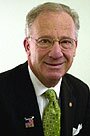 I used to think Senate President Pro Tempore Robert C. Jubelirer was one of the few bright bulbs in Harrisburg. Turns out he's just as screwy and dim as the rest of the pack.
Although Jubelirer, R-Blair, voted against the bill that legalized slot machines last July, his Political Action Committee accepted $20,000 last year from companies owned by Scranton-area businessman and slots parlor hopeful Louis A. DeNaples, who owns Mount Airy Lodge in the Poconos.
Jubelirer's PAC then gave nearly $13,000 to a pro-slot machine PAC.
Talk about playing both sides of the fence.
Here's my favorite part, folks. Jubelirer recently praised the formation of a new anti-corruption task force by state Attorney General Tom Corbett, saying, "Gambling has never proved to be a corruption-free enterprise, no matter which state tries it, and no matter how strong the regulatory oversight is designed to be. So there is no question there is trouble ahead for Pennsylvania. The only questions seem to be when, where, and how much trouble hits."
DeNaples' D&L Realty in Dunmore gave $10,000 to the PAC Jubelirer chairs, Citizens for a Better Pennsylvania, on March 14, 2005, campaign finance records show. His PAC in turn gave $12,386 in two payments - $4,886 on March 22, 2005 and $7,500 on March 25 - to Citizens Against Higher Taxes and were the group's largest contributions by far last year.
Chaired by James Broussard, a Lebanon Valley College history professor, Citizens Against Higher Taxes supported the legalization of slot machines because it also promised property tax reform.
The slots vote occurred in the early morning of July 2, before both the House and Senate adjourned for the July 4th holiday. The 146-page bill was slid into an unrelated two-paragraph measure about background checks for harness racing track employees, then brought to the floor for a vote without public debate.
The Friends of Senator Jubelirer, another PAC, gave Broussard's organization $200 on Aug. 18, 2005.
Two months later, another DeNaples-owned business, RAM Consultants of Sturges-Olyphant, gave Jubelirer's Citizens for a Better Pennsylvania another $10,000 on Oct. 14.
 Jubelirer does not have a vote on who gets a license. But he did have an appointment to the state gaming board, which will make the final decision after series of public hearing that start next week.
And he's not the only one to have taken money from slots applicants. Gov. Ed Rendell, House Minority Leader H. William DeWeese and House Speaker John M. Perzel also accepted tens of thousands in campaign contributions before making their appointments to the gambling board.
In trying to explain why lawmakers had trouble passing the slots legislation and property tax reform last May, Broussard told the Philadelphia Inquirer, "A lot of the problem is the same thing we saw in 1989: a high level of generic public suspicion of anything that comes out of Harrisburg."
Is hindsight, is it any wonder why the public was suspicious?
By the way, the Pittsburgh Tribune-Review, the paper which first connected the dots between Jubelirer's PAC and Broussard's, also reported Friday that five of the seven gambling board members are driving around in state-leased cars at taxpayer expense in addition to collecting their $145,000 salaries.
Labels: Bob Jubelirer, casino, Ed Rendell, Louis DeNaples, slots
| RSS Feed |

The Daily Rant by Dave Ralis is licensed under a Creative Commons Attribution 3.0 United States License.